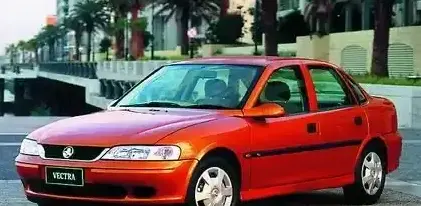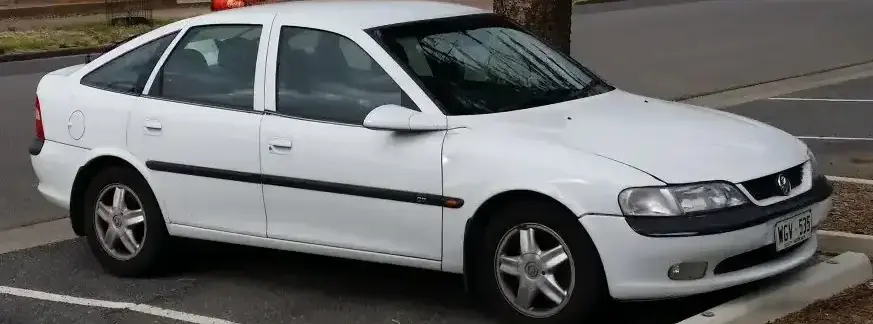
The Holden Vectra Hatchback (B) 2.0 i 16V, produced between 1998 and 2000, represented a significant offering in the Australian mid-size car market. Part of the broader Vectra B generation (1995-2002 internationally, but with a shorter lifespan in Australia), this variant occupied a middle ground in the lineup, offering a balance between performance and affordability. It was positioned above the base models and below the more powerful V6 options, appealing to buyers seeking a practical and reasonably spirited hatchback. The Vectra B was Holden’s replacement for the popular Commodore, aiming to attract a different segment of the market with its European styling and engineering.
Technical Specifications
| Brand | Holden |
| Model | Vectra |
| Generation | Vectra Hatchback (B) |
| Type (Engine) | 2.0 i 16V (136 Hp) |
| Start of production | 1998 |
| End of production | 2000 |
| Powertrain Architecture | Internal Combustion engine |
| Body type | Hatchback |
| Seats | 5 |
| Doors | 5 |
| Fuel consumption (combined) | 10 l/100 km (23.5 US mpg, 28.2 UK mpg, 10 km/l) |
| Fuel Type | Petrol (Gasoline) |
| Acceleration 0 – 100 km/h | 7.6 sec |
| Acceleration 0 – 62 mph | 7.6 sec |
| Acceleration 0 – 60 mph | 7.2 sec |
| Maximum speed | 215 km/h (133.59 mph) |
| Weight-to-power ratio | 9.6 kg/Hp, 104.6 Hp/tonne |
| Weight-to-torque ratio | 6.9 kg/Nm, 144.6 Nm/tonne |
| Power | 136 Hp @ 5600 rpm |
| Power per litre | 68.1 Hp/l |
| Torque | 188 Nm @ 3200 rpm (138.66 lb.-ft. @ 3200 rpm) |
| Engine layout | Front, Transverse |
| Engine displacement | 1998 cm3 (121.93 cu. in.) |
| Number of cylinders | 4 |
| Engine configuration | Inline |
| Number of valves per cylinder | 4 |
| Fuel injection system | Multi-port manifold injection |
| Engine aspiration | Naturally aspirated engine |
| Valvetrain | DOHC |
| Kerb Weight | 1300 kg (2866.01 lbs) |
| Trunk (boot) space – minimum | 480 l (16.95 cu. ft.) |
| Trunk (boot) space – maximum | 790 l (27.9 cu. ft.) |
| Fuel tank capacity | 60 l (15.85 US gal | 13.2 UK gal) |
| Length | 4477 mm (176.26 in) |
| Width | 1707 mm (67.2 in) |
| Height | 1428 mm (56.22 in) |
| Wheelbase | 2640 mm (103.94 in) |
| Front track | 1484 mm (58.43 in) |
| Rear (Back) track | 1470 mm (57.87 in) |
| Drivetrain Architecture | The Internal combustion engine (ICE) drives the front wheels of the vehicle. |
| Drive wheel | Front wheel drive |
| Number of gears and type of gearbox | 5 gears, manual transmission |
| Front suspension | Coil spring |
| Rear suspension | Coil spring |
| Front brakes | Ventilated discs |
| Rear brakes | Disc |
| Assisting systems | ABS (Anti-lock braking system) |
| Power steering | Hydraulic Steering |
| Tires size | 195/65 R15 V |
Powertrain & Engine Architecture
The heart of the Vectra 2.0 i 16V was the X20XEL engine, a 1998cc inline-four cylinder powerplant. This engine was part of Opel’s (Holden’s parent company at the time) Ecotec family, known for its relatively lightweight construction and focus on efficiency. The ‘16V’ designation refers to the four valves per cylinder, contributing to improved breathing and power output. Fuel delivery was handled by a multi-port fuel injection system, providing precise fuel metering for optimal combustion. The engine featured a double overhead camshaft (DOHC) valvetrain, further enhancing its volumetric efficiency. The 5-speed manual transmission was the standard offering, providing drivers with direct control over the engine’s power. The engine’s design prioritized smooth operation and reasonable fuel economy over outright performance.
Driving Characteristics
The 136 horsepower and 188 Nm (138.66 lb-ft) of torque delivered by the 2.0L engine provided adequate, though not exhilarating, performance. Acceleration from 0-60 mph was achieved in around 7.2 seconds, making it competitive with other vehicles in its class. The manual transmission allowed for a more engaging driving experience compared to the optional automatic, and the gear ratios were well-suited for everyday driving. While not a sports car, the Vectra 2.0 i 16V offered a comfortable and composed ride, with predictable handling characteristics. Compared to the higher-output V6 models, the 2.0L felt less powerful, particularly during overtaking maneuvers. However, it offered a noticeable improvement in fuel economy and a more manageable driving experience for those prioritizing practicality.
Equipment & Trim Levels
The Holden Vectra 2.0 i 16V typically came equipped with a reasonable level of standard features. These included power windows and mirrors, central locking, an AM/FM radio, and air conditioning. Interior upholstery was typically cloth, with a functional and durable design. Optional extras included alloy wheels, a sunroof, and upgraded audio systems. The trim level was generally considered mid-range, offering a step up from the base models in terms of comfort and convenience without the added expense of the premium V6 variants. Safety features included ABS brakes, which were becoming increasingly common on vehicles of this era.
Chassis & Braking
The Vectra B utilized a MacPherson strut front suspension and a multi-link rear suspension, providing a good balance between ride comfort and handling. The front brakes were ventilated discs, offering good stopping power, while the rear brakes were solid discs. The chassis was designed to be relatively lightweight, contributing to the car’s agility. Stabilizer bars were fitted to both the front and rear axles to reduce body roll during cornering. The steering was hydraulically assisted, providing a light and responsive feel.
Market Reception & Comparison
The Holden Vectra 2.0 i 16V was generally well-received by Australian automotive critics. It was praised for its comfortable ride, spacious interior, and reasonable fuel economy. However, some critics noted that the engine lacked the punch of its V6 counterparts. Compared to other vehicles in its class, such as the Ford Falcon and Holden Commodore, the Vectra offered a more European driving experience, with a focus on refinement and handling. The 2.0L variant offered a compelling alternative for buyers who didn’t require the extra power of the V6, providing a more affordable and fuel-efficient option.
Legacy
The Holden Vectra B, including the 2.0 i 16V variant, has developed a reputation for reasonable reliability, although age and mileage are now significant factors. The X20XEL engine is generally considered to be a durable unit, but regular maintenance is essential to prevent issues. Common problems include oil leaks and sensor failures. In the used car market, the Vectra 2.0 i 16V represents a relatively affordable entry point into European-engineered motoring. While it may not offer the performance or prestige of some of its rivals, it remains a practical and comfortable option for those seeking a reliable and spacious hatchback.