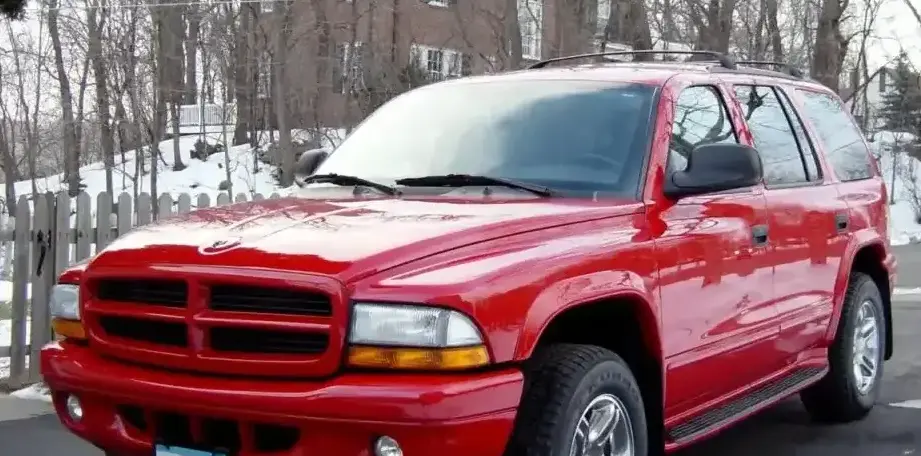
The Dodge Durango III (WD) 3.6 V6 AWD, produced from 2010 to 2014, represented a significant return to form for Dodge’s full-size SUV. Following a hiatus after the second-generation Durango, the third generation, built on a modified Mercedes-Benz W164 platform (resulting from the DaimlerChrysler partnership), aimed to blend robust truck-based capability with a more refined driving experience. The 3.6-liter V6, paired with an eight-speed automatic transmission and all-wheel drive, occupied a crucial mid-range position in the Durango lineup, offering a balance between performance, fuel efficiency, and affordability. It served as the gateway to Durango ownership, appealing to families and individuals needing a versatile seven-passenger vehicle without the higher price tag of the V8 models.
Technical Specifications
| Brand | Dodge |
| Model | Durango |
| Generation | Durango III (WD) |
| Type (Engine) | 3.6 V6 (290 Hp) AWD |
| Start of production | 2010 |
| End of production | 2014 |
| Powertrain Architecture | Internal Combustion engine |
| Body type | SUV |
| Seats | 7 |
| Doors | 4 |
| Fuel consumption (urban) | 14.7 l/100 km (16 US mpg, 19.2 UK mpg, 6.8 km/l) |
| Fuel consumption (extra urban) | 10.2 l/100 km (23.1 US mpg, 27.7 UK mpg, 9.8 km/l) |
| Fuel Type | Petrol (Gasoline) |
| Weight-to-power ratio | 7.7 kg/Hp, 130.1 Hp/tonne |
| Weight-to-torque ratio | 6.3 kg/Nm, 158.4 Nm/tonne |
| Power | 290 Hp @ 6400 rpm |
| Power per litre | 80.5 Hp/l |
| Torque | 353 Nm @ 4800 rpm (260.36 lb.-ft. @ 4800 rpm) |
| Maximum engine speed | 6400 rpm |
| Engine layout | Front, Longitudinal |
| Engine displacement | 3604 cm3 (219.93 cu. in.) |
| Number of cylinders | 6 |
| Engine configuration | V-engine |
| Cylinder Bore | 96 mm (3.78 in.) |
| Piston Stroke | 83 mm (3.27 in.) |
| Compression ratio | 10.2:1 |
| Number of valves per cylinder | 4 |
| Fuel injection system | Multi-port manifold injection |
| Engine aspiration | Naturally aspirated engine |
| Valvetrain | DOHC |
| Engine oil capacity | 5.6 l (5.92 US qt | 4.93 UK qt) |
| Coolant | 9.9 l (10.46 US qt | 8.71 UK qt) |
| Kerb Weight | 2229-2312 kg (4914.1 – 5097.09 lbs.) |
| Max. weight | 2948-3221 kg (6499.23 – 7101.09 lbs.) |
| Max load | 719-909 kg (1585.12 – 2004 lbs.) |
| Trunk (boot) space – minimum | 490 l (17.3 cu. ft.) |
| Trunk (boot) space – maximum | 2390 l (84.4 cu. ft.) |
| Fuel tank capacity | 93.1 l (24.59 US gal | 20.48 UK gal) |
| Permitted trailer load with brakes (12%) | 2812 kg (6199.4 lbs.) |
| Length | 5075 mm (199.8 in.) |
| Width | 1925 mm (75.79 in.) |
| Width including mirrors | 2172 mm (85.51 in.) |
| Height | 1801 mm (70.91 in.) |
| Wheelbase | 3043 mm (119.8 in.) |
| Front track | 1623 mm (63.9 in.) |
| Rear (Back) track | 1627 mm (64.06 in.) |
| Ride height (ground clearance) | 207 mm (8.15 in.) |
| Drag coefficient (Cd) | 0.35 |
| Minimum turning circle (turning diameter) | 11.3 m (37.07 ft.) |
| Approach angle | 16.3° |
| Departure angle | 21.4° |
| Ramp-over (brakeover) angle | 17.8° |
| Drive wheel | All wheel drive (4×4) |
| Number of gears and type of gearbox | 8 gears, automatic transmission |
| Front suspension | Wishbone, Transverse stabilizer |
| Rear suspension | Independent multi-link suspension |
| Front brakes | Ventilated discs, 330 mm |
| Rear brakes | Disc, 330 mm |
| Assisting systems | ABS (Anti-lock braking system) |
| Tires size | 265/60 R18; 265/50 R20 |
| Wheel rims size | 18; 20 |
Powertrain & Engine Architecture
The heart of this Durango variant is the 3.6-liter Pentastar V6 engine, internally designated as the engine code EN. This engine represented a significant leap forward for Chrysler’s V6 offerings. It features a 60-degree V-angle, aluminum block and cylinder heads, and dual overhead camshafts (DOHC) with four valves per cylinder. The engine utilizes a multi-port fuel injection system, delivering fuel directly into the intake ports. The Pentastar V6 is known for its relatively smooth operation and willingness to rev. The eight-speed automatic transmission, sourced from ZF, was a key component in maximizing fuel efficiency and providing smooth shifts. This transmission offered a wide gear ratio spread, allowing the engine to operate in its optimal power band more frequently. The all-wheel-drive system is primarily rear-wheel drive biased, automatically engaging the front wheels when slip is detected, enhancing traction in various conditions.
Driving Characteristics
The 3.6L V6 Durango AWD delivers adequate performance for everyday driving and light towing. While not as quick as the V8-powered models, it provides sufficient power for merging onto highways and passing slower traffic. The eight-speed transmission helps to keep the engine in its sweet spot, minimizing the sensation of being underpowered. However, when fully loaded with passengers and cargo, or when tackling steep inclines, the V6 can feel strained. The automatic transmission is generally smooth and responsive, although some drivers noted occasional hesitant downshifts. The all-wheel-drive system provides enhanced stability and traction, particularly in inclement weather. Compared to the 5.7L Hemi V8, the V6 offers significantly better fuel economy, but at the cost of substantial performance. The manual transmission was not offered with the V6 engine.
Equipment & Trim Levels
The 3.6L V6 AWD Durango typically came standard with features such as three-zone automatic climate control, a six-speaker audio system, keyless entry, and a rearview camera. Higher trim levels, such as the Limited, added features like leather upholstery, heated front seats, a power liftgate, and a larger touchscreen display. Optional extras included a navigation system, a premium sound system, and advanced safety features like blind-spot monitoring and rear cross-path detection. Interior upholstery was typically cloth on the base models, with leather available on higher trims. Dashboard configurations were consistent across all trims, featuring a user-friendly layout with intuitive controls.
Chassis & Braking
The Durango III utilizes a fully independent suspension system, with a short and long arm (SLA) setup at the front and a multi-link suspension at the rear. This configuration provides a comfortable ride and good handling characteristics. The V6 models typically featured smaller stabilizer bars compared to the V8 models. Braking duties are handled by ventilated discs at all four corners, providing ample stopping power. Anti-lock brakes (ABS) are standard, along with electronic brake-force distribution. Rear drum brakes were not offered on the Durango III.
Market Reception & Comparison
The 3.6L V6 Durango AWD was generally well-received by critics as a practical and fuel-efficient option in the full-size SUV segment. While some reviewers noted its lack of outright performance compared to the V8 models, they praised its comfortable ride, spacious interior, and standard features. Fuel economy was a significant selling point, with the V6 Durango achieving noticeably better gas mileage than its V8 counterparts. Reliability was generally good, although some owners reported minor issues with the transmission and electrical systems. Compared to competitors like the Chevrolet Traverse and Ford Explorer, the Durango offered a more rugged and truck-like feel.
Legacy
The 3.6L Pentastar V6 engine has proven to be a durable and reliable powerplant, and continues to be used in various Chrysler, Dodge, and Jeep vehicles. The eight-speed automatic transmission has also gained a reputation for its smoothness and efficiency. In the used car market, the 2010-2014 Durango 3.6L V6 AWD represents a good value proposition for buyers seeking a capable and versatile SUV. While not the fastest or most luxurious option available, it offers a compelling combination of practicality, reliability, and affordability. Regular maintenance, including timely oil changes and transmission fluid services, is crucial for ensuring the long-term health of this powertrain.