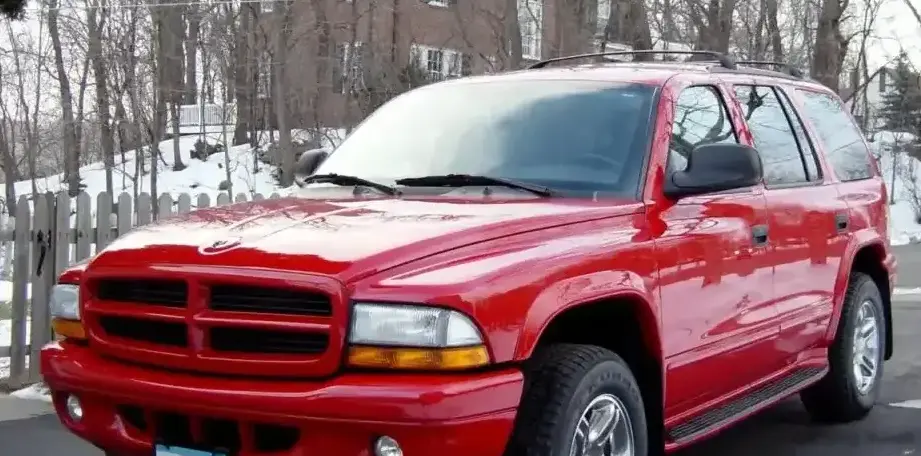
The Dodge Durango III, specifically the variant equipped with the 5.7-liter V8 engine producing 360 horsepower, represented a significant return to form for the Durango nameplate. Introduced for the 2011 model year (though technically spanning 2010-2014), this third generation Durango moved away from the previous model’s truck-based platform and adopted a more sophisticated, car-based unibody construction derived from the Jeep Grand Cherokee (WK2). This shift aimed to provide a more comfortable ride and improved on-road handling while retaining the Durango’s reputation for capability and spaciousness. The 5.7L V8/8-speed automatic combination occupied the upper-mid range of the Durango lineup, positioned above the base 3.6L V6 but below the high-performance SRT trim.
Technical Specifications
| Brand | Dodge |
| Model | Durango |
| Generation | Durango III (WD) |
| Type (Engine) | 5.7 V8 (360 Hp) |
| Start of production | 2010 year |
| End of production | 2014 year |
| Powertrain Architecture | Internal Combustion engine |
| Body type | SUV |
| Seats | 5 |
| Doors | 4 |
| Fuel consumption (economy) – urban | 16.8 l/100 km (14 US mpg, 16.8 UK mpg, 6 km/l) |
| Fuel consumption (economy) – extra urban | 11.7 l/100 km (20.1 US mpg, 24.1 UK mpg, 8.5 km/l) |
| Fuel Type | Petrol (Gasoline) |
| Weight-to-power ratio | 6.5 kg/Hp, 153.3 Hp/tonne |
| Weight-to-torque ratio | 4.4 kg/Nm, 225.3 Nm/tonne |
| Power | 360 Hp @ 5150 rpm |
| Power per litre | 63.7 Hp/l |
| Torque | 529 Nm @ 4250 rpm (390.17 lb.-ft. @ 4250 rpm) |
| Maximum engine speed | 5800 rpm |
| Engine layout | Front, Longitudinal |
| Engine displacement | 5654 cm3 (345.03 cu. in.) |
| Number of cylinders | 8 |
| Engine configuration | V-engine |
| Cylinder Bore | 99.5 mm (3.92 in.) |
| Piston Stroke | 90.9 mm (3.58 in.) |
| Compression ratio | 10.5:1 |
| Number of valves per cylinder | 2 |
| Fuel injection system | Multi-port manifold injection |
| Engine aspiration | Naturally aspirated engine |
| Valvetrain | VVT |
| Engine oil capacity | 6.6 l (6.97 US qt | 5.81 UK qt) |
| Coolant | 14.6 l (15.43 US qt | 12.85 UK qt) |
| Kerb Weight | 2348-2359 kg (5176.45 – 5200.7 lbs.) |
| Max. weight | 3221 kg (7101.09 lbs.) |
| Max load | 862-873 kg (1900.38 – 1924.64 lbs.) |
| Trunk (boot) space – minimum | 490 l (17.3 cu. ft.) |
| Trunk (boot) space – maximum | 2390 l (84.4 cu. ft.) |
| Fuel tank capacity | 93.1 l (24.59 US gal | 20.48 UK gal) |
| Permitted trailer load with brakes (12%) | 3358 kg (7403.12 lbs.) |
| Length | 5075 mm (199.8 in.) |
| Width | 1925 mm (75.79 in.) |
| Width including mirrors | 2172 mm (85.51 in.) |
| Height | 1801 mm (70.91 in.) |
| Wheelbase | 3043 mm (119.8 in.) |
| Front track | 1623 mm (63.9 in.) |
| Rear (Back) track | 1628 mm (64.09 in.) |
| Ride height (ground clearance) | 207 mm (8.15 in.) |
| Drag coefficient (Cd) | 0.35 |
| Minimum turning circle (turning diameter) | 11.3 m (37.07 ft.) |
| Approach angle | 16.3° |
| Departure angle | 21.4° |
| Ramp-over (brakeover) angle | 17.8° |
| Drivetrain Architecture | The Internal combustion engine (ICE) drives the rear wheels of the vehicle. |
| Drive wheel | Rear wheel drive |
| Number of gears and type of gearbox | 8 gears, automatic transmission |
| Front suspension | Wishbone |
| Rear suspension | Independent multi-link suspension |
| Front brakes | Ventilated discs, 330 mm |
| Rear brakes | Disc, 330 mm |
| Assisting systems | ABS (Anti-lock braking system) |
| Tires size | 265/60 R18; 265/50 R20 |
| Wheel rims size | 18; 20 |
Powertrain & Engine Architecture
The heart of this Durango variant is the 5.7-liter “Hemi” V8 engine, specifically utilizing the engine code ENF. This engine is a naturally aspirated, overhead valve (OHV) design featuring variable valve timing (VVT) on the intake camshaft. The multi-port fuel injection system delivers fuel directly to each cylinder, optimizing combustion. The 5.7L Hemi produces 360 horsepower at 5,150 rpm and 390 lb-ft of torque at 4,250 rpm. This power is channeled through a sophisticated eight-speed automatic transmission (845RE), a crucial component in balancing performance and fuel efficiency. The 8-speed transmission offered closer gear ratios compared to older automatic transmissions, allowing the engine to stay within its optimal power band more frequently. The transmission also featured a manual shift mode for more driver control.
Driving Characteristics
The 5.7L Durango offered a compelling blend of power and usability. While not as overtly sporty as the SRT model, the 360 hp engine provided ample acceleration for everyday driving and confident highway passing. The eight-speed automatic transmission contributed to a smoother driving experience, with quick and precise shifts. Compared to the base 3.6L V6, the 5.7L offered significantly more low-end torque, making it more capable of towing and hauling. The rear-wheel-drive configuration, standard on this trim, provided a more traditional driving feel, although four-wheel drive was available as an option. The unibody construction, while improving ride comfort, did result in a slightly less rugged feel compared to the previous generation’s body-on-frame design.
Equipment & Trim Levels
The 5.7L Durango typically came standard with features such as alloy wheels, automatic headlights, a rearview camera, and a basic infotainment system with a touchscreen display. Higher trim levels, such as the Limited, added features like leather upholstery, heated front seats, a premium sound system, and advanced safety technologies like blind-spot monitoring and rear cross-traffic alert. Optional extras included a dual-pane sunroof, navigation system, and a rear-seat entertainment system. Interior upholstery was typically cloth on the base trims, upgrading to leather on higher levels. Dashboard configurations were relatively consistent across trims, with a focus on functionality and ease of use.
Chassis & Braking
The Durango III utilized an independent front suspension with a multi-link rear suspension, contributing to a comfortable and controlled ride. The 5.7L models generally featured larger brakes than the V6 versions, with ventilated discs at all four corners. Anti-lock brakes (ABS) were standard, along with electronic stability control. The rear suspension design was tuned to handle the increased weight and power of the V8 engine. Stabilizer bars were fitted front and rear to reduce body roll during cornering. Tire sizes varied depending on the trim level and wheel size, ranging from 265/60R18 to 265/50R20.
Market Reception & Comparison
Critics generally praised the Durango III for its spacious interior, comfortable ride, and powerful engine options. The 5.7L V8 was considered a sweet spot in the lineup, offering a good balance of performance and fuel economy. However, some reviewers noted that the Durango’s size and weight could make it feel cumbersome in tight spaces. Compared to competitors like the Chevrolet Traverse and Ford Explorer, the Durango offered a more rugged and truck-like feel, appealing to buyers who prioritized towing capacity and off-road capability. Fuel economy was reasonable for a vehicle of its size and power, but it lagged behind some of the more fuel-efficient crossovers in the segment.
Legacy
The 5.7L Hemi-powered Durango III proved to be a reliable and durable vehicle. The engine itself is known for its longevity, and the eight-speed automatic transmission has also proven to be relatively trouble-free. On the used car market, these Durangos hold their value reasonably well, particularly those in good condition with lower mileage. Common maintenance items include regular oil changes, transmission fluid flushes, and brake pad replacements. The Durango III, and specifically the 5.7L variant, helped re-establish the Durango as a viable contender in the full-size SUV segment, paving the way for the continued success of the nameplate.