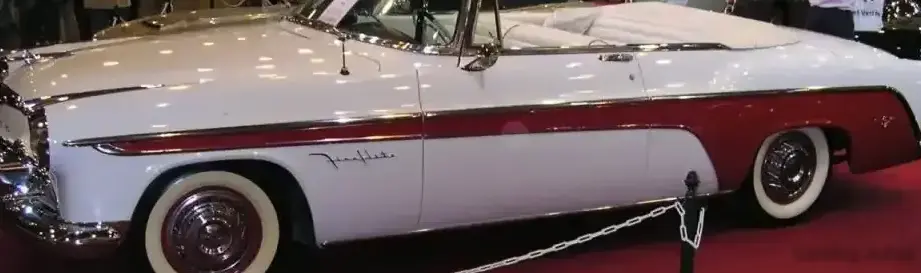
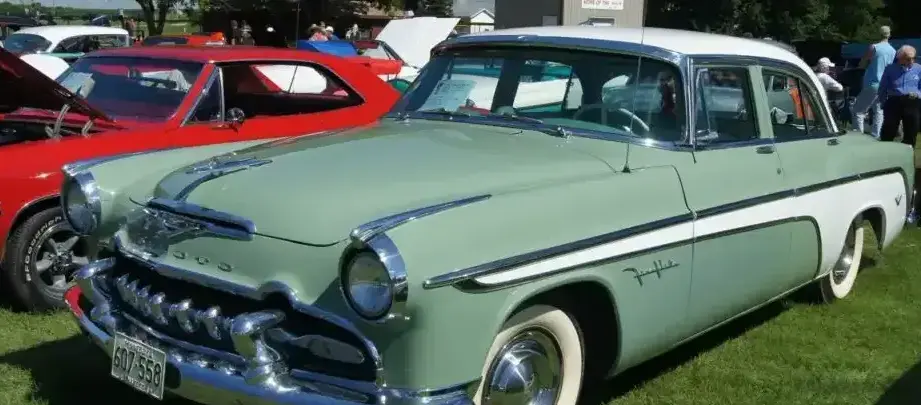
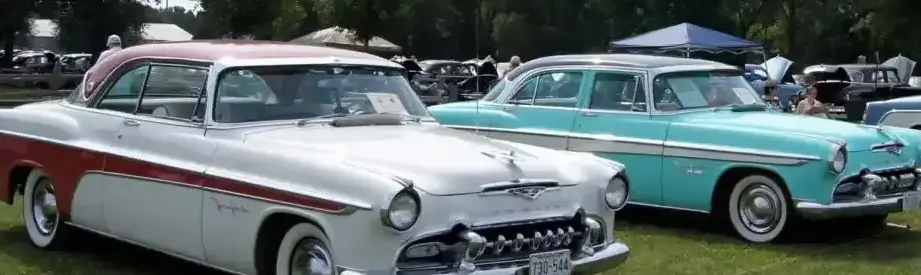
The DeSoto Fireflite III Four-Door Sedan, as presented in its 1958 facelift, represented a significant offering from the Chrysler Corporation’s mid-range brand. Produced for the 1957 and 1958 model years, the Fireflite occupied a sweet spot in the DeSoto lineup, positioned above the entry-level Firesweep and below the more luxurious Fireside. This particular variant, equipped with the 5.9-liter V8 engine producing 305 horsepower and paired with the TorqueFlite automatic transmission, aimed to deliver a blend of performance, comfort, and style to the American family car market. The Fireflite’s design reflected the styling trends of the late 1950s, characterized by bold tailfins, generous chrome accents, and a spacious interior.
Technical Specifications
| Brand | DeSoto |
| Model | Fireflite |
| Generation | Fireflite III Four-Door Sedan (facelift 1958) |
| Type (Engine) | 5.9 V8 (305 Hp) TorqueFlite |
| Start of production | 1957 |
| End of production | 1958 |
| Powertrain Architecture | Internal Combustion engine |
| Body type | Sedan |
| Seats | 6 |
| Doors | 4 |
| Fuel Type | Petrol (Gasoline) |
| Weight-to-power ratio | 6.2 kg/Hp, 161.5 Hp/tonne |
| Weight-to-torque ratio | 3.5 kg/Nm, 286.9 Nm/tonne |
| Power | 305 Hp @ 4600 rpm |
| Power per litre | 51.6 Hp/l |
| Torque | 542 Nm @ 2800 rpm, 399.76 lb.-ft. @ 2800 rpm |
| Engine displacement | 5916 cm3, 361.02 cu. in. |
| Number of cylinders | 8 |
| Engine configuration | V-engine |
| Cylinder Bore | 104.65 mm, 4.12 in. |
| Piston Stroke | 85.85 mm, 3.38 in. |
| Compression ratio | 10:1 |
| Number of valves per cylinder | 2 |
| Fuel injection system | Carburettor |
| Engine aspiration | Naturally aspirated engine |
| Valvetrain | OHV |
| Engine oil capacity | 3.8 l, 4.02 US qt | 3.34 UK qt |
| Coolant | 16.1 l, 17.01 US qt | 14.17 UK qt |
| Kerb Weight | 1889 kg, 4164.53 lbs |
| Fuel tank capacity | 87 l, 22.98 US gal | 19.14 UK gal |
| Length | 5552 mm, 218.58 in |
| Width | 1989 mm, 78.31 in |
| Height | 1450 mm, 57.09 in |
| Wheelbase | 3200 mm, 125.98 in |
| Front track | 1549 mm, 60.98 in |
| Rear (Back) track | 1516 mm, 59.69 in |
| Front overhang | 892 mm, 35.12 in |
| Rear overhang | 1461 mm, 57.52 in |
| Ride height (ground clearance) | 140 mm, 5.51 in |
| Minimum turning circle (turning diameter) | 15.1 m, 49.54 ft |
| Approach angle | 16.3° |
| Departure angle | 11.6° |
| Ramp-over (brakeover) angle | 10° |
| Drivetrain Architecture | The Internal combustion engine (ICE) drives the rear wheels of the vehicle. |
| Drive wheel | Rear wheel drive |
| Number of gears and type of gearbox | 3 gears, automatic transmission TorqueFlite |
| Front suspension | Independent coil spring |
| Rear suspension | Leaf spring |
| Front brakes | Drum, 305 mm |
| Rear brakes | Drum, 305 mm |
| Steering type | Worm-reduction unit |
Powertrain & Engine Architecture
The heart of the 1958 Fireflite was the Chrysler-built 5.9-liter (361 cubic inch) V8 engine. This engine, designated within Chrysler as the “B” engine family, featured a cast iron block and aluminum cylinder heads. The 305 horsepower output was achieved through a four-barrel carburetor, a relatively high 10:1 compression ratio, and a robust valvetrain utilizing overhead valves (OHV). The engine’s design prioritized low-end torque, making it well-suited for the demands of everyday driving and hauling a full passenger load. The TorqueFlite automatic transmission, a three-speed unit, was a Chrysler innovation known for its smoothness and durability. It featured a torque converter that multiplied engine torque, enhancing acceleration from a standstill. The transmission’s shift points were calibrated to provide comfortable and predictable operation, prioritizing ease of use over outright performance.
Driving Characteristics
The Fireflite with the 305 hp V8 and TorqueFlite transmission offered a comfortable and capable driving experience for its time. While not a sports car, the engine provided ample power for merging onto highways and passing other vehicles. The automatic transmission eliminated the need for manual gear changes, making it ideal for city driving and long road trips. Compared to the Firesweep’s smaller engine, the Fireflite offered a noticeable increase in performance. However, it wasn’t as nimble or fuel-efficient as some of its competitors equipped with smaller engines. The rear-wheel-drive layout and leaf spring rear suspension provided a stable ride, but it wasn’t particularly sophisticated in handling. The TorqueFlite’s gear ratios were optimized for cruising, with a focus on smooth acceleration rather than rapid shifts.
Equipment & Trim Levels
The 1958 Fireflite came standard with a generous array of features for the era. These included full wheel covers, whitewall tires, a two-tone paint scheme, and a spacious interior upholstered in cloth and vinyl. Power steering and power brakes were often included as standard equipment, enhancing the driving experience. Optional extras included air conditioning, a radio, and a continental kit (spare tire mounted on the rear bumper). Interior trim levels varied, with higher-end models offering more luxurious upholstery and additional chrome accents. The dashboard featured a prominent speedometer, fuel gauge, and temperature gauge, along with a selection of warning lights.
Chassis & Braking
The Fireflite utilized a body-on-frame construction, typical of American cars of the 1950s. The chassis featured an independent coil spring suspension in the front, providing a relatively comfortable ride. The rear suspension employed leaf springs, which were more robust and capable of handling heavier loads. Braking duties were handled by drum brakes on all four wheels. While adequate for the time, the drum brakes lacked the stopping power and fade resistance of modern disc brakes. The steering system utilized a worm-reduction unit, which provided a relatively heavy but precise steering feel.
Market Reception & Comparison
The 1958 Fireflite was generally well-received by automotive critics, who praised its stylish design, comfortable ride, and powerful engine. However, some critics noted its relatively high price and fuel consumption compared to competitors. Compared to the base Firesweep, the Fireflite offered a significant upgrade in performance and features, justifying its higher price tag. Against rivals like the Ford Fairlane and Chevrolet Bel Air, the Fireflite held its own in terms of style and comfort, but it wasn’t as widely popular. The Fireflite’s fuel economy was typical for a full-size American car of the era, averaging around 14-16 miles per gallon.
Legacy
The DeSoto Fireflite, particularly the 1957-1958 models, has become a sought-after classic car among collectors. The 5.9-liter V8 engine and TorqueFlite transmission are known for their durability and relative ease of maintenance. While parts availability can be a challenge, a dedicated network of suppliers caters to the classic DeSoto market. Today, well-maintained Fireflites command respectable prices, reflecting their historical significance and enduring appeal. The Fireflite represents a bygone era of American automotive design, characterized by bold styling, powerful engines, and a focus on comfort and convenience.