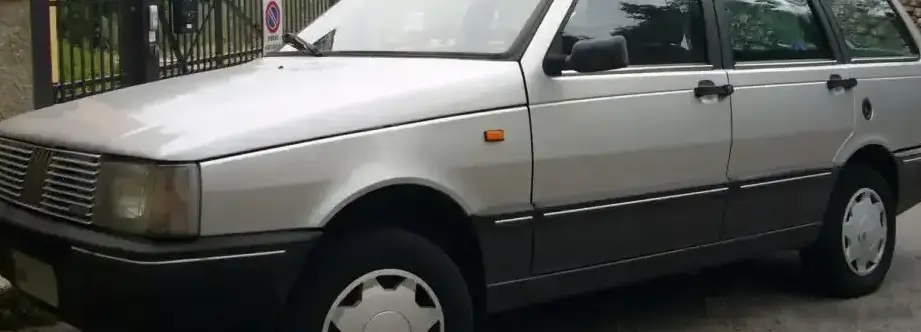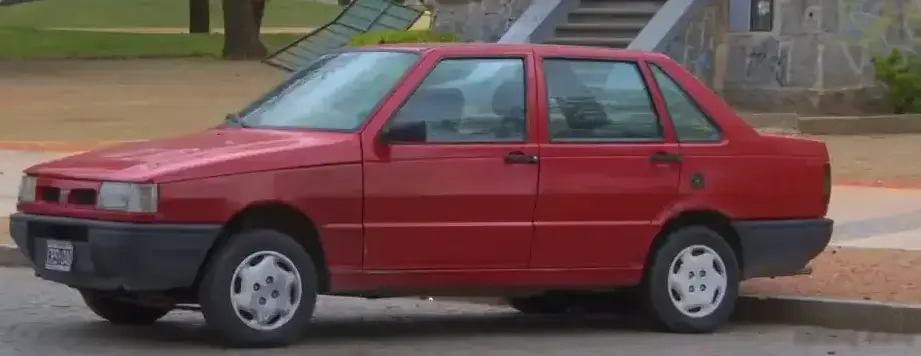
The Fiat Duna 70 1.3, produced between 1987 and 1991, represents an entry-level offering within the broader Fiat Duna (146 B) range. Positioned as an affordable and practical sedan, the Duna was designed to replace the aging Fiat 127, offering a more modern design and improved efficiency. This 67 horsepower variant, powered by the 146 A5.000 engine, served as the base model, targeting budget-conscious buyers in European and South American markets. It was a key component of Fiat’s strategy to provide accessible transportation during a period of economic change.
Technical Specifications
| Brand | Fiat |
| Model | Duna |
| Generation | Duna (146 B) |
| Type (Engine) | 70 1.3 (67 Hp) |
| Start of Production | 1987 |
| End of Production | 1991 |
| Powertrain Architecture | Internal Combustion Engine |
| Body Type | Sedan |
| Fuel Type | Petrol (Gasoline) |
| Power | 67 Hp |
| Engine Model/Code | 146 A5.000 |
| Engine Aspiration | Naturally Aspirated |
| Engine Oil Capacity | 3.8 l (4.02 US qt | 3.34 UK qt) |
| Coolant Capacity | 6 l (6.34 US qt | 5.28 UK qt) |
Powertrain & Engine Architecture
The heart of the Duna 70 1.3 is the 146 A5.000 engine, a 1.3-liter inline-four cylinder gasoline engine. This engine is a relatively simple design, featuring a single overhead camshaft (SOHC) operating two valves per cylinder. Fuel delivery is managed by a single-point fuel injection system, a common feature for vehicles of this era aiming for cost-effectiveness. While not particularly powerful, the engine was known for its durability and relatively low maintenance requirements. The engine’s bore and stroke are 76.2 mm x 80.5 mm, resulting in a displacement of 1301 cc. The compression ratio is 9.2:1. The engine produces 67 horsepower (49.6 kW) at 6000 rpm and 88 Nm (65 lb-ft) of torque at 3600 rpm. The Duna 70 1.3 was exclusively offered with a four-speed manual transmission, reflecting its focus on affordability and simplicity. An automatic transmission was not available on this base model.
Driving Characteristics
The driving experience in the Duna 70 1.3 is best described as utilitarian. With only 67 horsepower propelling a vehicle weighing approximately 830 kg (1830 lbs), acceleration is modest. Zero to 60 mph times were not a priority for this vehicle, and realistically, it took well over 15 seconds to achieve that speed. The four-speed manual transmission offers a straightforward driving experience, with gear ratios geared towards fuel efficiency rather than performance. The first gear is relatively short, aiding in initial acceleration, while the higher gears are spaced to maintain reasonable fuel economy on the highway. The suspension, consisting of MacPherson struts in the front and a twist-beam axle in the rear, provides a comfortable, if somewhat unrefined, ride. Handling is predictable but not sporty, with noticeable body roll during cornering. Compared to the later, more powerful 1.5-liter versions of the Duna, the 70 1.3 feels significantly underpowered, particularly when carrying passengers or cargo. However, its simplicity and light weight contribute to its maneuverability in urban environments.
Equipment & Trim Levels
The Duna 70 1.3 was intentionally kept basic in terms of equipment to maintain its low price point. Standard features typically included cloth upholstery, vinyl floor covering, and a simple dashboard layout with basic instrumentation – speedometer, fuel gauge, and temperature gauge. Power steering and air conditioning were not standard, and often not even available as options on this base trim level. The exterior featured steel wheels with hubcaps, black plastic bumpers, and minimal chrome trim. Optional extras were limited, but could include a radio, upgraded seat upholstery, and occasionally, a sunroof. The interior plastics were durable but utilitarian, reflecting the car’s overall focus on practicality. The Duna 70 1.3 was designed to be a no-frills transportation solution.
Chassis & Braking
The Duna 70 1.3 utilizes a relatively conventional chassis design for a vehicle of its era. The front suspension employs MacPherson struts, providing a reasonable level of comfort and handling. The rear suspension features a twist-beam axle, a cost-effective solution that prioritizes simplicity and space efficiency. Braking is handled by disc brakes in the front and drum brakes in the rear. The braking system is adequate for the vehicle’s weight and performance, but lacks the stopping power of more modern vehicles. Steering is manual rack and pinion, providing a direct but somewhat heavy feel. The Duna’s relatively lightweight construction helps to offset the limitations of its basic chassis and braking components.
Market Reception & Comparison
The Fiat Duna 70 1.3 was generally well-received as an affordable and reliable transportation option, particularly in markets where budget-conscious buyers were prevalent. Critics acknowledged its simplicity and practicality, but also noted its lack of refinement and performance. Compared to other vehicles in its class, such as the Renault 9 or Peugeot 205, the Duna offered a competitive price point but lacked the more sophisticated features and driving dynamics of its rivals. Fuel economy was a strong point, with the Duna 70 1.3 achieving around 35-40 mpg in mixed driving conditions. Reliability was generally good, with the 1.3-liter engine proving to be durable and relatively easy to maintain. However, the basic interior and lack of features were often cited as drawbacks.
Legacy
The Fiat Duna, and specifically the 70 1.3 variant, holds a modest but significant place in automotive history. It represented Fiat’s commitment to providing affordable transportation during a period of economic transition. While not a groundbreaking vehicle, it served as a reliable and practical option for many drivers. Today, the Duna 70 1.3 is a relatively rare sight, and well-maintained examples are becoming increasingly sought after by classic car enthusiasts. The 146 A5.000 engine, while simple, is known for its longevity, and many examples are still running today. The Duna’s legacy lies in its affordability, reliability, and its role as a practical transportation solution for a generation of drivers.