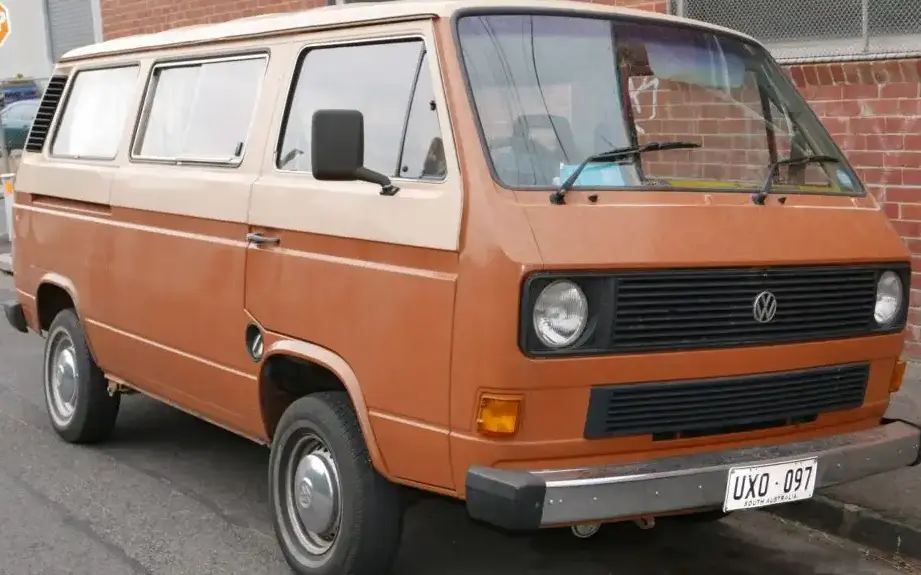
The Volkswagen Caravelle (T6.1), specifically the long wheelbase variant powered by the 2.0 TDI 150 horsepower engine, represents a mid-cycle refresh of the popular T6 Transporter platform. Introduced in 2019 and continuing through 2020, this version of the Caravelle aimed to balance practicality, comfort, and efficiency for families and businesses alike. Positioned as a versatile people-carrier, the T6.1 Caravelle offered a step up in refinement and technology compared to earlier T6 models, while maintaining the core functionality that made the Transporter range so successful in the European market. This particular engine and configuration was a common choice, offering a good compromise between performance and fuel economy for those not requiring the higher outputs of the biturbo variants.
Technical Specifications
| Brand | Volkswagen |
| Model | Caravelle |
| Generation | Caravelle (T6.1, facelift 2019) Long |
| Type (Engine) | 2.0 TDI (150 Hp) |
| Start of production | 2019 |
| End of production | 2020 |
| Powertrain Architecture | Internal Combustion engine |
| Body type | Van |
| Seats | 4-9 |
| Doors | 4-5 |
| Fuel consumption (urban) | 7.6-8.2 l/100 km (30.9 – 28.7 US mpg, 37.2 – 34.4 UK mpg, 13.2 – 12.2 km/l) |
| Fuel consumption (extra urban) | 5.6-6.5 l/100 km (42 – 36.2 US mpg, 50.4 – 43.5 UK mpg, 17.9 – 15.4 km/l) |
| Fuel consumption (combined) | 6.4-7.2 l/100 km (36.8 – 32.7 US mpg, 44.1 – 39.2 UK mpg, 15.6 – 13.9 km/l) |
| CO2 emissions | 168-189 g/km |
| Fuel Type | Diesel |
| Acceleration 0 – 100 km/h | 11.9 sec |
| Acceleration 0 – 62 mph | 11.9 sec |
| Acceleration 0 – 60 mph | 11.3 sec |
| Maximum speed | 183 km/h (113.71 mph) |
| Emission standard | Euro 6d TEMP-EVAP-ISC |
| Weight-to-power ratio | 13.8 kg/Hp, 72.4 Hp/tonne |
| Weight-to-torque ratio | 6.1 kg/Nm, 164.1 Nm/tonne |
| Power | 150 Hp @ 3250-3750 rpm |
| Power per litre | 76.2 Hp/l |
| Torque | 340 Nm @ 1500-3000 rpm (250.77 lb.-ft. @ 1500-3000 rpm) |
| Engine layout | Front, Transverse |
| Engine Model/Code | EA288 / CXFA, CXHA |
| Engine displacement | 1968 cm3 (120.09 cu. in.) |
| Number of cylinders | 4 |
| Engine configuration | Inline |
| Cylinder Bore | 81 mm (3.19 in.) |
| Piston Stroke | 95.5 mm (3.76 in.) |
| Compression ratio | 15.5:1 |
| Number of valves per cylinder | 4 |
| Fuel injection system | Diesel Commonrail |
| Engine aspiration | Turbocharger, Intercooler |
| Valvetrain | DOHC |
| Engine oil capacity | 7.4 l (7.82 US qt | 6.51 UK qt) |
| Kerb Weight | 2072-2364 kg (4567.98 – 5211.73 lbs.) |
| Max. weight | 3080-3200 kg (6790.24 – 7054.79 lbs.) |
| Max load | 836-1008 kg (1843.06 – 2222.26 lbs.) |
| Trunk (boot) space – maximum | 6700 l (236.61 cu. ft.) |
| Fuel tank capacity | 70 l (18.49 US gal | 15.4 UK gal) |
| AdBlue tank | 13 l (3.43 US gal | 2.86 UK gal) |
| Max. roof load | 100 kg (220.46 lbs.) |
| Permitted trailer load with brakes (12%) | 2500 kg (5511.56 lbs.) |
| Permitted trailer load without brakes | 750 kg (1653.47 lbs.) |
| Permitted towbar download | 100 kg (220.46 lbs.) |
| Length | 5304 mm (208.82 in.) |
| Width | 1904 mm (74.96 in.) |
| Width including mirrors | 2297 mm (90.43 in.) |
| Height | 1990 mm (78.35 in.) |
| Wheelbase | 3400 mm (133.86 in.) |
| Front overhang | 906 mm (35.67 in.) |
| Rear overhang | 998 mm (39.29 in.) |
| Ride height (ground clearance) | 202 mm (7.95 in.) |
| Minimum turning circle | 13.2 m (43.31 ft.) |
| Front suspension | Independent, type McPherson with coil spring and anti-roll bar |
| Rear suspension | Independent coil spring, Wishbone, Transverse stabilizer |
| Front brakes | Ventilated discs, 308×29.5 mm |
| Rear brakes | Ventilated discs, 294×22 mm |
| Drive wheel | Front wheel drive |
| Number of gears | 6 |
| Gearbox type | manual transmission |
Powertrain & Engine Architecture
The heart of this Caravelle variant is the Volkswagen Group’s EA288 series 2.0-liter four-cylinder diesel engine. Specifically, engine codes CXFA and CXHA were commonly found in this application. This engine utilizes a common rail direct injection system, delivering fuel at extremely high pressures for optimized combustion. The turbocharger, coupled with an intercooler, provides a boost in power and torque, allowing for reasonable performance despite the vehicle’s size and weight. The engine features a DOHC (Double Overhead Camshaft) valvetrain with four valves per cylinder, enhancing breathing and contributing to its efficiency. The 150 horsepower output is achieved between 3250 and 3750 rpm, while the peak torque of 340 Nm (250.77 lb-ft) is available from a low 1500 rpm, providing good pulling power. The engine is paired with a six-speed manual transmission, chosen for its durability and efficiency. While a seven-speed DSG (Dual Clutch Gearbox) was available on other T6.1 models, the six-speed manual was a popular choice for those prioritizing cost and simplicity.
Driving Characteristics
The 2.0 TDI 150 hp Caravelle, with its manual transmission, offers a practical and reasonably engaging driving experience. Acceleration is adequate, taking around 11.9 seconds to reach 62 mph (100 km/h), but it’s not designed for outright speed. The strength of this powertrain lies in its mid-range torque, making it well-suited for carrying passengers and luggage, even on inclines. The six-speed gearbox is well-matched to the engine, providing sufficient ratios for both relaxed cruising and spirited driving. Compared to the more powerful biturbo TDI engines, this variant feels less strained during everyday use. The manual transmission provides more driver involvement than the DSG option, but requires more effort in stop-and-go traffic. The front-wheel-drive configuration provides predictable handling, although it can exhibit some torque steer under hard acceleration.
Equipment & Trim Levels
The Caravelle trim level generally included features such as air conditioning, power windows, central locking, and a basic audio system. Higher-spec Caravelles could be equipped with features like climate control, a touchscreen infotainment system with navigation, parking sensors, and upgraded upholstery. Interior trim levels varied, with options ranging from cloth seats to leatherette or full leather. The long wheelbase version of the Caravelle offered increased space in the rear, making it ideal for larger families or those requiring ample cargo capacity. Optional extras included features like a panoramic sunroof, auxiliary heating, and various driver-assistance systems.
Chassis & Braking
The T6.1 Caravelle utilizes an independent suspension setup, with McPherson struts at the front and a multi-link arrangement at the rear. This provides a comfortable ride quality, even when the vehicle is fully loaded. Anti-roll bars are fitted to both axles to reduce body roll during cornering. The braking system consists of ventilated discs on all four wheels, providing adequate stopping power. ABS (Anti-lock Braking System) is standard. The Caravelle’s weight, ranging from 2072 to 2364 kg (4567.98 – 5211.73 lbs.), necessitates a robust braking system to ensure safe and controlled deceleration.
Market Reception & Comparison
The 2.0 TDI 150 hp Caravelle was well-received in the European market as a practical and versatile people-carrier. Critics praised its comfortable ride, spacious interior, and fuel efficiency. Compared to the more expensive biturbo TDI variants, this version offered a more affordable entry point into the Caravelle range. The manual transmission was seen as a positive by some, offering a more engaging driving experience, while others preferred the convenience of the DSG gearbox. Fuel economy figures of 6.4-7.2 l/100 km (36.8 – 32.7 US mpg) were considered competitive for a vehicle of this size and type. Reliability was generally good, although diesel particulate filter (DPF) issues could occur with frequent short journeys.
Legacy
The Volkswagen Caravelle T6.1 2.0 TDI 150 hp remains a popular choice in the used car market. Its reputation for reliability, practicality, and fuel efficiency continues to attract buyers. The EA288 engine, while not without its potential issues (such as DPF clogging and timing chain wear), is generally considered durable when properly maintained. The long wheelbase version is particularly sought after for its increased space. As with any used vehicle, a thorough inspection is recommended before purchase, paying particular attention to the engine’s service history and the condition of the DPF.