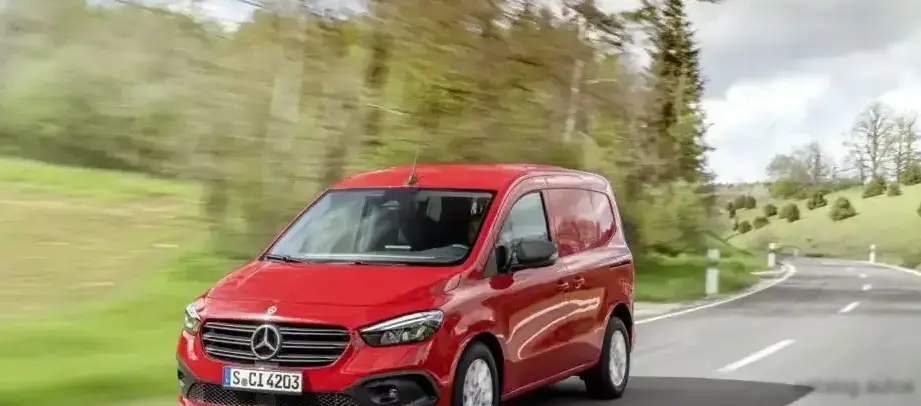
The Mercedes-Benz Citan Tourer Long (W415) 112 BlueEFFICIENCY, produced from 2013 to 2015, represents a key variant within the first generation of the Citan compact van. Positioned as a practical and economical option, this model aimed to provide a versatile vehicle for both commercial and family use. The “Long” designation indicates an extended wheelbase, offering increased cargo capacity compared to the standard Citan. The 112 designation refers to the engine output, signifying approximately 112 horsepower, while “BlueEFFICIENCY” denotes Mercedes-Benz’s fuel-saving technologies implemented in this version. It was built in collaboration with Renault, sharing its platform and many components with the Renault Kangoo. This model was primarily marketed in Europe, offering a more premium alternative to other small vans in its class.
Technical Specifications
| Brand | Mercedes-Benz |
| Model | Citan |
| Generation | Citan Tourer Long (W415) |
| Type (Engine) | 112 (114 Hp) BlueEFFICIENCY |
| Start of production | 2013 |
| End of production | 2015 |
| Powertrain Architecture | Internal Combustion engine |
| Body type | Minivan |
| Seats | 5 |
| Doors | 5 |
| Fuel consumption (urban) | 7.2 l/100 km (32.7 US mpg) |
| Fuel consumption (extra urban) | 5.4 l/100 km (43.6 US mpg) |
| Fuel consumption (combined) | 6.1 l/100 km (38.6 US mpg) |
| CO2 emissions | 140 g/km |
| Fuel Type | Petrol (Gasoline) |
| Emission standard | Euro 5 |
| Weight-to-power ratio | 12 kg/Hp |
| Weight-to-torque ratio | 7.2 kg/Nm |
| Power | 114 Hp @ 4500 rpm |
| Torque | 190 Nm @ 2000-4000 rpm (140.14 lb.-ft.) |
| Engine layout | Front, Transverse |
| Engine Model/Code | M 200.711 |
| Engine displacement | 1192 cm3 (72.74 cu. in.) |
| Number of cylinders | 4 |
| Engine configuration | Inline |
| Cylinder Bore | 72 mm (2.83 in.) |
| Piston Stroke | 73.2 mm (2.88 in.) |
| Number of valves per cylinder | 4 |
| Fuel injection system | Direct injection |
| Engine aspiration | Turbocharger, Intercooler |
| Valvetrain | DOHC |
| Engine oil capacity | 4.8 l (5.07 US qt) |
| Coolant capacity | 10.3 l (10.88 US qt) |
| Kerb Weight | 1365 kg (3009.31 lbs.) |
| Max. weight | 1920 kg (4232.88 lbs.) |
| Max load | 555 kg (1223.57 lbs.) |
| Trunk space (min) | 685 l (24.19 cu. ft.) |
| Trunk space (max) | 3000 l (105.94 cu. ft.) |
| Fuel tank capacity | 60 l (15.85 US gal) |
| Max. roof load | 100 kg (220.46 lbs.) |
| Permitted trailer load (braked) | 1050 kg (2314.85 lbs.) |
| Permitted trailer load (unbraked) | 690 kg (1521.19 lbs.) |
| Permitted towbar download | 75 kg (165.35 lbs.) |
| Length | 4321 mm (170.12 in.) |
| Width | 1829 mm (72.01 in.) |
| Width including mirrors | 2138 mm (84.17 in.) |
| Height | 1809 mm (71.22 in.) |
| Wheelbase | 2697 mm (106.18 in.) |
| Minimum turning circle | 11.2 m (36.75 ft.) |
| Drivetrain | Front wheel drive |
| Number of gears | 6 |
| Gearbox type | Manual transmission |
| Front suspension | Independent type McPherson |
| Rear suspension | Torsion |
| Front brakes | Ventilated discs |
| Rear brakes | Disc |
| Assisting systems | ABS (Anti-lock braking system) |
| Steering type | Steering rack and pinion |
| Power steering | Electric |
| Tires size | 195/65 R15 |
| Wheel rims size | 6.5J x 15 |
Powertrain & Engine Architecture
The Citan 112 BlueEFFICIENCY is powered by the M 200.711 engine, a 1.2-liter inline-four cylinder gasoline engine. This engine is turbocharged and features direct fuel injection, contributing to its relatively efficient performance. The engine utilizes a double overhead camshaft (DOHC) valvetrain, optimizing airflow for improved power output. The turbocharger and intercooler work in tandem to increase air density entering the engine, boosting horsepower and torque. Paired with this engine is a six-speed manual transmission, chosen for its fuel efficiency and driver engagement. This transmission was a standard offering, with no automatic option available for this specific variant. The engine’s design prioritizes low-end torque, making it suitable for everyday driving and light commercial applications.
Driving Characteristics
The 114 horsepower and 190 Nm (140 lb-ft) of torque provided by the 1.2-liter engine delivered adequate, though not exhilarating, performance. Acceleration was reasonable for a vehicle of this type, but it wasn’t designed for rapid speeds. The six-speed manual transmission allowed drivers to keep the engine in its optimal power band, maximizing efficiency and responsiveness. Compared to the more powerful 1.5 dCi diesel variants, the 112 BlueEFFICIENCY felt less capable when fully loaded or tackling steep inclines. However, its lighter weight and responsive engine made it more nimble in urban environments. The gear ratios were tuned for fuel economy, resulting in a slightly higher engine speed at highway cruising speeds compared to some competitors.
Equipment & Trim Levels
The Citan Tourer Long 112 BlueEFFICIENCY typically came equipped with a practical, yet functional interior. Standard features included air conditioning, power windows, a basic audio system, and a driver’s airbag. The interior upholstery was typically a durable cloth material. The dashboard layout was straightforward and focused on functionality. Optional extras included a navigation system, parking sensors, and upgraded audio systems. The “Tourer” designation meant it included features geared towards passenger comfort, such as more refined interior trim and additional sound insulation compared to the base Citan panel van. The long wheelbase version offered significantly more cargo space, making it ideal for families or businesses needing to transport larger items.
Chassis & Braking
The Citan Tourer Long utilized a McPherson strut independent suspension system at the front, providing a comfortable ride and predictable handling. The rear suspension employed a torsion beam setup, which was cost-effective and provided adequate stability for most driving conditions. The braking system consisted of ventilated discs at the front and solid discs at the rear. Anti-lock Braking System (ABS) was standard, enhancing safety during emergency braking situations. The steering was rack and pinion with electric power assistance, offering light and precise steering feel. The suspension was tuned to balance ride comfort with load-carrying capability.
Market Reception & Comparison
The Citan Tourer Long 112 BlueEFFICIENCY was generally well-received by critics for its practicality, fuel efficiency, and competitive pricing. However, some reviewers noted that the engine lacked the refinement and power of some of its competitors. Compared to the diesel-powered Citan variants, the 112 offered lower running costs in terms of fuel, but potentially higher maintenance costs due to the complexity of the turbocharger and direct injection system. The petrol engine was favored by those who primarily drove shorter distances and didn’t require the extra torque of a diesel. Its fuel economy of around 38.6 US mpg combined was competitive within its segment.
Legacy
The Mercedes-Benz Citan Tourer Long 112 BlueEFFICIENCY remains a relatively common sight on European roads. The M 200.711 engine, while not known for being exceptionally durable, has proven to be reasonably reliable with proper maintenance. Common issues include turbocharger wear and potential problems with the direct injection system. In the used car market, these Citans are often sought after for their affordability and practicality. They represent a good value for buyers looking for a versatile and economical small van. The Citan’s success paved the way for the second-generation model, which further refined the formula and addressed some of the shortcomings of the original.