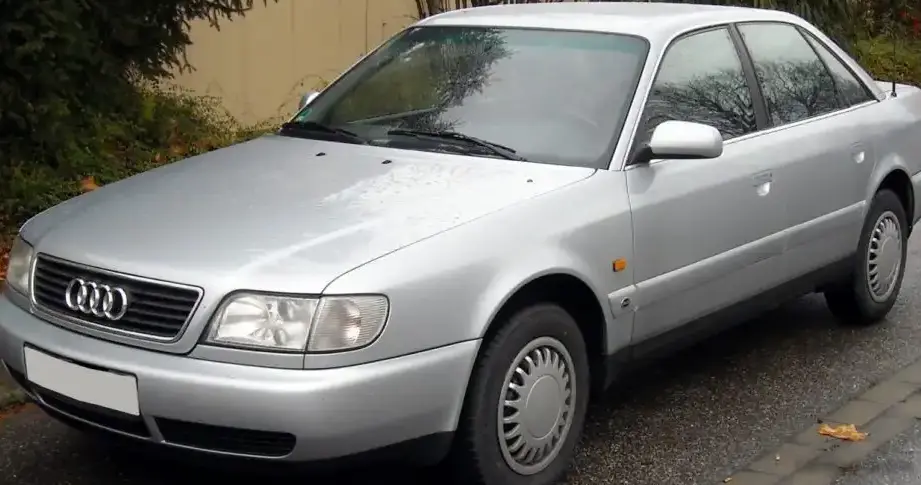
The Audi A6 Avant (4B, C5) 2.8 V6 30V, produced between 1998 and 2000, represents a significant iteration of Audi’s mid-size executive wagon. Part of the C5 generation A6 range (1997-2004), the Avant – Audi’s designation for its station wagon models – offered a blend of practicality, performance, and the sophisticated engineering expected of the brand. This particular variant, powered by the 2.8-liter V6 engine producing 193 horsepower, occupied a sweet spot in the lineup, offering a substantial step up in performance from the four-cylinder models while remaining more accessible than the flagship V8 options. It was primarily marketed in Europe and other international markets, where the demand for premium wagons remained strong.
Technical Specifications
| Brand | Audi |
| Model | A6 |
| Generation | A6 Avant (4B,C5) |
| Type (Engine) | 2.8 V6 30V (193 Hp) |
| Start of production | 1998 |
| End of production | 2000 |
| Powertrain Architecture | Internal Combustion engine |
| Body type | Station wagon (estate) |
| Seats | 5 |
| Doors | 5 |
| Fuel consumption (economy) – urban | 14.3 l/100 km (16.4 US mpg, 19.8 UK mpg, 7 km/l) |
| Fuel consumption (economy) – extra urban | 7.3 l/100 km (32.2 US mpg, 38.7 UK mpg, 13.7 km/l) |
| Fuel consumption (economy) – combined | 9.9 l/100 km (23.8 US mpg, 28.5 UK mpg, 10.1 km/l) |
| CO2 emissions | 238 g/km |
| Fuel Type | Petrol (Gasoline) |
| Acceleration 0 – 100 km/h | 8.4 sec |
| Acceleration 0 – 62 mph | 8.4 sec |
| Acceleration 0 – 60 mph | 8 sec |
| Maximum speed | 234 km/h (145.4 mph) |
| Weight-to-power ratio | 7.8 kg/Hp, 127.8 Hp/tonne |
| Weight-to-torque ratio | 5.4 kg/Nm, 185.4 Nm/tonne |
| Power | 193 Hp @ 6000 rpm |
| Power per litre | 69.6 Hp/l |
| Torque | 280 Nm @ 3200 rpm (206.52 lb.-ft. @ 3200 rpm) |
| Engine layout | Front, Longitudinal |
| Engine Model/Code | ACK, AHA, ALG, AMX, APR, AQD |
| Engine displacement | 2771 cm3 (169.1 cu. in.) |
| Number of cylinders | 6 |
| Engine configuration | V-engine |
| Cylinder Bore | 82.5 mm (3.25 in.) |
| Piston Stroke | 86.4 mm (3.4 in.) |
| Compression ratio | 10.6:1 |
| Number of valves per cylinder | 5 |
| Fuel injection system | Multi-port manifold injection |
| Engine aspiration | Naturally aspirated engine |
| Valvetrain | DOHC |
| Engine oil capacity | 5.5 l (5.81 US qt | 4.84 UK qt) |
| Coolant | 6 l (6.34 US qt | 5.28 UK qt) |
| Kerb Weight | 1510 kg (3328.98 lbs.) |
| Max. weight | 2090 kg (4607.66 lbs.) |
| Max load | 580 kg (1278.68 lbs.) |
| Trunk (boot) space – minimum | 455 l (16.07 cu. ft.) |
| Trunk (boot) space – maximum | 1590 l (56.15 cu. ft.) |
| Fuel tank capacity | 70 l (18.49 US gal | 15.4 UK gal) |
| Max. roof load | 100 kg (220.46 lbs.) |
| Permitted trailer load with brakes (8%) | 1900 kg (4188.78 lbs.) |
| Permitted trailer load with brakes (12%) | 1700 kg (3747.86 lbs.) |
| Permitted trailer load without brakes | 750 kg (1653.47 lbs.) |
| Permitted towbar download | 85 kg (187.39 lbs.) |
| Length | 4796 mm (188.82 in.) |
| Width | 1810 mm (71.26 in.) |
| Height | 1479 mm (58.23 in.) |
| Wheelbase | 2760 mm (108.66 in.) |
| Front track | 1540 mm (60.63 in.) |
| Rear (Back) track | 1569 mm (61.77 in.) |
| Drag coefficient (Cd) | 0.31 |
| Minimum turning circle (turning diameter) | 11.68 m (38.32 ft.) |
| Drivetrain Architecture | The Internal combustion engine (ICE) drives the front wheels of the vehicle. |
| Drive wheel | Front wheel drive |
| Number of gears and type of gearbox | 5 gears, manual transmission |
| Front suspension | Independent multi-link suspension |
| Rear suspension | Semi-independent, coil spring |
| Front brakes | Ventilated discs |
| Rear brakes | Disc |
| Assisting systems | ABS (Anti-lock braking system) |
| Steering type | Steering rack and pinion |
| Power steering | Hydraulic Steering |
| Tires size | 205/55 R16 |
| Wheel rims size | 7J x 16 |
Powertrain & Engine Architecture
The heart of the A6 Avant 2.8 V6 30V is the ACK (and related codes like AHA, ALG, AMX, APR, AQD) 2.8-liter naturally aspirated V6 engine. This engine, a mainstay of Audi’s lineup during the late 1990s, features a 90-degree V-angle for inherent smoothness. It utilizes a cast iron block with an aluminum cylinder head, incorporating five valves per cylinder (three intake, two exhaust) operated by dual overhead camshafts (DOHC). Fuel delivery is managed by a Bosch Motronic multi-port fuel injection system, providing precise control over the air-fuel mixture. The 30V designation refers to the total number of valves in the engine. The engine’s design prioritized a broad torque curve, making it flexible and responsive in everyday driving. The engine was typically paired with a five-speed manual transmission, but a four-speed automatic transmission (often the 5HP24) was also available, and is the focus of this article. This automatic transmission was known for its smoothness and reliability, though it did contribute to slightly lower fuel economy compared to the manual.
Driving Characteristics
The 2.8 V6 with the four-speed automatic transmission delivered a comfortable and refined driving experience. While not as overtly sporty as the manual version or the higher-output models, it provided ample power for highway cruising and overtaking. The automatic transmission, while smooth, did result in some power loss compared to the manual, and gear changes weren’t as immediate. The 0-60 mph time of around 8 seconds was respectable for the era. The engine’s torque peak at 3200 rpm meant that strong acceleration was readily available without needing to rev the engine excessively. The front-wheel-drive configuration provided good traction in most conditions, but could exhibit some understeer when pushed hard. The overall driving experience was geared towards comfort and ease of use, making it an ideal choice for long-distance journeys and family transportation.
Equipment & Trim Levels
The A6 Avant 2.8 V6 Automatic typically came well-equipped, reflecting Audi’s position as a premium brand. Standard features included power windows, power locks, a sunroof, climate control, and an upgraded audio system. Interior upholstery was typically cloth, with leather options available as an upgrade. Dashboard trim could vary, with wood or aluminum accents offered. Optional extras included navigation systems, heated seats, and upgraded wheels. The specific trim level (e.g., base, SE) determined the level of standard equipment, with higher trims offering more luxurious features.
Chassis & Braking
The C5 A6 Avant featured an independent multi-link front suspension, providing excellent ride quality and handling. The rear suspension utilized a semi-independent coil spring setup. Braking duties were handled by ventilated discs at the front and solid discs at the rear, with ABS (Anti-lock Braking System) standard. The suspension was tuned to prioritize comfort, but still offered a reasonably controlled driving experience. Stabilizer bars were fitted front and rear to reduce body roll during cornering.
Market Reception & Comparison
The A6 Avant 2.8 V6 Automatic was generally well-received by automotive critics. It was praised for its comfortable ride, spacious interior, and refined engine. However, some critics noted that the automatic transmission dulled the engine’s performance somewhat. Compared to the 1.8T models, the 2.8 V6 offered significantly more power and a smoother driving experience, but at a higher price point. The 2.8 V6 also proved more reliable than the early 1.8T engines, which were prone to oil consumption issues. Fuel economy was reasonable for a V6 engine of this size, but not exceptional.
Legacy
The Audi A6 Avant 2.8 V6 30V, particularly with the automatic transmission, has proven to be a relatively reliable and durable vehicle. The ACK engine is known for its longevity, provided it receives regular maintenance. Today, these cars are increasingly sought after by enthusiasts and collectors, particularly well-maintained examples. While parts availability is generally good, some components specific to the C5 generation A6 can be becoming harder to find. The combination of practicality, performance, and Audi’s build quality has ensured that the A6 Avant 2.8 V6 30V remains a desirable and respected vehicle in the used car market.