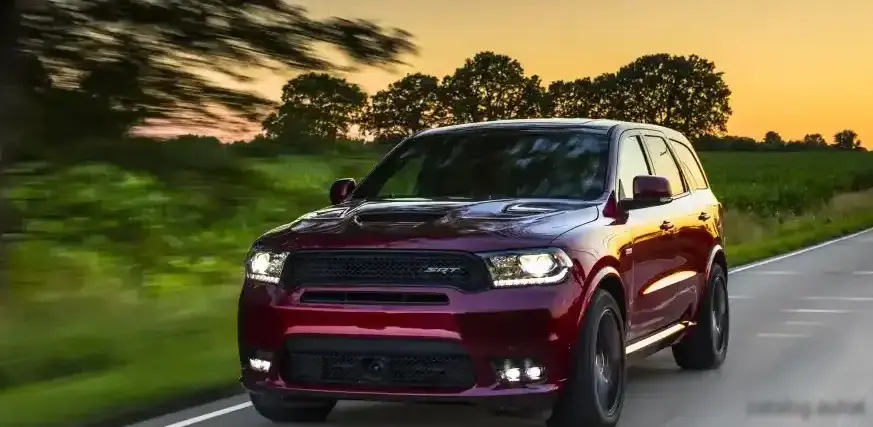
The Dodge Durango III, specifically the facelifted version produced from 2014 to 2020, represented a significant step forward for the American SUV. Among the various engine and drivetrain configurations offered, the 5.7-liter V8 HEMI paired with an eight-speed automatic transmission stands out as a popular and well-regarded choice. This variant occupied a sweet spot in the Durango lineup, offering a substantial increase in performance and towing capacity compared to the base V6 models, without reaching the higher price point of the performance-oriented SRT trim. Built on the WD platform, the Durango aimed to blend full-size SUV practicality with a more manageable footprint and a focus on on-road comfort.
Technical Specifications
| Brand | Dodge |
| Model | Durango |
| Generation | Durango III (WD, facelift 2014) |
| Type (Engine) | 5.7 V8 (360 Hp) HEMI |
| Start of production | 2014 |
| End of production | 2020 |
| Powertrain Architecture | Internal Combustion engine |
| Body type | SUV |
| Seats | 7 |
| Doors | 4 |
| Fuel consumption (economy) – urban | 16.8 l/100 km (14 US mpg, 16.8 UK mpg, 6 km/l) |
| Fuel consumption (economy) – extra urban | 10.7 l/100 km (22 US mpg, 26.4 UK mpg, 9.3 km/l) |
| Fuel consumption (economy) – combined | 13.8 l/100 km (17 US mpg, 20.5 UK mpg, 7.2 km/l) |
| Fuel Type | Petrol (Gasoline) |
| Weight-to-power ratio | 6.5 kg/Hp, 153.3 Hp/tonne |
| Weight-to-torque ratio | 4.4 kg/Nm, 225.3 Nm/tonne |
| Power | 360 Hp @ 5150 rpm |
| Power per litre | 63.7 Hp/l |
| Torque | 529 Nm @ 4250 rpm (390.17 lb.-ft. @ 4250 rpm) |
| Maximum engine speed | 5800 rpm |
| Engine layout | Front, Longitudinal |
| Engine displacement | 5654 cm3 (345.03 cu. in.) |
| Number of cylinders | 8 |
| Engine configuration | V-engine |
| Cylinder Bore | 99.5 mm (3.92 in.) |
| Piston Stroke | 90.9 mm (3.58 in.) |
| Compression ratio | 10.5:1 |
| Number of valves per cylinder | 2 |
| Fuel injection system | Multi-port manifold injection |
| Engine aspiration | Naturally aspirated engine |
| Valvetrain | VVT |
| Engine oil capacity | 6.6 l (6.97 US qt | 5.81 UK qt) |
| Coolant | 14.6 l (15.43 US qt | 12.85 UK qt) |
| Kerb Weight | 2348-2361 kg (5176.45 – 5205.11 lbs.) |
| Max. weight | 3221 kg (7101.09 lbs.) |
| Max load | 860-873 kg (1895.98 – 1924.64 lbs.) |
| Trunk (boot) space – minimum | 490 l (17.3 cu. ft.) |
| Trunk (boot) space – maximum | 2410 l (85.11 cu. ft.) |
| Fuel tank capacity | 93.1 l (24.59 US gal | 20.48 UK gal) |
| Permitted trailer load with brakes (12%) | 3356 kg (7398.71 lbs.) |
| Length | 5110 mm (201.18 in.) |
| Width | 1925 mm (75.79 in.) |
| Width including mirrors | 2172 mm (85.51 in.) |
| Height | 1801 mm (70.91 in.) |
| Wheelbase | 3043 mm (119.8 in.) |
| Front track | 1623 mm (63.9 in.) |
| Rear (Back) track | 1628 mm (64.09 in.) |
| Ride height (ground clearance) | 207 mm (8.15 in.) |
| Drag coefficient (Cd) | 0.35 |
| Minimum turning circle (turning diameter) | 12.5 m (41.01 ft.) |
| Approach angle | 16.3° |
| Departure angle | 21.5° |
| Ramp-over (brakeover) angle | 18.1° |
| Drivetrain Architecture | The Internal combustion engine (ICE) drives the rear wheels of the vehicle. |
| Drive wheel | Rear wheel drive |
| Number of gears and type of gearbox | 8 gears, automatic transmission |
| Front suspension | Wishbone, Transverse stabilizer |
| Rear suspension | Independent multi-link suspension |
| Front brakes | Ventilated discs, 350 mm |
| Rear brakes | Ventilated discs, 330 mm |
| Assisting systems | ABS (Anti-lock braking system) |
| Tires size | 265/60 R18; 265/50 R20 |
| Wheel rims size | 8J x 18; 10J x 20 |
Powertrain & Engine Architecture
At the heart of this Durango variant lies the 5.7-liter HEMI V8 engine, internally designated with various codes depending on the specific year and calibration. This engine is a member of Chrysler’s well-established HEMI family, characterized by its hemispherical combustion chambers. The 5.7L HEMI utilizes a cast iron block with aluminum cylinder heads, contributing to a robust and relatively lightweight construction. Fuel delivery is managed by a multi-port fuel injection system, precisely metering fuel into each cylinder. Variable Valve Timing (VVT) is employed to optimize engine performance and efficiency across a wider range of engine speeds. The engine produces 360 horsepower at 5,150 rpm and 390 lb-ft of torque at 4,250 rpm. Paired with this engine is Chrysler’s 8-speed automatic transmission (845RE), known for its smooth shifting and wide gear ratio spread. This transmission helps to maximize fuel efficiency and provides ample torque multiplication for towing and acceleration.
Driving Characteristics
The 5.7L V8 and 8-speed automatic combination delivers a noticeably more engaging driving experience than the base V6 Durango. Acceleration is brisk, and the engine provides ample power for merging onto highways and passing other vehicles. The eight-speed transmission keeps the engine in its optimal power band, contributing to responsive performance. While not as overtly sporty as the Durango SRT, this variant offers a comfortable balance between performance and everyday usability. The rear-wheel-drive configuration provides a more traditional SUV feel, although four-wheel-drive options were readily available. The transmission’s gear ratios are tuned for both acceleration and fuel economy, with a relatively tall overdrive gear for relaxed cruising. Compared to the manual transmission equipped Durangos, the automatic offers convenience and ease of use, but sacrifices some driver engagement.
Equipment & Trim Levels
The 5.7L HEMI engine was typically offered on higher trim levels of the Durango, such as the Limited and R/T. Standard features generally included leather upholstery, heated front seats, a touchscreen infotainment system, and a rearview camera. The R/T trim added performance-oriented features like a sport suspension and unique exterior styling cues. Optional extras included a sunroof, navigation system, premium audio system, and advanced safety features like blind-spot monitoring and rear cross-traffic alert. Interior materials and finishes were generally of good quality, providing a comfortable and refined cabin environment.
Chassis & Braking
The Durango III utilizes a robust chassis with independent front suspension and an independent multi-link rear suspension. This suspension setup provides a comfortable ride quality while maintaining good handling characteristics. The 5.7L models typically featured larger brakes than the V6 models, with ventilated discs at all four corners. Anti-lock brakes (ABS) were standard equipment. Stabilizer bars were fitted to both the front and rear suspension to reduce body roll during cornering. Wheel sizes ranged from 18 to 20 inches, depending on the trim level and options selected.
Market Reception & Comparison
The Durango 5.7L HEMI received generally positive reviews from automotive critics. It was praised for its powerful engine, comfortable ride, and spacious interior. Fuel economy was a common criticism, as expected for a large SUV with a V8 engine. Compared to the V6 Durango, the 5.7L offered a significant performance upgrade, but at a higher price point. Compared to competitors like the Chevrolet Tahoe and Ford Expedition, the Durango offered a more manageable size and a more refined driving experience. Reliability was generally considered to be average for the segment, with some reports of minor issues with the infotainment system and electrical components.
Legacy
The 2014-2020 Dodge Durango 5.7L HEMI remains a popular choice in the used car market. The HEMI V8 engine is known for its durability and relatively straightforward maintenance. While fuel economy is not its strong suit, the Durango offers a compelling combination of power, space, and comfort. Well-maintained examples continue to command reasonable prices, and the engine’s robust construction suggests that many will remain on the road for years to come. The 8-speed transmission has also proven to be reliable, contributing to the Durango’s overall longevity.