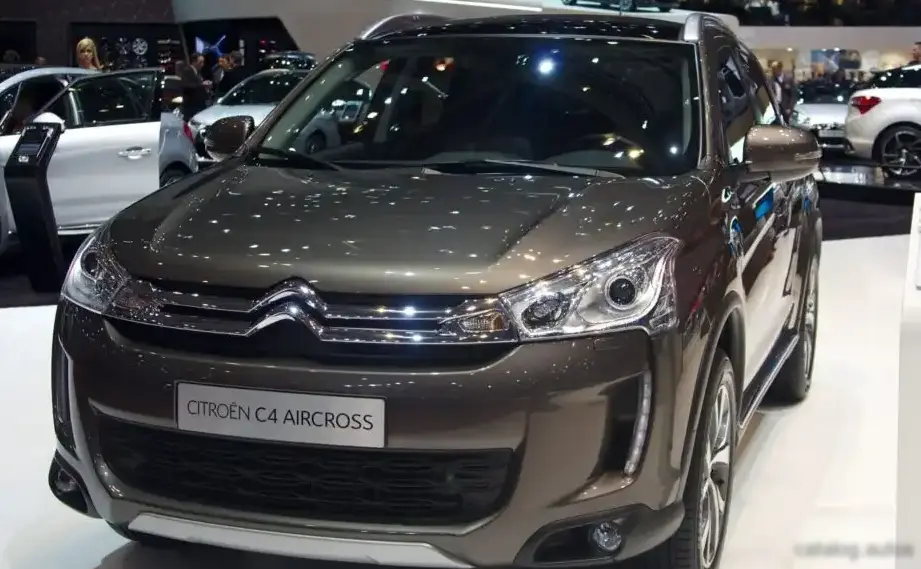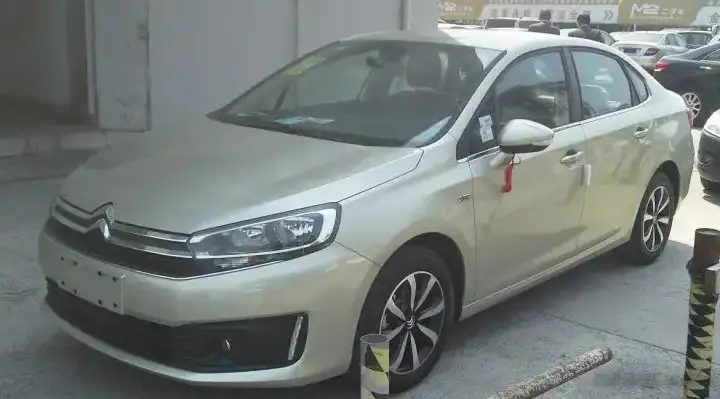
The Citroen C4 I Grand Picasso (Phase II), specifically the 1.6 HDI variant producing 112 horsepower, was a popular choice in the European market from 2012 to 2013. This model represented a mid-cycle refresh of the first-generation Grand Picasso (introduced in 2006), focusing on enhanced styling, improved interior quality, and increased efficiency. Positioned as a mid-range offering within the C4 Grand Picasso lineup, it aimed to balance practicality, fuel economy, and affordability for families. The Grand Picasso, in general, competed with vehicles like the Renault Scenic, Peugeot 5008, and Volkswagen Touran, offering a spacious and versatile seven-seat configuration.
Technical Specifications
| Brand | Citroen |
| Model | C4 |
| Generation | C4 I Grand Picasso (Phase II, 2010) |
| Type (Engine) | 1.6 HDI (112 Hp) |
| Start of production | 2012 |
| End of production | 2013 |
| Powertrain Architecture | Internal Combustion engine |
| Body type | Minivan, MPV |
| Seats | 7 |
| Doors | 5 |
| Fuel consumption (urban) | 6.2 l/100 km (37.9 US mpg, 45.6 UK mpg, 16.1 km/l) |
| Fuel consumption (extra urban) | 4.6 l/100 km (51.1 US mpg, 61.4 UK mpg, 21.7 km/l) |
| Fuel consumption (combined) | 5.2 l/100 km (45.2 US mpg, 54.3 UK mpg, 19.2 km/l) |
| CO2 emissions | 135 g/km |
| Fuel Type | Diesel |
| Acceleration 0 – 100 km/h | 14.2 sec |
| Acceleration 0 – 62 mph | 14.2 sec |
| Acceleration 0 – 60 mph | 13.5 sec |
| Maximum speed | 181 km/h (112.47 mph) |
| Emission standard | Euro 5 |
| Weight-to-power ratio | 13.8 kg/Hp, 72.3 Hp/tonne |
| Weight-to-torque ratio | 5.7 kg/Nm, 174.2 Nm/tonne |
| Power | 112 Hp @ 3600 rpm |
| Power per litre | 71.8 Hp/l |
| Torque | 270 Nm @ 1750 rpm (199.14 lb.-ft. @ 1750 rpm) |
| Engine layout | Front, Transverse |
| Engine Model/Code | 9HR DV6C |
| Engine displacement | 1560 cm3 (95.2 cu. in.) |
| Number of cylinders | 4 |
| Engine configuration | Inline |
| Cylinder Bore | 75 mm (2.95 in.) |
| Piston Stroke | 88.3 mm (3.48 in.) |
| Compression ratio | 16:1 |
| Number of valves per cylinder | 2 |
| Fuel injection system | Diesel Commonrail |
| Engine aspiration | Turbocharger, Intercooler |
| Engine oil capacity | 3.75 l (3.96 US qt | 3.3 UK qt) |
| Kerb Weight | 1550 kg (3417.17 lbs.) |
| Max. weight | 2100 kg (4629.71 lbs.) |
| Max load | 550 kg (1212.54 lbs.) |
| Trunk (boot) space – minimum | 208 l (7.35 cu. ft.) |
| Trunk (boot) space – maximum | 1951 l (68.9 cu. ft.) |
| Fuel tank capacity | 60 l (15.85 US gal | 13.2 UK gal) |
| Permitted trailer load with brakes (8%) | 1330 kg (2932.15 lbs.) |
| Permitted trailer load without brakes | 750 kg (1653.47 lbs.) |
| Permitted towbar download | 50 kg (110.23 lbs.) |
| Length | 4590 mm (180.71 in.) |
| Width | 1830 mm (72.05 in.) |
| Width including mirrors | 2100 mm (82.68 in.) |
| Height | 1660-1710 mm (65.35 – 67.32 in.) |
| Wheelbase | 2728 mm (107.4 in.) |
| Front track | 1505 mm (59.25 in.) |
| Rear (Back) track | 1539 mm (60.59 in.) |
| Front overhang | 995 mm (39.17 in.) |
| Rear overhang | 867 mm (34.13 in.) |
| Drag coefficient (Cd) | 0.31 |
| Minimum turning circle (turning diameter) | 11.85 m (38.88 ft.) |
| Drivetrain Architecture | The Internal combustion engine (ICE) drives the front wheels of the vehicle. |
| Drive wheel | Front wheel drive |
| Number of gears and type of gearbox | 6 gears, manual transmission |
| Front suspension | Independent, type McPherson with coil spring and anti-roll bar |
| Rear suspension | Semi-independent, coil spring |
| Front brakes | Ventilated discs |
| Rear brakes | Disc |
| Assisting systems | ABS (Anti-lock braking system) |
| Steering type | Steering rack and pinion |
| Tires size | 215/50 R17 |
| Wheel rims size | 17 |
Powertrain & Engine Architecture
The heart of this C4 Grand Picasso variant is the 1.6-liter (1560cc) DV6C engine, identified by the code 9HR. This engine is a four-cylinder, inline diesel powerplant utilizing common rail direct injection and a turbocharger with intercooling. The DV6 engine family, developed by PSA Peugeot Citroën, is known for its relatively compact size and efficiency. The 112 horsepower output is achieved at 3600 rpm, while the peak torque of 270 Nm (199 lb-ft) is available from as low as 1750 rpm, providing good low-end responsiveness. The engine features a 16:1 compression ratio and 2 valves per cylinder. The 6-speed manual transmission was the standard offering, chosen for its balance of fuel efficiency and driver control.
Driving Characteristics
The 1.6 HDI 112 hp engine, paired with the 6-speed manual gearbox, delivered adequate performance for everyday driving. Acceleration from 0-100 km/h (0-62 mph) took around 14.2 seconds, making it less about spirited driving and more about comfortable transportation. The engine’s strong low-end torque made it well-suited for navigating city streets and overtaking on highways, although it lacked the outright punch of higher-powered variants. The gear ratios were tuned for fuel efficiency, with a relatively long sixth gear for relaxed cruising. Compared to the more powerful 2.0 HDI options, this variant felt noticeably slower, but it offered a more economical driving experience.
Equipment & Trim Levels
The 1.6 HDI 112 hp Grand Picasso typically came equipped with a reasonable level of standard features. These included air conditioning, electric front windows, a CD stereo system, and ABS brakes. Higher trim levels, such as Exclusive, added features like alloy wheels, rear parking sensors, automatic headlights and wipers, and a more sophisticated infotainment system. Interior upholstery was typically cloth, with options for leather upgrades. The Grand Picasso’s modular interior allowed for flexible seating configurations, with individual seats in the second and third rows that could be folded flat or removed entirely to maximize cargo space.
Chassis & Braking
The C4 Grand Picasso utilized a McPherson strut front suspension and a semi-independent coil spring rear suspension. This setup provided a comfortable ride quality, prioritizing passenger comfort over sporty handling. The front brakes were ventilated discs, while the rear brakes were solid discs. ABS (Anti-lock Braking System) was standard, enhancing safety during emergency braking situations. The steering was a rack and pinion system, providing reasonably precise control. The vehicle’s weight of around 1550 kg (3417 lbs) contributed to its stable handling characteristics.
Market Reception & Comparison
The 1.6 HDI 112 hp variant of the C4 Grand Picasso was generally well-received by critics as a practical and economical family vehicle. It was praised for its spacious interior, comfortable ride, and fuel efficiency. However, some reviewers noted that the engine lacked the power to comfortably carry a full load of passengers and luggage, especially on inclines. Compared to the 2.0 HDI models, the 1.6 HDI offered lower running costs but compromised on performance. Fuel economy figures of around 5.2 l/100 km (45.2 US mpg) were considered excellent for a vehicle of its size and class.
Legacy
The 1.6 HDI engine, in general, proved to be a reliable unit, although like any diesel engine, it is susceptible to issues related to the diesel particulate filter (DPF) if not properly maintained. Regular servicing and the use of high-quality diesel fuel are crucial for ensuring long-term reliability. In the used car market, the C4 Grand Picasso 1.6 HDI remains a popular choice for budget-conscious families seeking a spacious and practical MPV. Its relatively low running costs and proven reliability make it a sensible option, although potential buyers should be aware of the potential for DPF-related issues and ensure a thorough inspection before purchase.