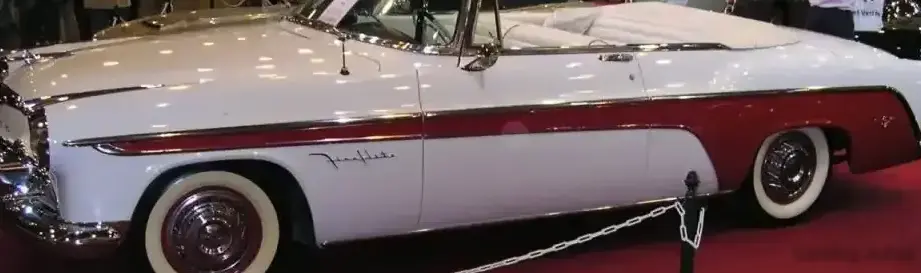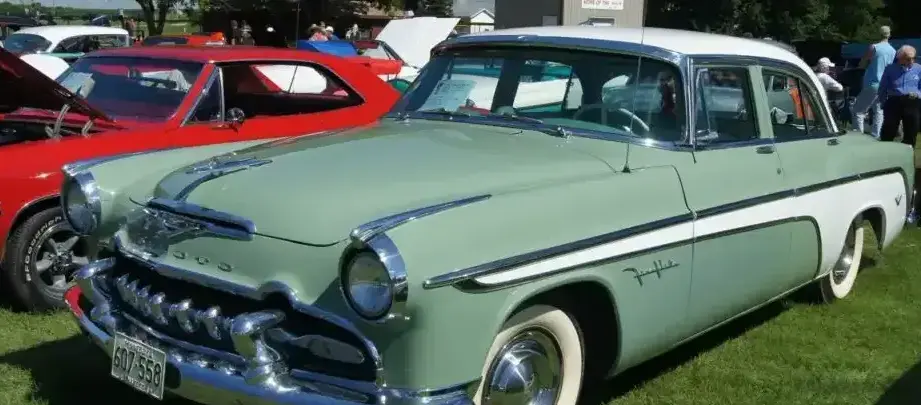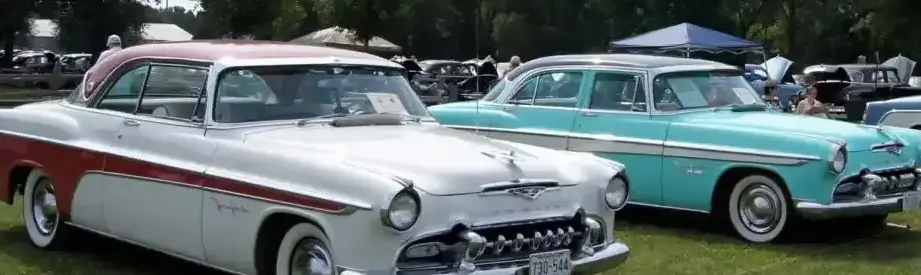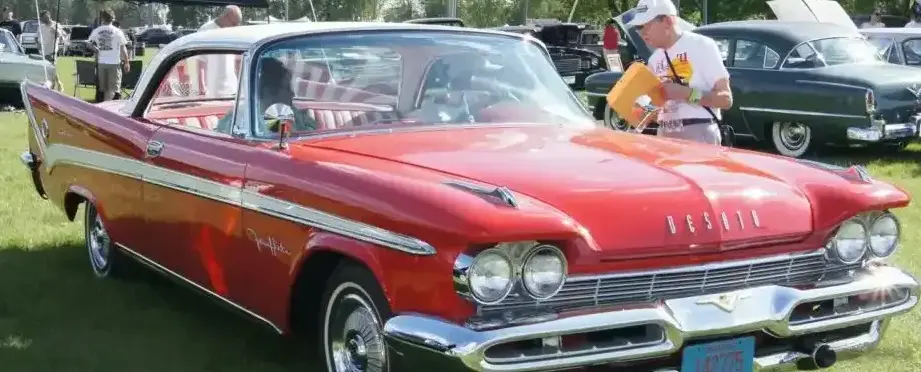
The DeSoto Fireflite III Two-Door Sportsman, specifically the 1959 facelift model equipped with the 6.3-liter V8 engine producing 325 horsepower and paired with a TorqueFlite automatic transmission, represents a high point in the final years of the DeSoto marque. Produced for only two model years (1958-1959), the Fireflite III was positioned as a premium offering within the DeSoto lineup, aimed at buyers seeking a blend of luxury, performance, and distinctive styling. This particular configuration, the two-door coupe, was a popular choice for those desiring a more sporting aesthetic compared to the four-door sedan.
Technical Specifications
| Brand | DeSoto |
| Model | Fireflite |
| Generation | Fireflite III Two-Door Sportsman (facelift 1959) |
| Type (Engine) | 6.3 V8 (325 Hp) TorqueFlite |
| Start of production | 1958 |
| End of production | 1959 |
| Powertrain Architecture | Internal Combustion engine |
| Body type | Coupe |
| Seats | 6 |
| Doors | 2 |
| Fuel Type | Petrol (Gasoline) |
| Weight-to-power ratio | 5.8 kg/Hp, 173.9 Hp/tonne |
| Weight-to-torque ratio | 3.2 kg/Nm, 308.2 Nm/tonne |
| Power | 325 Hp @ 4600 rpm |
| Power per litre | 51.8 Hp/l |
| Torque | 576 Nm @ 2800 rpm, 424.84 lb.-ft. @ 2800 rpm |
| Engine displacement | 6276 cm3, 382.99 cu. in. |
| Number of cylinders | 8 |
| Engine configuration | V-engine |
| Cylinder Bore | 107.95 mm, 4.25 in. |
| Piston Stroke | 85.85 mm, 3.38 in. |
| Compression ratio | 10.1:1 |
| Number of valves per cylinder | 2 |
| Fuel injection system | Carburettor |
| Engine aspiration | Naturally aspirated engine |
| Valvetrain | OHV |
| Engine oil capacity | 4.7 l, 4.97 US qt | 4.14 UK qt |
| Coolant | 15.1 l, 15.96 US qt | 13.29 UK qt |
| Kerb Weight | 1869 kg, 4120.44 lbs |
| Fuel tank capacity | 87 l, 22.98 US gal | 19.14 UK gal |
| Length | 5616 mm, 221.1 in |
| Width | 1999 mm, 78.7 in |
| Height | 1397 mm, 55 in |
| Wheelbase | 3200 mm, 125.98 in |
| Front track | 1549 mm, 60.98 in |
| Rear (Back) track | 1516 mm, 59.69 in |
| Front overhang | 889 mm, 35 in |
| Rear overhang | 1527 mm, 60.12 in |
| Ride height (ground clearance) | 142 mm, 5.59 in |
| Minimum turning circle (turning diameter) | 15.2 m, 49.87 ft |
| Approach angle | 15° |
| Departure angle | 11° |
| Ramp-over (brakeover) angle | 10.4° |
| Drivetrain Architecture | The Internal combustion engine (ICE) drives the rear wheels of the vehicle. |
| Drive wheel | Rear wheel drive |
| Number of gears and type of gearbox | 3 gears, automatic transmission TorqueFlite |
| Front suspension | Independent torsion bar, double wishbone |
| Rear suspension | Leaf spring |
| Front brakes | Drum, 305 mm |
| Rear brakes | Drum, 305 mm |
| Steering type | Worm-reduction unit |
Powertrain & Engine Architecture
The heart of the 1959 Fireflite Sportsman was the Chrysler-built 383 cubic inch (6.3-liter) V8 engine. This engine, designated with various codes depending on specific calibration, produced 325 horsepower at 4,600 rpm and a substantial 576 Nm (424.84 lb-ft) of torque at 2,800 rpm. The engine featured a cast iron block, aluminum cylinder heads, and a hydraulic lifter valve train. Fuel was delivered via a Carter carburetor, a common setup for the era. The 10.1:1 compression ratio contributed to the engine’s robust power output. The TorqueFlite automatic transmission, a three-speed unit, was Chrysler’s renowned automatic, known for its durability and smooth operation. It was a push-button operated transmission, a signature feature of Chrysler products during this period.
Driving Characteristics
The combination of the 325 hp V8 and the TorqueFlite automatic provided a comfortable and capable driving experience. While not a sports car in the modern sense, the Fireflite offered brisk acceleration for its time. The automatic transmission, while lacking the control of a manual, delivered smooth shifts and made the car easy to drive in city traffic. The 3-speed TorqueFlite’s gear ratios were optimized for cruising, making it well-suited for highway travel. Compared to the base DeSoto models with smaller engines, the Fireflite offered a significant performance advantage. However, compared to other performance-oriented cars of the era, it wasn’t as nimble or responsive. The substantial weight of the vehicle (1869 kg / 4120.44 lbs) did impact handling, but the torsion bar front suspension helped to mitigate some of the body roll.
Equipment & Trim Levels
The Fireflite Sportsman was well-equipped for a 1959 vehicle. Standard features included power steering, power brakes, a deluxe interior with cloth and vinyl upholstery, and a full wheel cover. The two-door Sportsman model typically featured a more stylish interior trim than the four-door sedan. Optional extras included air conditioning, a radio, power windows, and a continental kit (spare tire mounted on the rear). The interior was characterized by its spaciousness and comfortable seating for up to six passengers. The dashboard featured a prominent instrument cluster with gauges for speed, fuel, temperature, and oil pressure.
Chassis & Braking
The Fireflite III rode on a 3200 mm (125.98 in) wheelbase and featured independent torsion bar suspension in the front, providing a relatively comfortable ride. The rear suspension utilized leaf springs, a common design for rear-wheel-drive cars of the era. Braking was accomplished via drum brakes on all four wheels, measuring 305 mm in diameter. While adequate for the time, the drum brakes lacked the stopping power of modern disc brakes. Steering was handled by a worm-reduction unit, which provided a relatively heavy but precise steering feel.
Market Reception & Comparison
The 1959 DeSoto Fireflite was generally well-received by automotive critics, who praised its powerful engine, comfortable ride, and stylish design. However, it faced stiff competition from other American manufacturers, including Chevrolet, Ford, and Plymouth. The Fireflite was positioned as a premium offering, and its price reflected that. Compared to the base DeSoto models, the Fireflite offered a significant upgrade in performance and features. However, it was not as sporty or luxurious as some of its competitors. Fuel economy, typical for a large V8 engine of the time, was relatively poor.
Legacy
The DeSoto brand was discontinued after the 1961 model year, making the Fireflite III a relatively rare and collectible classic car today. The 6.3-liter V8 engine and TorqueFlite transmission proved to be durable and reliable powertrains, and many examples are still on the road today. While maintenance can be challenging due to the age of the vehicle and the scarcity of parts, the Fireflite III remains a popular choice among classic car enthusiasts. The 1959 facelift model, with its distinctive styling and powerful engine, is particularly sought after. The Fireflite represents a final flourish of American automotive excess and design before the industry began to shift towards more compact and fuel-efficient vehicles.