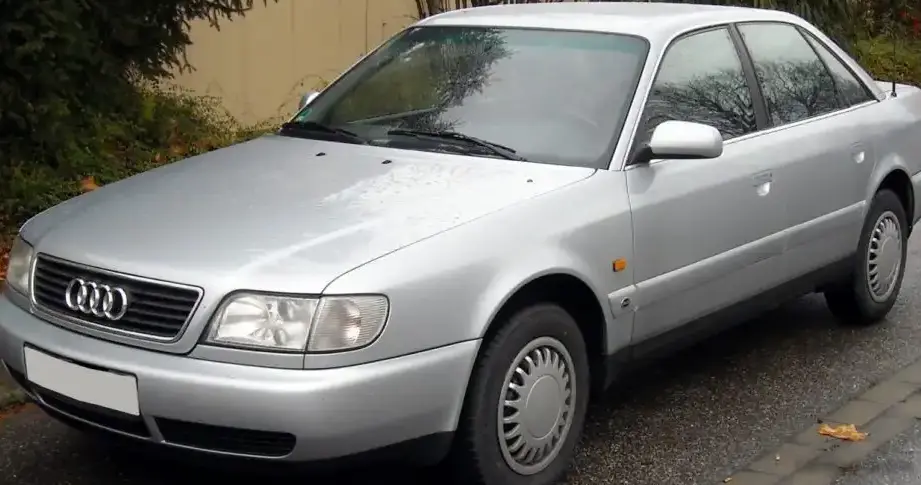
The Audi A6 Avant (4B, C5) 4.2 V8 40V, produced from 1999 to 2000, represents the pinnacle of performance within the C5 generation A6 Avant (wagon) lineup. Positioned as the flagship variant, it combined a potent naturally aspirated V8 engine with Audi’s renowned quattro all-wheel-drive system and a five-speed Tiptronic automatic transmission. This model aimed to deliver a luxurious and capable grand touring experience, appealing to buyers seeking both practicality and exhilarating performance in a station wagon format. It was a relatively short-lived production run, bridging the gap between the earlier C5 models and the subsequent refinements.
Technical Specifications
| Brand | Audi |
| Model | A6 |
| Generation | A6 Avant (4B,C5) |
| Type (Engine) | 4.2 V8 40V (300 Hp) quattro Tiptronic |
| Start of production | 1999 |
| End of production | 2000 |
| Powertrain Architecture | Internal Combustion engine |
| Body type | Station wagon (estate) |
| Seats | 5 |
| Doors | 5 |
| Fuel consumption (urban) | 19.4 l/100 km (12.1 US mpg, 14.6 UK mpg, 5.2 km/l) |
| Fuel consumption (extra urban) | 9.5 l/100 km (24.8 US mpg, 29.7 UK mpg, 10.5 km/l) |
| Fuel consumption (combined) | 13.1 l/100 km (18 US mpg, 21.6 UK mpg, 7.6 km/l) |
| CO2 emissions | 314 g/km |
| Fuel Type | Petrol (Gasoline) |
| Acceleration 0 – 100 km/h | 6.9 sec |
| Acceleration 0 – 62 mph | 6.9 sec |
| Acceleration 0 – 60 mph | 6.6 sec |
| Maximum speed | 250 km/h (155.34 mph) |
| Emission standard | Euro 4 |
| Weight-to-power ratio | 6.1 kg/Hp, 165.3 Hp/tonne |
| Weight-to-torque ratio | 4.5 kg/Nm, 220.4 Nm/tonne |
| Power | 300 Hp @ 6200 rpm |
| Power per litre | 71.9 Hp/l |
| Torque | 400 Nm @ 3000-4000 rpm (295.02 lb.-ft. @ 3000-4000 rpm) |
| Engine layout | Front, Longitudinal |
| Engine Model/Code | ARS, ASG |
| Engine displacement | 4172 cm3 (254.59 cu. in.) |
| Number of cylinders | 8 |
| Engine configuration | V-engine |
| Cylinder Bore | 84.5 mm (3.33 in.) |
| Piston Stroke | 93 mm (3.66 in.) |
| Compression ratio | 11:1 |
| Number of valves per cylinder | 5 |
| Fuel injection system | Multi-port manifold injection |
| Engine aspiration | Naturally aspirated engine |
| Valvetrain | DOHC |
| Engine oil capacity | 7.5 l (7.93 US qt | 6.6 UK qt) |
| Coolant | 11 l (11.62 US qt | 9.68 UK qt) |
| Kerb Weight | 1815 kg (4001.39 lbs.) |
| Max. weight | 2355 kg (5191.89 lbs.) |
| Max load | 540 kg (1190.5 lbs.) |
| Trunk (boot) space – minimum | 455 l (16.07 cu. ft.) |
| Trunk (boot) space – maximum | 1590 l (56.15 cu. ft.) |
| Fuel tank capacity | 82 l (21.66 US gal | 18.04 UK gal) |
| Max. roof load | 100 kg (220.46 lbs.) |
| Permitted trailer load with brakes (8%) | 2100 kg (4629.71 lbs.) |
| Permitted trailer load with brakes (12%) | 2100 kg (4629.71 lbs.) |
| Permitted trailer load without brakes | 750 kg (1653.47 lbs.) |
| Permitted towbar download | 85 kg (187.39 lbs.) |
| Length | 4833 mm (190.28 in.) |
| Width | 1850 mm (72.83 in.) |
| Height | 1465 mm (57.68 in.) |
| Wheelbase | 2759 mm (108.62 in.) |
| Front track | 1578 mm (62.13 in.) |
| Rear (Back) track | 1590 mm (62.6 in.) |
| Drag coefficient (Cd) | 0.34 |
| Minimum turning circle | 11.68 m (38.32 ft.) |
| Drive wheel | All wheel drive (4×4) |
| Number of gears and type of gearbox | 5 gears, automatic transmission Tiptronic |
| Front suspension | Independent multi-link suspension |
| Rear suspension | Semi-independent, coil spring |
| Front brakes | Ventilated discs |
| Rear brakes | Ventilated discs |
| Assisting systems | ABS (Anti-lock braking system) |
| Steering type | Steering rack and pinion |
| Power steering | Hydraulic Steering |
| Tires size | 235/50 R16 |
| Wheel rims size | 8J x16 |
INTRODUCTION
The Audi A6 Avant (4B, C5) 4.2 V8 40V quattro Tiptronic, produced between 1999 and 2000, was a high-performance variant of Audi’s popular A6 wagon. Built on the 4B chassis platform (also underpinning the A3 and Passat of the era), the Avant offered a compelling blend of practicality, luxury, and sporting performance. This particular model occupied the top echelon of the A6 Avant range, offering a significant step up in power and refinement compared to the four-cylinder and V6 options. It was aimed at buyers who desired a capable all-weather vehicle with the performance characteristics of a sports sedan.
Powertrain & Engine Architecture
The heart of this A6 Avant is the 4.2-liter, naturally aspirated V8 engine, designated as the ARS or ASG code depending on minor revisions. This engine features a 90-degree V-angle, four valves per cylinder (40V), and a dual overhead camshaft (DOHC) design. Fuel delivery is managed by a multi-port fuel injection system. The engine produces 300 horsepower at 6200 rpm and 400 Nm (295 lb-ft) of torque between 3000 and 4000 rpm. The engine’s architecture prioritizes smooth power delivery and a characteristic V8 sound. Paired with this engine is a five-speed Tiptronic automatic transmission, which allows for both fully automatic operation and driver-selectable gear changes. The Tiptronic system, while not as responsive as a manual transmission, offered a degree of control and convenience.
Driving Characteristics
The 4.2 V8 Avant delivers a noticeably different driving experience compared to lower-powered A6 variants. The substantial torque output provides strong acceleration in virtually any gear, making overtaking effortless. While the 0-60 mph time of around 6.6 seconds isn’t blistering by modern standards, it was quite respectable for a wagon of its size and weight in the late 1990s. The Tiptronic transmission, while smooth, can feel somewhat hesitant during quick downshifts. The quattro all-wheel-drive system provides excellent traction in all conditions, enhancing stability and confidence, particularly on slippery surfaces. The gear ratios are tuned for a balance between acceleration and fuel economy, but the V8 engine’s thirst for fuel is always present.
Equipment & Trim Levels
As the range-topping A6 Avant, this 4.2 V8 model came generously equipped. Standard features typically included leather upholstery, power-adjustable front seats with memory function, automatic climate control, a premium sound system, and a sunroof. Optional extras often included navigation system, upgraded wheels, and various cosmetic enhancements. The interior trim was typically finished with wood or aluminum accents, reflecting the car’s luxury positioning. The dashboard layout was typical of the C5 A6, characterized by a clean and functional design.
Chassis & Braking
The A6 Avant 4.2 V8 featured an independent multi-link front suspension and a semi-independent coil spring rear suspension. This setup provided a comfortable ride while maintaining good handling characteristics. Braking duties were handled by ventilated discs on all four wheels, coupled with an Anti-lock Braking System (ABS). The suspension was tuned to balance comfort and handling, leaning towards the former given the car’s grand touring intentions. Stabilizer bars were fitted front and rear to reduce body roll during cornering.
Market Reception & Comparison
The A6 Avant 4.2 V8 was generally well-received by automotive critics, who praised its powerful engine, comfortable ride, and all-weather capability. However, its relatively high price and fuel consumption were often cited as drawbacks. Compared to the more common A6 2.8 V6 models, the 4.2 V8 offered a significant performance advantage but came at a substantial cost premium. The 1.8T models, while more fuel-efficient, lacked the outright power and refinement of the V8. Reliability was generally good, although the complex Tiptronic transmission could be prone to issues if not properly maintained.
Legacy
The Audi A6 Avant (4B, C5) 4.2 V8 40V quattro Tiptronic remains a desirable vehicle among Audi enthusiasts today. Its combination of performance, practicality, and relative rarity has made it a sought-after classic. While maintenance costs can be higher than those of lower-powered A6 variants, the V8 engine is generally considered robust if properly cared for. The Tiptronic transmission requires diligent fluid changes to prevent premature failure. In the used car market, these Avants command a premium price, reflecting their unique position within the C5 A6 lineup and their enduring appeal to those seeking a distinctive and capable wagon.