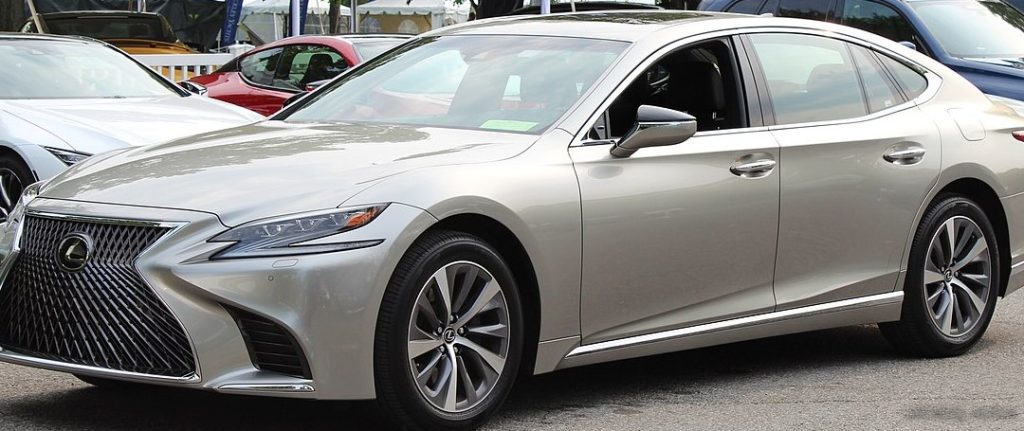
The Lexus LS 600h, specifically the facelifted model produced from October 2009 to 2012, represents Lexus’s foray into the luxury hybrid sedan market. Positioned as the flagship of the Lexus lineup, the 600h combined a powerful V8 gasoline engine with an electric motor, offering a blend of performance and fuel efficiency. This variant, featuring all-wheel drive (AWD) and an electronically controlled continuously variable transmission (e-CVT), aimed to compete with established luxury brands while showcasing Lexus’s technological prowess. It falls within the fourth generation of the LS (XV40 chassis), benefitting from the 2009 refresh which included styling updates and revised features.
Technical Specifications
| Brand | Lexus |
| Model | LS |
| Generation | LS IV (facelift 2009) |
| Type (Engine) | 600h V8 (445 Hp) Hybrid AWD e-CVT |
| Start of production | October, 2009 |
| End of production | 2012 |
| Powertrain Architecture | FHEV (Full Hybrid Electric Vehicle) |
| Body type | Sedan |
| Seats | 5 |
| Doors | 4 |
| Fuel consumption (urban) | 11.2 l/100 km (21 US mpg, 25.2 UK mpg, 8.9 km/l) |
| Fuel consumption (extra urban) | 8 l/100 km (29.4 US mpg, 35.3 UK mpg, 12.5 km/l) |
| Fuel consumption (combined) | 9.3 l/100 km (25.3 US mpg, 30.4 UK mpg, 10.8 km/l) |
| CO2 emissions | 218 g/km |
| Fuel Type | Petrol (Gasoline) |
| Acceleration 0 – 100 km/h | 6.3 sec |
| Acceleration 0 – 62 mph | 6.3 sec |
| Acceleration 0 – 60 mph | 5.5 sec |
| Maximum speed | 250 km/h (155.34 mph), Electronically limited |
| Emission standard | Euro 5 |
| Weight-to-power ratio | 5.1 kg/Hp, 194.3 Hp/tonne |
| Weight-to-torque ratio | 4.4 kg/Nm, 227.1 Nm/tonne |
| Battery voltage | 288 V |
| Battery technology | Nickel-metal hydride (NiMH) |
| Battery weight | 67 kg (147.71 lbs.) |
| Battery location | Inside the trunk |
| All-electric range | 3 km (1.86 mi) |
| Electric motor power | 224 Hp |
| Electric motor Torque | 300 Nm (221.27 lb.-ft.) |
| Electric motor location | Integrated into the transmission |
| Electric motor type | Synchronous |
| System power | 445 Hp |
| Engine Power | 394 Hp @ 6400 rpm |
| Engine Torque | 520 Nm @ 4000 rpm (383.53 lb.-ft. @ 4000 rpm) |
| Engine layout | Front, Longitudinal |
| Engine Model/Code | 2UR-FSE |
| Engine displacement | 4969 cm3 (303.23 cu. in.) |
| Number of cylinders | 8 |
| Engine configuration | V-engine |
| Cylinder Bore | 94 mm (3.7 in.) |
| Piston Stroke | 89.5 mm (3.52 in.) |
| Compression ratio | 11.8:1 |
| Number of valves per cylinder | 4 |
| Fuel injection system | Direct injection and Multi-port manifold injection |
| Engine aspiration | Naturally aspirated engine |
| Valvetrain | DOHC, Dual VVT-iE |
| Engine oil capacity | 9 l (9.51 US qt | 7.92 UK qt) |
| Coolant capacity | 11.1 l (11.73 US qt | 9.77 UK qt) |
| Kerb Weight | 2290-2420 kg (5048.59 – 5335.19 lbs.) |
| Max. weight | 2795 kg (6161.92 lbs.) |
| Max load | 375-505 kg (826.73 – 1113.33 lbs.) |
| Trunk (boot) space | 420 l (14.83 cu. ft.) |
| Fuel tank capacity | 84 l (22.19 US gal | 18.48 UK gal) |
| Length | 5060 mm (199.21 in.) |
| Width | 1875 mm (73.82 in.) |
| Height | 1480 mm (58.27 in.) |
| Wheelbase | 2970 mm (116.93 in.) |
| Front overhang | 915 mm (36.02 in.) |
| Rear overhang | 1175 mm (46.26 in.) |
| Drag coefficient (Cd) | 0.27 |
| Minimum turning circle | 12.2 m (40.03 ft.) |
| Drivetrain Architecture | The Internal combustion engine (ICE) and the electric motor permanently drive the four wheels of the car with the ability to work in full electric or mixed mode. |
| Drive wheel | All wheel drive (4×4) |
| Number of gears | automatic transmission e-CVT |
| Front brakes | Ventilated discs, 380×36 mm |
| Rear brakes | Ventilated discs, 335×22 mm |
INTRODUCTION
The Lexus LS 600h, introduced in 2007 and facelifted in 2009, was Lexus’s initial offering in the full-size luxury hybrid segment. Built on the XV40 platform, shared with the standard LS 460, the 600h distinguished itself through its advanced powertrain and commitment to fuel efficiency within the luxury class. The 2009 facelift brought subtle cosmetic changes, including revised front and rear fascias, along with interior enhancements. This variant, equipped with the 4.6-liter V8 hybrid system and all-wheel drive, was positioned as a premium offering, sitting at the top of the LS range. It was primarily marketed in North America, Japan, and select European markets.
Powertrain & Engine Architecture
At the heart of the LS 600h is the 2UR-FSE 4.6-liter V8 engine. This engine utilizes D-4S direct injection and multi-port fuel injection, along with Dual VVT-iE (Variable Valve Timing with electric motor) for optimized performance and efficiency. The engine produces 394 horsepower at 6400 rpm and 383.5 lb-ft of torque at 4000 rpm. Crucially, this engine is paired with a robust electric motor, generating 224 horsepower and 221 lb-ft of torque. The combined system output reaches 445 horsepower. The powertrain employs a planetary gearset, integral to Lexus’s Hybrid Synergy Drive, functioning as an e-CVT (electronically controlled continuously variable transmission). This system seamlessly blends power from the gasoline engine and electric motor, optimizing fuel economy and providing smooth acceleration. The nickel-metal hydride (NiMH) battery pack, with a voltage of 288V and a capacity of 67 kg, is located within the trunk, slightly reducing cargo space.
Driving Characteristics
The LS 600h delivers a refined and comfortable driving experience. The e-CVT, while lacking the traditional gear changes of a conventional automatic, provides seamless acceleration. The electric motor provides instant torque, contributing to brisk off-the-line performance, achieving 0-60 mph in approximately 5.5 seconds. Compared to the standard LS 460 with a conventional automatic transmission, the 600h feels slightly heavier due to the battery pack, but the added torque from the electric motor largely compensates for this. The all-wheel-drive system provides enhanced traction and stability, particularly in inclement weather. The hybrid system prioritizes electric-only operation at low speeds, resulting in near-silent operation in city driving. However, under hard acceleration, the V8 engine engages, providing a more traditional, yet still refined, driving experience.
Equipment & Trim Levels
The LS 600h was generously equipped, reflecting its flagship status. Standard features included leather upholstery, wood trim, a premium sound system, navigation system, adaptive cruise control, and a power rear sunshade. Available options included a rear-seat entertainment system, massaging seats, and an advanced air suspension system. The interior design emphasized luxury and comfort, with attention to detail and high-quality materials. Trim levels were relatively limited, with most customization options available through individual selections rather than distinct packages.
Chassis & Braking
The LS 600h utilizes an independent multi-link suspension system at both the front and rear. An optional air suspension system was available, providing adjustable ride height and enhanced comfort. Braking duties are handled by ventilated discs at all four corners, measuring 380x36mm at the front and 335x22mm at the rear. The vehicle is equipped with ABS (Anti-lock braking system), electronic brake-force distribution, and brake assist. The steering system is a rack-and-pinion setup with electric power steering.
Market Reception & Comparison
The LS 600h was generally well-received by critics, who praised its smooth ride, quiet cabin, and advanced technology. However, its relatively high price and modest fuel economy gains compared to the standard LS 460 were points of criticism. Compared to the LS 460, the 600h offered a more environmentally conscious option, but at a significant price premium. Against competitors like the BMW 7 Series Hybrid and the Porsche Panamera Hybrid, the LS 600h offered a compelling blend of luxury, technology, and reliability, though it often lagged behind in outright performance.
Legacy
The Lexus LS 600h, while not a massive sales success, played a crucial role in establishing Lexus as a leader in hybrid technology. The powertrain proved to be relatively reliable, with many examples still on the road today. The hybrid system’s complexity does mean that maintenance can be more expensive than the standard LS 460. On the used car market, the LS 600h represents a good value for those seeking a luxurious and technologically advanced sedan, though potential buyers should be aware of the potential costs associated with maintaining the hybrid system. The lessons learned from the development of the LS 600h paved the way for Lexus’s continued expansion of its hybrid offerings.