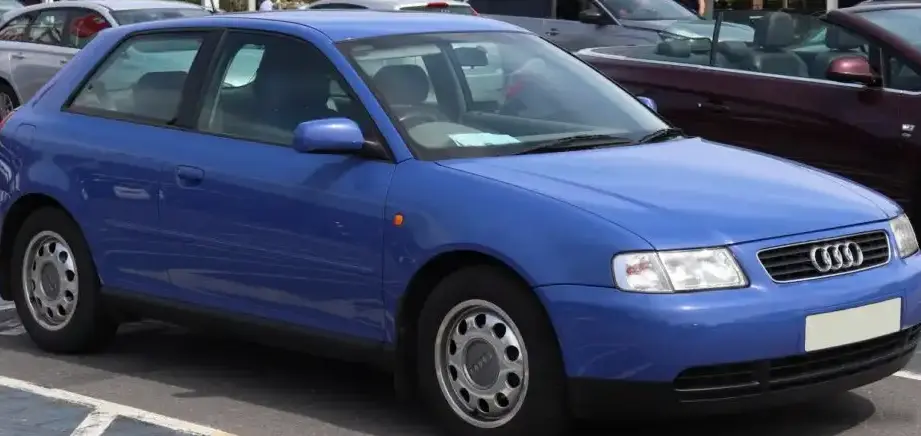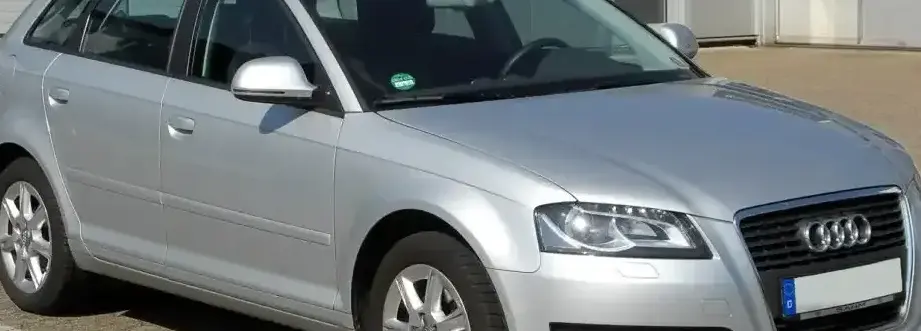
The Audi A3 Sportback (8PA) facelift, produced from 2008 to 2012, represented a significant update to Audi’s popular compact hatchback. Within the 8PA generation, the 2.0 TDI quattro variant, boasting 170 horsepower, occupied a middle ground in the lineup, offering a blend of performance, efficiency, and all-weather capability. This model was primarily aimed at the European market, where demand for diesel engines and all-wheel drive systems remained strong. It served as a more premium and capable alternative to the base 1.6 TDI and 1.8 TFSI models, while remaining more accessible than the high-performance S3.
Technical Specifications
| Brand | Audi |
| Model | A3 |
| Generation | A3 Sportback (8PA, facelift 2008) |
| Type (Engine) | 2.0 TDI (170 Hp) quattro DPF |
| Start of production | 2008 |
| End of production | 2012 |
| Powertrain Architecture | Internal Combustion engine |
| Body type | Hatchback |
| Seats | 5 |
| Doors | 5 |
| Fuel consumption (urban) | 7.2 l/100 km (32.7 US mpg, 39.2 UK mpg, 13.9 km/l) |
| Fuel consumption (extra urban) | 4.7 l/100 km (50 US mpg, 60.1 UK mpg, 21.3 km/l) |
| Fuel consumption (combined) | 5.6 l/100 km (42 US mpg, 50.4 UK mpg, 17.9 km/l) |
| Fuel Type | Diesel |
| Acceleration 0 – 100 km/h | 7.9 sec |
| Acceleration 0 – 62 mph | 7.9 sec |
| Acceleration 0 – 60 mph | 7.5 sec |
| Maximum speed | 222 km/h (137.94 mph) |
| Emission standard | Euro 5 |
| Weight-to-power ratio | 8.6 kg/Hp, 116 Hp/tonne |
| Weight-to-torque ratio | 4.2 kg/Nm, 238.9 Nm/tonne |
| Power | 170 Hp @ 4200 rpm |
| Power per litre | 86.4 Hp/l |
| Torque | 350 Nm @ 1750-2500 rpm (258.15 lb.-ft. @ 1750-2500 rpm) |
| Engine layout | Front, Transverse |
| Engine Model/Code | CBBB, CFGB |
| Engine displacement | 1968 cm3 (120.09 cu. in.) |
| Number of cylinders | 4 |
| Engine configuration | Inline |
| Cylinder Bore | 81 mm (3.19 in.) |
| Piston Stroke | 95.5 mm (3.76 in.) |
| Compression ratio | 16.5:1 |
| Number of valves per cylinder | 4 |
| Fuel injection system | Diesel Commonrail |
| Engine aspiration | Turbocharger, Intercooler |
| Valvetrain | DOHC |
| Engine oil capacity | 3.8 l (4.02 US qt | 3.34 UK qt) |
| Kerb Weight | 1465 kg (3229.77 lbs.) |
| Max. weight | 2025 kg (4464.36 lbs.) |
| Max load | 560 kg (1234.59 lbs.) |
| Trunk (boot) space – minimum | 552 l (19.49 cu. ft.) |
| Trunk (boot) space – maximum | 1104 l (38.99 cu. ft.) |
| Fuel tank capacity | 60 l (15.85 US gal | 13.2 UK gal) |
| Length | 4292 mm (168.98 in.) |
| Width | 1765 mm (69.49 in.) |
| Height | 1423 mm (56.02 in.) |
| Wheelbase | 2578 mm (101.5 in.) |
| Front track | 1534 mm (60.39 in.) |
| Rear (Back) track | 1507 mm (59.33 in.) |
| Drag coefficient (Cd) | 0.31 |
| Minimum turning circle | 10.7 m (35.1 ft.) |
| Drive wheel | All wheel drive (4×4) |
| Number of gears | 6 |
| Gearbox type | Manual transmission |
| Front suspension | Spring Strut |
| Rear suspension | Transverse stabilizer |
| Front brakes | Ventilated discs |
| Rear brakes | Disc |
| Assisting systems | ABS (Anti-lock braking system) |
| Steering type | Steering rack and pinion |
| Tires size | 225/45 R17 |
| Wheel rims size | 7.5J x 17 |
INTRODUCTION
The 2.0 TDI quattro variant of the Audi A3 Sportback (8PA) facelift, produced between 2008 and 2012, was a popular choice for drivers seeking a refined and practical hatchback with enhanced grip and fuel efficiency. Built on the Volkswagen Group’s A5 (PQ35) platform – also known as the 1HX0 for the A3 – this model combined a potent turbocharged diesel engine with Audi’s renowned quattro all-wheel-drive system. It slotted into the A3 Sportback range above the entry-level 1.6 TDI and 1.8 TFSI models, offering a noticeable performance upgrade and a more sophisticated driving experience. The facelift brought styling revisions, improved interior materials, and updated technology compared to the pre-2008 8PA models.
Powertrain & Engine Architecture
At the heart of the A3 2.0 TDI quattro lay the Volkswagen Group’s common rail diesel engine, available in two main iterations: the CBBB and CFGB. Both were 1968cc, inline-four cylinder engines featuring a turbocharger with an intercooler. The CBBB engine, introduced earlier in the lifecycle, typically produced 170 horsepower at 4200 rpm and 350 Nm (258 lb-ft) of torque between 1750 and 2500 rpm. The CFGB, a later revision, offered similar outputs but with minor refinements to improve efficiency and reduce emissions. These engines utilized a 16.5:1 compression ratio and a dual overhead camshaft (DOHC) valvetrain with four valves per cylinder. The common rail direct injection system, supplied by Bosch, delivered fuel at extremely high pressure for optimized combustion. The engine was transversely mounted in the front of the vehicle. The six-speed manual transmission was standard, providing precise gear changes and contributing to the car’s engaging driving dynamics.
Driving Characteristics
The 2.0 TDI quattro offered a compelling blend of performance and economy. While not a sports car, the 170 horsepower and 350 Nm of torque provided ample power for everyday driving and confident overtaking. The quattro all-wheel-drive system significantly enhanced traction, particularly on slippery surfaces, making it a capable vehicle in all weather conditions. The six-speed manual transmission allowed drivers to fully exploit the engine’s torque band. Compared to the 1.6 TDI, the 2.0 TDI felt noticeably more responsive, with quicker acceleration and a more relaxed cruising experience. Against the 1.8 TFSI, the diesel offered superior fuel economy and a broader torque curve, although the petrol engine provided a slightly more refined and rev-happy character. The gear ratios were well-chosen, providing strong acceleration in lower gears and comfortable cruising at highway speeds.
Equipment & Trim Levels
The A3 Sportback 2.0 TDI quattro typically came well-equipped, reflecting its position as a mid-range offering. Standard features included air conditioning, alloy wheels, a multi-function steering wheel, and an Audi Concert audio system. Higher trim levels, such as Sport and S-line, added features like sport seats, upgraded interior trim, and exterior styling enhancements. Optional extras included a panoramic sunroof, navigation system, parking sensors, and xenon headlights. Interior upholstery was typically cloth, with leather options available as an upgrade. The dashboard layout was typical of Audi at the time, characterized by a clean and functional design with high-quality materials.
Chassis & Braking
The A3 Sportback’s chassis featured a MacPherson strut front suspension and a multi-link rear suspension, providing a comfortable yet controlled ride. The quattro all-wheel-drive system utilized a Torsen differential, automatically distributing torque between the front and rear axles based on traction conditions. Braking duties were handled by ventilated discs at the front and solid discs at the rear, with ABS (Anti-lock Braking System) as standard. The suspension was tuned to provide a balance between comfort and handling, offering a stable and predictable driving experience. Stabilizer bars were fitted to both the front and rear axles to reduce body roll during cornering.
Market Reception & Comparison
The Audi A3 Sportback 2.0 TDI quattro was generally well-received by automotive critics. It was praised for its refined engine, comfortable ride, and all-weather capability. Fuel economy was a significant selling point, with the diesel engine offering substantial savings compared to petrol alternatives. Compared to rivals like the BMW 1 Series and Mercedes-Benz A-Class, the A3 was often lauded for its interior quality and sophisticated design. However, some critics noted that the manual transmission could feel slightly notchy, and the ride could be firm on rough roads. Reliability was generally good, although diesel particulate filter (DPF) issues could occur with infrequent long-distance driving.
Legacy
The 2.0 TDI engine, in its various iterations, proved to be a durable and reliable powerplant. The CBBB and CFGB codes are still commonly found in used A3 Sportbacks today. While DPF maintenance and potential turbocharger wear are considerations for prospective buyers, these engines are generally known for their longevity. The A3 Sportback 2.0 TDI quattro remains a popular choice in the used car market, offering a compelling combination of practicality, performance, and fuel efficiency. Its enduring appeal is a testament to Audi’s engineering prowess and the enduring popularity of the A3 model line.