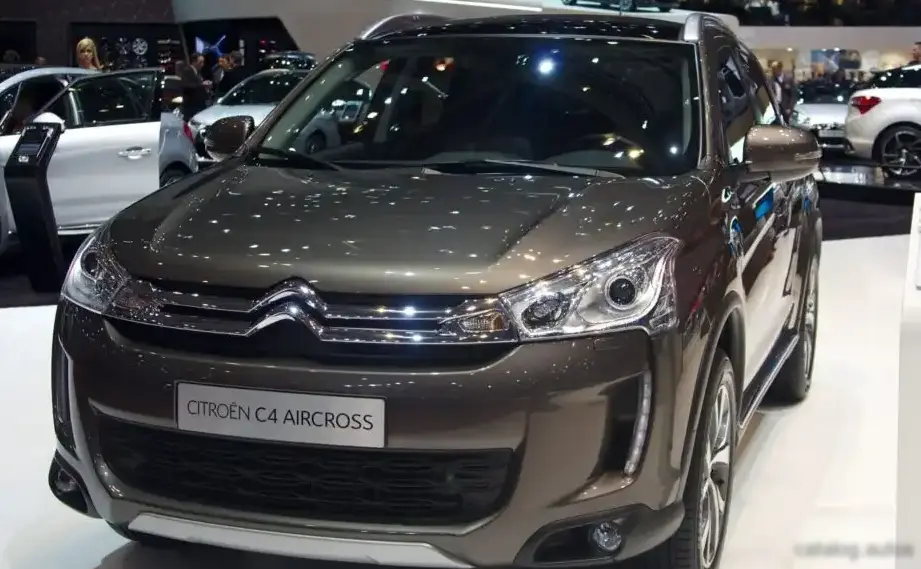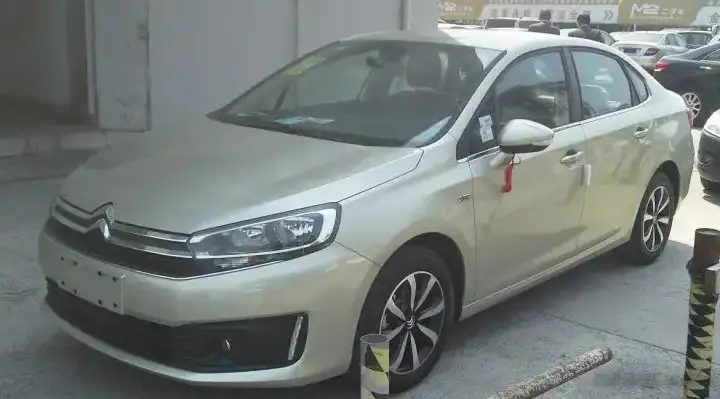
The Citroen C4 I Grand Picasso (Phase II), specifically the 2.0 HDI 150 horsepower variant equipped with the electronically controlled gearbox (EGS), was produced from 2012 to 2013. This model represents a mid-life refresh of the first-generation Grand Picasso (introduced in 2006), falling within the broader C4 Picasso range built on the PSA Peugeot Citroën EMP1 platform (also known as the 1HX0/A3 platform). Positioned as a mid-range offering, it aimed to balance fuel efficiency, practicality, and a more refined driving experience compared to lower-powered engine options. The Grand Picasso, in general, was Citroën’s entry into the increasingly popular compact minivan/MPV segment, designed to appeal to families seeking spaciousness and versatility.
Technical Specifications
| Brand | Citroen |
| Model | C4 |
| Generation | C4 I Grand Picasso (Phase II, 2010) |
| Type (Engine) | 2.0 HDI (150 Hp) EGS |
| Start of production | 2012 |
| End of production | 2013 |
| Powertrain Architecture | Internal Combustion engine |
| Body type | Minivan, MPV |
| Seats | 7 |
| Doors | 5 |
| Fuel consumption (urban) | 6.6 l/100 km (35.6 US mpg, 42.8 UK mpg, 15.2 km/l) |
| Fuel consumption (extra urban) | 4.5 l/100 km (52.3 US mpg, 62.8 UK mpg, 22.2 km/l) |
| Fuel consumption (combined) | 5.3 l/100 km (44.4 US mpg, 53.3 UK mpg, 18.9 km/l) |
| CO2 emissions | 137 g/km |
| Fuel Type | Diesel |
| Acceleration 0 – 100 km/h | 10.9 sec |
| Acceleration 0 – 62 mph | 10.9 sec |
| Acceleration 0 – 60 mph | 10.4 sec |
| Maximum speed | 195 km/h (121.17 mph) |
| Emission standard | Euro 5 |
| Weight-to-power ratio | 11.3 kg/Hp, 88.8 Hp/tonne |
| Weight-to-torque ratio | 5.6 kg/Nm, 177.5 Nm/tonne |
| Power | 150 Hp @ 3750 rpm |
| Power per litre | 75.1 Hp/l |
| Torque | 300 Nm @ 2000 rpm (221.27 lb.-ft. @ 2000 rpm) |
| Engine layout | Front, Transverse |
| Engine Model/Code | RHE DW10CTED4 |
| Engine displacement | 1997 cm3 (121.86 cu. in.) |
| Number of cylinders | 4 |
| Engine configuration | Inline |
| Cylinder Bore | 85 mm (3.35 in.) |
| Piston Stroke | 88 mm (3.46 in.) |
| Compression ratio | 16:1 |
| Number of valves per cylinder | 4 |
| Fuel injection system | Diesel Commonrail |
| Engine aspiration | Turbocharger, Intercooler |
| Valvetrain | DOHC |
| Engine oil capacity | 5 l (5.28 US qt | 4.4 UK qt) |
| Coolant | 8 l (8.45 US qt | 7.04 UK qt) |
| Kerb Weight | 1690 kg (3725.81 lbs.) |
| Max. weight | 2320 kg (5114.72 lbs.) |
| Max load | 630 kg (1388.91 lbs.) |
| Trunk (boot) space – minimum | 208 l (7.35 cu. ft.) |
| Trunk (boot) space – maximum | 1951 l (68.9 cu. ft.) |
| Fuel tank capacity | 60 l (15.85 US gal | 13.2 UK gal) |
| Permitted trailer load with brakes (8%) | 1600 kg (3527.4 lbs.) |
| Permitted trailer load without brakes | 750 kg (1653.47 lbs.) |
| Permitted towbar download | 70 kg (154.32 lbs.) |
| Length | 4590 mm (180.71 in.) |
| Width | 1830 mm (72.05 in.) |
| Width including mirrors | 2100 mm (82.68 in.) |
| Height | 1660-1710 mm (65.35 – 67.32 in.) |
| Wheelbase | 2728 mm (107.4 in.) |
| Front track | 1505 mm (59.25 in.) |
| Rear (Back) track | 1539 mm (60.59 in.) |
| Front overhang | 995 mm (39.17 in.) |
| Rear overhang | 867 mm (34.13 in.) |
| Drag coefficient (Cd) | 0.31 |
| Minimum turning circle (turning diameter) | 11.85 m (38.88 ft.) |
| Drivetrain Architecture | The Internal combustion engine (ICE) drives the front wheels of the vehicle. |
| Drive wheel | Front wheel drive |
| Number of gears and type of gearbox | 6 gears, automatic transmission EGS |
| Front suspension | Independent, type McPherson with coil spring and anti-roll bar |
| Rear suspension | Semi-independent, coil spring |
| Front brakes | Ventilated discs |
| Rear brakes | Disc |
| Assisting systems | ABS (Anti-lock braking system) |
| Steering type | Steering rack and pinion |
| Tires size | 215/50 R17 |
| Wheel rims size | 17 |
Powertrain & Engine Architecture
The heart of this Grand Picasso variant is the DW10CTED4, a 2.0-liter four-cylinder diesel engine. This engine is a common sight in PSA Group vehicles of the era. It features a cast iron block and aluminum cylinder head, employing a common rail direct injection system for optimized fuel delivery. The turbocharger, coupled with an intercooler, boosts power output to 150 horsepower at 3750 rpm and 300 Nm (221 lb-ft) of torque at 2000 rpm. The engine utilizes a double overhead camshaft (DOHC) valvetrain with four valves per cylinder, contributing to its relatively high specific output. The EGS (Electronically Controlled Gearbox) transmission is a six-speed automated manual transmission. Unlike a traditional automatic with a torque converter, the EGS uses actuators to shift gears, offering a blend of efficiency and convenience. However, it’s often criticized for being less smooth than conventional automatics.
Driving Characteristics
The 150 hp 2.0 HDI with the EGS transmission provides adequate performance for a family MPV. Acceleration from 0-60 mph takes around 10.4 seconds, and it reaches a top speed of 195 km/h (121 mph). While not sporty, it offers sufficient power for highway cruising and overtaking. The EGS transmission, while improving fuel economy, can exhibit noticeable shifts, particularly at lower speeds. Compared to the manual transmission versions of the same engine, the EGS sacrifices some responsiveness. The higher-output 163 hp version of the 2.0 HDI offered a more spirited driving experience, while the lower-powered 110 hp variant prioritized fuel economy. The Grand Picasso’s suspension is tuned for comfort, providing a relatively smooth ride, but body roll is present during cornering.
Equipment & Trim Levels
The 2.0 HDI 150 EGS Grand Picasso typically came equipped with features such as air conditioning, power windows, central locking, and an integrated audio system. Higher trim levels added features like alloy wheels, rear parking sensors, a panoramic sunroof, and leather upholstery. The interior design focused on practicality and spaciousness, with modular seating arrangements allowing for flexible cargo and passenger configurations. Safety features included ABS, electronic brakeforce distribution, and multiple airbags.
Chassis & Braking
The Grand Picasso utilizes a McPherson strut front suspension and a semi-independent coil spring rear suspension. The front brakes are ventilated discs, while the rear brakes are solid discs. The suspension setup is geared towards comfort and ride quality, prioritizing passenger well-being over sporty handling. The steering is a rack and pinion system, providing reasonable precision. The vehicle’s weight of approximately 1690 kg (3726 lbs) necessitates a robust braking system to ensure adequate stopping power.
Market Reception & Comparison
The Citroen C4 I Grand Picasso was generally well-received by critics for its spacious interior, versatile seating arrangements, and comfortable ride. The 2.0 HDI 150 EGS variant offered a good balance between performance and fuel economy, making it a popular choice for families. However, the EGS transmission was often criticized for its jerky shifts and lack of refinement compared to traditional automatic gearboxes. Fuel economy figures of around 44.4 US mpg combined were competitive for the segment. Compared to rivals like the Renault Scenic and Volkswagen Touran, the Grand Picasso stood out with its distinctive styling and innovative interior features.
Legacy
The DW10CTED4 engine, in general, is known for its durability and reliability, provided it receives regular maintenance. The EGS transmission, however, can be prone to issues, particularly with the clutch and actuator mechanisms. In the used car market, the 2.0 HDI 150 EGS Grand Picasso represents a relatively affordable and practical option for families. However, potential buyers should be aware of the potential maintenance costs associated with the EGS transmission and ensure a thorough inspection before purchase. The Grand Picasso helped establish Citroën as a key player in the compact MPV segment, paving the way for future generations of the model.