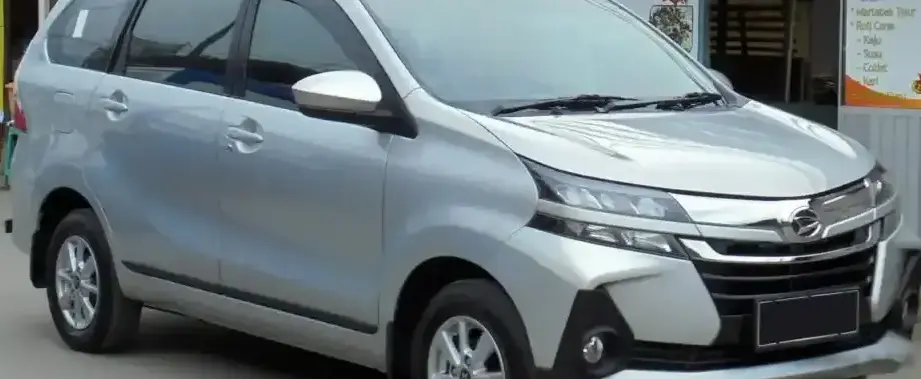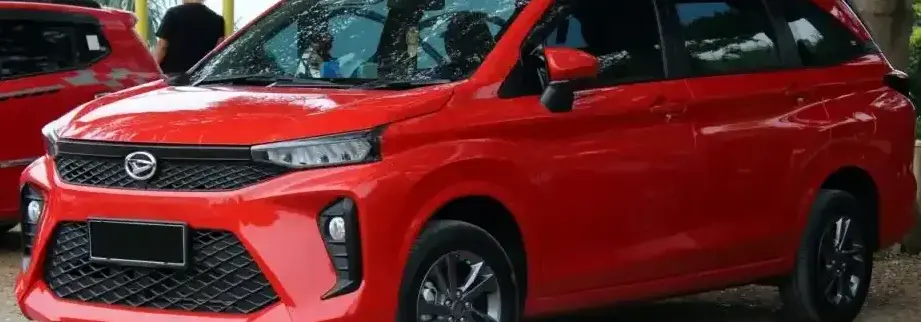
The Daihatsu Xenia III (W100) 1.3, producing 98 horsepower, represents an entry-level variant within the third generation of the Xenia multi-purpose vehicle (MPV). Introduced in 2021, this model is primarily targeted towards the Indonesian and broader Southeast Asian markets, where affordable and practical family transportation is highly valued. The W100 generation marked a significant shift for the Xenia, moving away from a rebadged Toyota Avanza to a more distinct Daihatsu design and engineering approach. This specific 1.3L CVT configuration served as the base model, offering a balance of fuel efficiency and accessibility for budget-conscious buyers.
Technical Specifications
| Brand | Daihatsu |
| Model | Xenia |
| Generation | Xenia III (W100) |
| Type (Engine) | 1.3 (98 Hp) CVT |
| Start of production | 2021 |
| Powertrain Architecture | Internal Combustion engine |
| Body type | MPV |
| Seats | 7 |
| Doors | 5 |
| Fuel Type | Petrol (Gasoline) |
| Weight-to-power ratio | 11.3 kg/Hp, 88.7 Hp/tonne |
| Weight-to-torque ratio | 9.1 kg/Nm, 110.4 Nm/tonne |
| Power | 98 Hp @ 6000 rpm |
| Power per litre | 73.7 Hp/l |
| Torque | 122 Nm @ 4200 rpm, 89.98 lb.-ft. @ 4200 rpm |
| Engine layout | Front, Transverse |
| Engine Model/Code | 1NR-VE |
| Engine displacement | 1329 cm3, 81.1 cu. in. |
| Number of cylinders | 4 |
| Engine configuration | Inline |
| Cylinder Bore | 72.5 mm, 2.85 in. |
| Piston Stroke | 80.5 mm, 3.17 in. |
| Number of valves per cylinder | 4 |
| Fuel injection system | Multi-port manifold injection |
| Engine aspiration | Naturally aspirated engine |
| Valvetrain | DOHC |
| Kerb Weight | 1105-1115 kg, 2436.11 – 2458.15 lbs. |
| Max. weight | 1705 kg, 3758.88 lbs. |
| Max load | 590-600 kg, 1300.73 – 1322.77 lbs. |
| Fuel tank capacity | 43 l, 11.36 US gal | 9.46 UK gal |
| Length | 4395 mm, 173.03 in. |
| Width | 1730 mm, 68.11 in. |
| Height | 1690 mm, 66.54 in. |
| Wheelbase | 2750 mm, 108.27 in. |
| Front track | 1515 mm, 59.65 in. |
| Rear (Back) track | 1510 mm, 59.45 in. |
| Ride height (ground clearance) | 195 mm, 7.68 in. |
| Drivetrain Architecture | The Internal combustion engine (ICE) drives the front wheels of the vehicle. |
| Drive wheel | Front wheel drive |
| Number of gears and type of gearbox | automatic transmission CVT |
| Front suspension | Independent type McPherson |
| Rear suspension | Torsion |
| Front brakes | Ventilated discs |
| Rear brakes | Drum |
| Assisting systems | ABS (Anti-lock braking system) |
| Steering type | Worm-reduction unit |
| Power steering | Electric Steering |
| Tires size | 185/65 R15 |
Powertrain & Engine Architecture
The heart of the Xenia III 1.3 CVT is the 1NR-VE engine, a 1.3-liter inline-four cylinder gasoline engine. This engine utilizes a dual overhead camshaft (DOHC) valvetrain and multi-point fuel injection to optimize combustion efficiency. The 1NR-VE is known for its relatively simple design, contributing to its reliability and ease of maintenance. The engine produces 98 horsepower at 6000 rpm and 122 Nm (89.98 lb-ft) of torque at 4200 rpm. Paired with this engine is a Continuously Variable Transmission (CVT). This CVT is designed to provide smooth, stepless gear changes, prioritizing fuel economy over outright acceleration. The CVT’s programming is tuned for comfortable city driving, with a focus on minimizing engine revolutions at cruising speeds.
Driving Characteristics
The 1.3L engine and CVT combination in the Xenia III delivers adequate, but not particularly spirited, performance. Acceleration is linear and predictable, suitable for navigating urban traffic and highway cruising. The CVT eliminates traditional gear shifts, resulting in a smooth driving experience, but it can sometimes feel less responsive than a conventional automatic transmission, especially during quick overtaking maneuvers. The relatively low horsepower output means that fully loading the Xenia with passengers and luggage will noticeably impact its performance. Compared to higher-trim Xenia models equipped with larger engines, this variant prioritizes fuel efficiency and affordability over outright power.
Equipment & Trim Levels
As the entry-level trim, the Xenia III 1.3 CVT typically comes equipped with basic amenities. Standard features generally include air conditioning, power windows, central locking, and a basic audio system. Interior upholstery is typically cloth, and the dashboard features a functional, if somewhat spartan, design. Optional extras, depending on the market and package selected, could include power side mirrors, a more advanced audio system with Bluetooth connectivity, and rear parking sensors. Safety features typically include ABS (Anti-lock Braking System) as standard, with airbags often available as an optional upgrade.
Chassis & Braking
The Xenia III utilizes a front-engine, front-wheel-drive layout. The front suspension employs an independent McPherson strut setup, providing a reasonable level of ride comfort. The rear suspension utilizes a torsion beam axle, a cost-effective solution that prioritizes space efficiency. Braking duties are handled by ventilated discs at the front and drum brakes at the rear. The braking system is adequate for the vehicle’s weight and intended use, but it lacks the stopping power of more sophisticated braking systems found in higher-end vehicles. The steering system is a worm-reduction unit with electric power steering, offering light and easy steering feel, particularly useful in congested urban environments.
Market Reception & Comparison
The Xenia III 1.3 CVT was generally well-received in its target markets as an affordable and practical family vehicle. Critics praised its fuel efficiency and spacious interior, but noted its lack of outright performance. Compared to other trims in the Xenia lineup, such as the 1.5L variants, the 1.3L model offered a more budget-friendly option, appealing to buyers who prioritized economy over power. In terms of reliability, the 1NR-VE engine has a generally good reputation, known for its durability and relatively low maintenance costs. However, the CVT transmission, while offering smooth operation, can be more expensive to repair or replace than a traditional automatic transmission.
Legacy
The Daihatsu Xenia III 1.3 CVT remains a popular choice in the used car market, particularly among buyers seeking an affordable and reliable MPV. Its simple engine design and readily available parts contribute to its relatively low cost of ownership. While not known for its performance, the 1.3L variant offers a practical and economical transportation solution for families. The W100 generation Xenia, and this 1.3L variant specifically, helped solidify Daihatsu’s position as a key player in the Southeast Asian MPV segment, offering a compelling alternative to competitors like the Toyota Avanza and Mitsubishi Xpander.