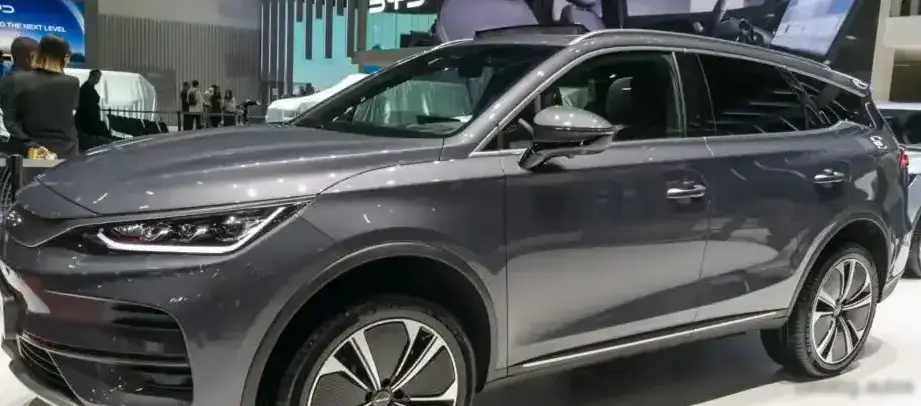
The BYD Tang II, specifically the facelifted 2021 model equipped with the 90.3 kWh battery pack and single electric motor producing 228 horsepower, represents a significant step in BYD’s expansion into the global electric vehicle market. Introduced in June 2022 and continuing production until April 2025, this variant of the Tang II aimed to provide a practical and relatively affordable all-electric SUV option, primarily targeting families and buyers seeking a spacious and technologically advanced vehicle. It slots into the Tang II lineup as a mid-range offering, balancing range, performance, and price point compared to other potential configurations.
Technical Specifications
| Brand | BYD |
| Model | Tang |
| Generation | Tang II (facelift 2021) |
| Type (Engine) | EV 90.3 kWh (228 Hp) |
| Start of production | June, 2022 |
| End of production | April, 2025 |
| Powertrain Architecture | BEV (Electric Vehicle) |
| Body type | SUV, Crossover |
| Seats | 6-7 |
| Doors | 5 |
| Fuel Type | Electricity |
| Gross battery capacity | 90.3 kWh |
| Battery technology | Lithium iron phosphate (LiFePO4) |
| Battery location | Below the floor |
| All-electric range (CLTC) | 600 km (372.82 mi) |
| Electric motor power | 228 Hp |
| Electric motor Torque | 350 Nm (258.15 lb.-ft.) |
| Electric motor location | Front axle, Transverse |
| Electric motor type | Synchronous |
| System power | 228 Hp |
| System torque | 350 Nm (258.15 lb.-ft.) |
| Length | 4900 mm (192.91 in.) |
| Width | 1950 mm (76.77 in.) |
| Height | 1725 mm (67.91 in.) |
| Wheelbase | 2820 mm (111.02 in.) |
| Front track | 1650 mm (64.96 in.) |
| Rear (Back) track | 1630 mm (64.17 in.) |
| Minimum turning circle (turning diameter) | 11.8 m (38.71 ft.) |
| Drivetrain Architecture | One electric motor drives the front wheels. |
| Drive wheel | Front wheel drive |
| Number of gears and type of gearbox | 1 gears, automatic transmission |
| Front suspension | Independent type McPherson |
| Rear suspension | Independent multi-link suspension |
| Front brakes | Ventilated discs |
| Rear brakes | Ventilated discs |
| Assisting systems | ABS (Anti-lock braking system) |
| Steering type | Steering rack and pinion |
| Power steering | Electric Steering |
| Tires size | 255/50 R20 |
| Wheel rims size | 20 |
Powertrain & Engine Architecture
The BYD Tang II 90.3 kWh utilizes a Blade Battery, a lithium iron phosphate (LiFePO4) battery pack known for its enhanced safety and thermal stability. Positioned under the vehicle floor, the 90.3 kWh battery provides a CLTC-rated range of 600 kilometers (373 miles). The powertrain centers around a single synchronous electric motor mounted transversely on the front axle, delivering 228 horsepower and 350 Nm (258 lb-ft) of torque. This configuration results in a front-wheel-drive vehicle. The single-speed automatic transmission is inherent to electric vehicle drivetrains, providing seamless acceleration without gear changes. BYD’s battery management system (BMS) plays a crucial role in optimizing battery performance, longevity, and safety, monitoring cell voltages, temperatures, and current flow.
Driving Characteristics
The 228 hp and 258 lb-ft of torque provide adequate, though not exhilarating, performance for everyday driving. Acceleration from 0 to 60 mph is estimated to be around 7.8 seconds. The single-speed transmission delivers instant torque, making merging onto highways and overtaking maneuvers relatively easy. Compared to potential higher-performance dual-motor versions of the Tang II, this front-wheel-drive variant offers a more comfortable and efficient driving experience, prioritizing range and fuel economy over outright speed. The front-wheel-drive setup can exhibit some torque steer under hard acceleration. The regenerative braking system allows for one-pedal driving in certain modes, enhancing efficiency and reducing brake wear.
Equipment & Trim Levels
The 2021 facelifted Tang II 90.3 kWh typically came standard with a comprehensive suite of features, including a large touchscreen infotainment system, a digital instrument cluster, leather upholstery, heated and ventilated front seats, a panoramic sunroof, and a suite of advanced driver-assistance systems (ADAS) such as adaptive cruise control, lane keeping assist, and automatic emergency braking. Higher trim levels offered additional features like premium audio systems, massaging seats, and more sophisticated ADAS functionalities. The interior design emphasized a modern and minimalist aesthetic, with high-quality materials and a spacious cabin accommodating up to seven passengers depending on the seating configuration.
Chassis & Braking
The Tang II utilizes an independent McPherson strut suspension at the front and an independent multi-link suspension at the rear, providing a comfortable ride quality and decent handling characteristics. Ventilated disc brakes are employed on all four wheels, ensuring adequate stopping power. The electric steering system offers light and precise steering feel. The vehicle’s relatively high weight, due to the large battery pack, necessitates a robust suspension setup to maintain stability and control. ABS (Anti-lock Braking System) is standard, enhancing braking performance in emergency situations.
Market Reception & Comparison
The BYD Tang II 90.3 kWh was generally well-received by automotive critics, who praised its spacious interior, long range, and comprehensive feature set. However, some reviewers noted that the interior materials, while good, didn’t quite match the quality of established European or American competitors. Compared to other electric SUVs in its class, the Tang II offered a competitive price point and a longer range than many rivals. Its fuel economy, measured in kilowatt-hours per 100 kilometers, was comparable to other EVs with similar battery capacities. Reliability reports have been generally positive, with owners reporting few major issues.
Legacy
The BYD Tang II 90.3 kWh played a crucial role in establishing BYD as a serious contender in the global EV market. Its combination of practicality, range, and affordability appealed to a wide range of buyers. The Blade Battery technology, utilized in this variant, has become a hallmark of BYD’s electric vehicle offerings, known for its safety and durability. In the used car market, the Tang II 90.3 kWh holds its value reasonably well, particularly models with low mileage and well-maintained batteries. The powertrain has proven to be relatively reliable, with the primary concern for potential buyers being the long-term health of the battery pack. As battery technology continues to evolve, the Tang II represents an important stepping stone in the transition towards a fully electric future.