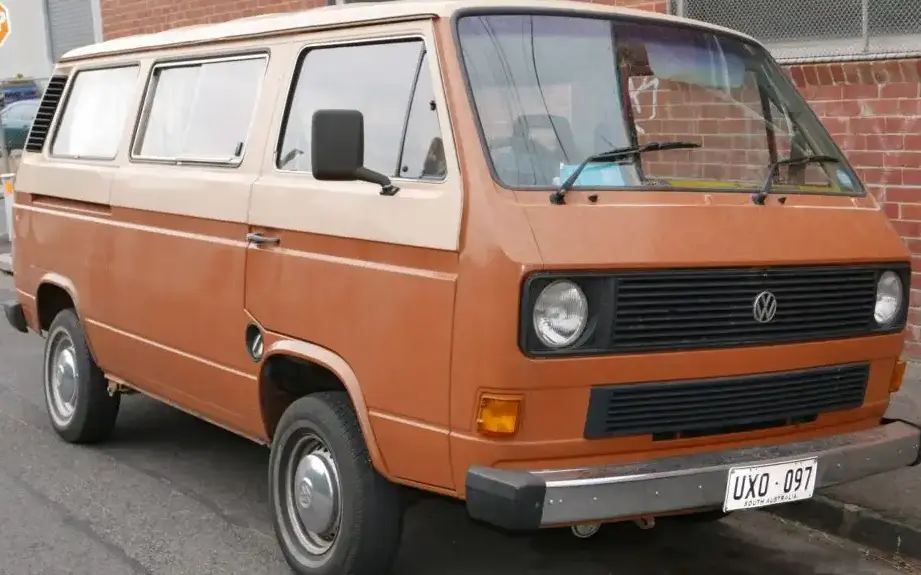
The Volkswagen Caravelle (T6.1), specifically the long wheelbase variant equipped with the 2.0 TDI 204 horsepower engine and a 7-speed Dual Clutch Gearbox (DSG), represents a significant iteration of Volkswagen’s popular multi-purpose vehicle. Produced from 2021 to 2023, this version of the Caravelle falls within the T6.1 generation, a facelift of the T6, bringing updated styling, technology, and improved efficiency. Positioned as a mid-to-high range offering within the Caravelle lineup, it catered to buyers seeking a balance of performance, comfort, and practicality for both family and commercial use. The T6.1 Caravelle continued Volkswagen’s tradition of offering a versatile vehicle capable of serving as a passenger carrier, a mobile office, or even a camper van base.
Technical Specifications
| Brand | Volkswagen |
| Model | Caravelle |
| Generation | Caravelle (T6.1, facelift 2019) Long |
| Type (Engine) | 2.0 TDI (204 Hp) DSG |
| Start of production | 2021 |
| End of production | 2023 |
| Powertrain Architecture | Internal Combustion engine |
| Body type | Van |
| Seats | 4-9 |
| Doors | 4-5 |
| Fuel consumption at Low speed (WLTP) | 9.4-10.4 l/100 km (25 – 22.6 US mpg, 30.1 – 27.2 UK mpg, 10.6 – 9.6 km/l) |
| Fuel consumption at Medium speed (WLTP) | 7.2-8 l/100 km (32.7 – 29.4 US mpg, 39.2 – 35.3 UK mpg, 13.9 – 12.5 km/l) |
| Fuel consumption at high speed (WLTP) | 6.5-7.1 l/100 km (36.2 – 33.1 US mpg, 43.5 – 39.8 UK mpg, 15.4 – 14.1 km/l) |
| Fuel consumption at very high speed (WLTP) | 7.9-8.8 l/100 km (29.8 – 26.7 US mpg, 35.8 – 32.1 UK mpg, 12.7 – 11.4 km/l) |
| Combined fuel consumption (WLTP) | 7.5-8.3 l/100 km (31.4 – 28.3 US mpg, 37.7 – 34 UK mpg, 13.3 – 12 km/l) |
| CO2 emissions (WLTP) | 198-218 g/km |
| Fuel consumption (economy) – urban (NEDC, WLTP equivalent) | 7.6-7.7 l/100 km (30.9 – 30.5 US mpg, 37.2 – 36.7 UK mpg, 13.2 – 13 km/l) |
| Fuel consumption (economy) – extra urban (NEDC, WLTP equivalent) | 5.9-6.1 l/100 km (39.9 – 38.6 US mpg, 47.9 – 46.3 UK mpg, 16.9 – 16.4 km/l) |
| Fuel consumption (economy) – combined (NEDC, WLTP equivalent) | 6.5-6.7 l/100 km (36.2 – 35.1 US mpg, 43.5 – 42.2 UK mpg, 15.4 – 14.9 km/l) |
| CO2 emissions (NEDC, WLTP equivalent) | 171-175 g/km |
| Fuel Type | Diesel |
| Acceleration 0 – 100 km/h | 9.1 sec |
| Acceleration 0 – 62 mph | 9.1 sec |
| Acceleration 0 – 60 mph | 8.6 sec |
| Maximum speed | 203 km/h (126.14 mph) |
| Emission standard | Euro 6d-ISC-FCM |
| Weight-to-power ratio | 10.7 kg/Hp, 93.5 Hp/tonne |
| Weight-to-torque ratio | 4.8 kg/Nm, 206.2 Nm/tonne |
| Power | 204 Hp @ 4000 rpm |
| Torque | 450 Nm @ 1400-2250 rpm (331.9 lb.-ft. @ 1400-2250 rpm) |
| Engine layout | Front, Transverse |
| Engine Model/Code | EA288MAR / DMZA |
| Engine displacement | 1968 cm3 (120.09 cu. in.) |
| Number of cylinders | 4 |
| Engine configuration | Inline |
| Cylinder Bore | 81 mm (3.19 in.) |
| Piston Stroke | 95.5 mm (3.76 in.) |
| Compression ratio | 15.5:1 |
| Number of valves per cylinder | 4 |
| Fuel injection system | Diesel Commonrail |
| Engine aspiration | BiTurbo, Intercooler |
| Valvetrain | DOHC |
| Engine oil capacity | 7.4 l (7.82 US qt | 6.51 UK qt) |
| Kerb Weight | 2182-2381 kg (4810.49 – 5249.21 lbs.) |
| Max. weight | 3080-3200 kg (6790.24 – 7054.79 lbs.) |
| Max load | 819-898 kg (1805.59 – 1979.75 lbs.) |
| Trunk (boot) space – maximum | 6700 l (236.61 cu. ft.) |
| Fuel tank capacity | 70 l (18.49 US gal | 15.4 UK gal) |
| AdBlue tank | 22 l (5.81 US gal | 4.84 UK gal) |
| Max. roof load | 100 kg (220.46 lbs.) |
| Permitted trailer load with brakes (12%) | 2220 kg (4894.26 lbs.) |
| Permitted trailer load without brakes | 750 kg (1653.47 lbs.) |
| Permitted towbar download | 100 kg (220.46 lbs.) |
| Length | 5304 mm (208.82 in.) |
| Width | 1904 mm (74.96 in.) |
| Width including mirrors | 2297 mm (90.43 in.) |
| Height | 1990 mm (78.35 in.) |
| Wheelbase | 3400 mm (133.86 in.) |
| Front suspension | Independent, type McPherson with coil spring and anti-roll bar |
| Rear suspension | Independent coil spring, Wishbone, Transverse stabilizer |
| Front brakes | Ventilated discs, 340×32.5 mm |
| Rear brakes | Ventilated discs, 294×22 mm |
| Number of gears and type of gearbox | 7 gears, automatic transmission DSG |
Powertrain & Engine Architecture
The heart of this Caravelle variant is the EA288MAR, specifically the DMZA engine code, a 2.0-liter inline four-cylinder turbocharged diesel engine. This engine utilizes a sophisticated bi-turbocharger setup – a combination of a low-pressure and a high-pressure turbo – to deliver both strong low-end torque and high-end power. The engine employs a common rail direct fuel injection system, operating at extremely high pressures to ensure efficient combustion and reduced emissions. The valvetrain is a Dual Overhead Camshaft (DOHC) design with four valves per cylinder, optimizing gas flow for improved performance. Paired with this engine is the 7-speed DSG (Dual Clutch Gearbox), a highly efficient and responsive automatic transmission known for its quick shifts and smooth operation. The DSG allows for both fully automatic operation and manual gear selection via paddle shifters or the gear lever.
Driving Characteristics
The 204 horsepower and 450 Nm (331.9 lb-ft) of torque provided by this powertrain configuration deliver a capable and refined driving experience. While not overtly sporty, the Caravelle offers ample power for comfortable highway cruising and effortless overtaking. The DSG transmission contributes to smooth acceleration and efficient gear changes. Compared to lower-powered Caravelle variants, such as those with the 102 hp engine, this 2.0 TDI offers a significant performance boost. However, it doesn’t match the outright acceleration of the more powerful, albeit less fuel-efficient, petrol engines. The DSG’s gear ratios are tuned for a balance of fuel economy and responsiveness, providing adequate acceleration in most driving situations. The front-wheel-drive configuration provides predictable handling, although it can exhibit some torque steer under hard acceleration.
Equipment & Trim Levels
The Caravelle T6.1 Long 2.0 TDI 204 DSG typically came equipped with a generous level of standard features. These included air conditioning, power windows, central locking, and an infotainment system with a touchscreen display. Higher trim levels offered upgrades such as leather upholstery, heated seats, a navigation system, and parking sensors. Optional extras included features like adaptive cruise control, a panoramic sunroof, and a tow hitch. Interior upholstery was typically a durable cloth, with leather options available. The dashboard layout was functional and well-designed, prioritizing practicality and ease of use.
Chassis & Braking
The Caravelle T6.1 utilizes an independent suspension setup on both the front and rear axles. The front suspension employs McPherson struts with coil springs and an anti-roll bar, while the rear features an independent coil spring setup with wishbones and a transverse stabilizer. This suspension configuration provides a comfortable ride quality, even when the vehicle is fully loaded. Braking duties are handled by ventilated disc brakes on all four wheels, providing ample stopping power. Anti-lock Braking System (ABS) is standard, enhancing safety and stability during emergency braking maneuvers.
Market Reception & Comparison
The Caravelle T6.1 2.0 TDI 204 DSG was generally well-received by automotive critics. It was praised for its comfortable ride, spacious interior, and efficient powertrain. The DSG transmission was also lauded for its smooth operation and responsiveness. Compared to other trims in the Caravelle lineup, this variant offered a compelling balance of performance and fuel economy. While the lower-powered diesel engines were more economical, they lacked the punch of the 2.0 TDI. The petrol engines offered more power but at the expense of fuel efficiency. Reliability was generally good, although some owners reported minor issues with the DSG transmission.
Legacy
The Volkswagen Caravelle T6.1 2.0 TDI 204 DSG has proven to be a durable and reliable vehicle. The EA288 engine, while complex, is generally considered to be robust when properly maintained. The DSG transmission, while requiring occasional servicing, is a proven technology. On the used car market, these Caravelles hold their value relatively well, reflecting their reputation for quality and versatility. They remain a popular choice for families, businesses, and individuals seeking a practical and comfortable multi-purpose vehicle.