Technical Specifications
| Brand | Audi |
| Model | A3 |
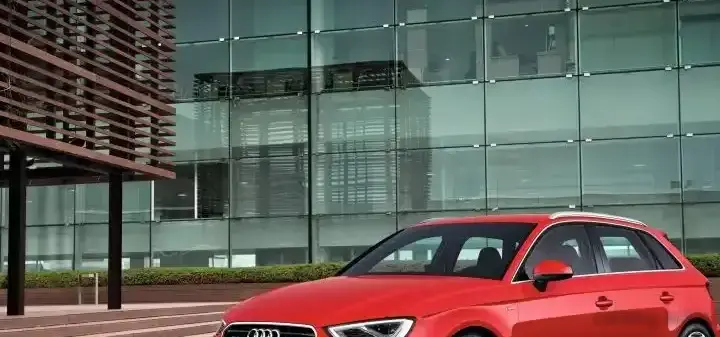
| Generation | A3 Sportback (8V) |
| Type (Engine) | 1.2 TFSI (105 Hp) |
| Start of production | 2014 |
| End of production | 2016 |
| Powertrain Architecture | Internal Combustion engine |
| Body type | Hatchback |
| Seats | 5 |
| Doors | 5 |
| Fuel consumption (urban) | 6.2 l/100 km (37.9 US mpg, 45.6 UK mpg, 16.1 km/l) |
| Fuel consumption (extra urban) | 4.2 l/100 km (56 US mpg, 67.3 UK mpg, 23.8 km/l) |
| Fuel consumption (combined) | 4.9 l/100 km (48 US mpg, 57.6 UK mpg, 20.4 km/l) |
| CO2 emissions | 114 g/km |
| Fuel Type | Petrol (Gasoline) |
| Acceleration 0 – 100 km/h | 10.5 sec |
| Acceleration 0 – 62 mph | 10.5 sec |
| Acceleration 0 – 60 mph | 10 sec |
| Maximum speed | 193 km/h (119.92 mph) |
| Emission standard | Euro 6 |
| Weight-to-power ratio | 11.2 kg/Hp, 89 Hp/tonne |
| Weight-to-torque ratio | 6.7 kg/Nm, 148.3 Nm/tonne |
| Power | 105 Hp @ 5000 rpm |
| Power per litre | 87.7 Hp/l |
| Torque | 175 Nm @ 1400-4000 rpm (129.07 lb.-ft. @ 1400-4000 rpm) |
| Engine layout | Front, Transverse |
| Engine Model/Code | CJZA |
| Engine displacement | 1197 cm3 (73.05 cu. in.) |
| Number of cylinders | 4 |
| Engine configuration | Inline |
| Cylinder Bore | 71 mm (2.8 in.) |
| Piston Stroke | 75.6 mm (2.98 in.) |
| Compression ratio | 10.5:1 |
| Number of valves per cylinder | 4 |
| Fuel injection system | Direct injection |
| Engine aspiration | Turbocharger, Intercooler |
| Valvetrain | DOHC |
| Engine oil capacity | 4 l (4.23 US qt | 3.52 UK qt) |
| Kerb Weight | 1180 kg (2601.45 lbs.) |
| Max. weight | 1740 kg (3836.04 lbs.) |
| Max load | 560 kg (1234.59 lbs.) |
| Trunk (boot) space – minimum | 380 l (13.42 cu. ft.) |
| Trunk (boot) space – maximum | 1220 l (43.08 cu. ft.) |
| Fuel tank capacity | 50 l (13.21 US gal | 11 UK gal) |
| Max. roof load | 75 kg (165.35 lbs.) |
| Permitted trailer load with brakes (8%) | 1500 kg (3306.93 lbs.) |
| Permitted trailer load with brakes (12%) | 1300 kg (2866.01 lbs.) |
| Permitted trailer load without brakes | 620 kg (1366.87 lbs.) |
| Permitted towbar download | 75 kg (165.35 lbs.) |
| Length | 4310 mm (169.69 in.) |
| Width | 1786 mm (70.31 in.) |
| Width including mirrors | 1966 mm (77.4 in.) |
| Height | 1426 mm (56.14 in.) |
| Wheelbase | 2636 mm (103.78 in.) |
| Front track | 1536 mm (60.47 in.) |
| Rear (Back) track | 1506 mm (59.29 in.) |
| Front overhang | 869 mm (34.21 in.) |
| Rear overhang | 805 mm (31.69 in.) |
| Drag coefficient (Cd) | 0.31 |
| Minimum turning circle (turning diameter) | 10.9 m (35.76 ft.) |
| Drivetrain Architecture | The Internal combustion engine (ICE) drives the front wheels of the vehicle. |
| Drive wheel | Front wheel drive |
| Number of gears and type of gearbox | 6 gears, manual transmission |
| Front suspension | Independent, type McPherson with coil spring and anti-roll bar |
| Rear suspension | Semi-independent, coil spring |
| Front brakes | Ventilated discs |
| Rear brakes | Disc |
| Assisting systems | ABS (Anti-lock braking system) |
| Steering type | Steering rack and pinion |
| Power steering | Electric Steering |
| Tires size | 205/55 R16 |
| Wheel rims size | 6.5J x 16 |
The Audi A3 Sportback (8V) 1.2 TFSI, producing 105 horsepower, was a key entry point into the third-generation A3 range, manufactured from 2014 to 2016. Positioned as a fuel-efficient and accessible option within the 8V A3 Sportback lineup, it catered to buyers prioritizing economy and practicality over outright performance. This variant occupied the lower end of the engine choices, sitting below the more powerful 1.8 TFSI and 2.0 TFSI models, as well as the diesel-powered TDI variants. It was primarily a European market vehicle, designed to meet the demands of densely populated areas and stringent fuel economy regulations.
Powertrain & Engine Architecture
The heart of this A3 Sportback variant is the CJZA engine, a 1.2-liter turbocharged four-cylinder petrol engine. This engine is part of Volkswagen Group’s EA111 family, known for its compact size and efficiency. The CJZA utilizes direct fuel injection (FSI) and a single turbocharger with an intercooler to boost power and torque. The direct injection system precisely meters fuel into the combustion chamber, improving combustion efficiency and reducing emissions. The engine features a double overhead camshaft (DOHC) valvetrain with four valves per cylinder, optimizing gas flow for enhanced performance. The 6-speed manual transmission was standard, offering precise gear changes and contributing to the car’s overall fuel efficiency. While a 7-speed S tronic dual-clutch transmission was available as an option on other A3 models, it wasn’t typically paired with the 1.2 TFSI engine.
Driving Characteristics
The 1.2 TFSI engine, while not designed for blistering acceleration, provided adequate performance for everyday driving. With 105 horsepower and 175 Nm (129 lb-ft) of torque, the A3 Sportback 1.2 TFSI could reach 0-62 mph (0-100 km/h) in 10.5 seconds and achieve a top speed of 193 km/h (119.92 mph). The turbocharger provides a noticeable boost in power at lower engine speeds, making it relatively easy to keep up with traffic. However, compared to the 1.8 TFSI or 2.0 TFSI models, the 1.2 TFSI felt less responsive and required more downshifting for overtaking maneuvers. The manual transmission’s gear ratios were tuned for fuel economy, resulting in a slightly less engaging driving experience than the more performance-oriented A3 variants.
Equipment & Trim Levels
The 1.2 TFSI typically came equipped with a reasonable level of standard features, positioning it as a well-equipped entry-level model. Standard equipment often included air conditioning, a basic infotainment system with a color display, alloy wheels, and electric windows. Safety features such as ABS, electronic stability control, and multiple airbags were also standard. Optional extras included upgrades to the infotainment system (such as navigation and Bluetooth connectivity), parking sensors, and a panoramic sunroof. Interior upholstery was typically cloth, with options for leather upgrades available at an additional cost. Trim levels varied slightly depending on the market, but generally, the 1.2 TFSI was offered in SE or Sport trims, with the Sport trim adding features like sport seats and a sport suspension.
Chassis & Braking
The A3 Sportback 8V utilized a McPherson strut front suspension and a semi-independent rear suspension. This setup provided a comfortable ride quality while maintaining decent handling characteristics. The front suspension featured a coil spring and anti-roll bar to reduce body roll during cornering. The braking system consisted of ventilated discs at the front and solid discs at the rear, providing adequate stopping power for the car’s weight and performance. ABS (Anti-lock Braking System) was standard, enhancing braking performance and stability in emergency situations. The electric power steering offered light and precise steering feel, making it easy to maneuver in urban environments.
Market Reception & Comparison
The Audi A3 Sportback 1.2 TFSI was generally well-received by critics as a practical and fuel-efficient hatchback. It was praised for its comfortable ride, well-appointed interior, and low running costs. However, some reviewers noted that the engine lacked the punch of the more powerful A3 variants. Compared to the 1.8 TFSI, the 1.2 TFSI offered significantly better fuel economy but considerably less performance. The 1.8 TFSI was often seen as a more balanced option for drivers who wanted a blend of performance and efficiency. The diesel-powered TDI models offered even better fuel economy but came with a higher purchase price and potential concerns about diesel emissions.
Legacy
The 1.2 TFSI engine, while not known for being a powerhouse, proved to be relatively reliable in the A3 Sportback 8V. Common issues were generally limited to turbocharger wear and occasional problems with the direct injection system. However, with proper maintenance, these engines could provide years of reliable service. In the used car market, the A3 Sportback 1.2 TFSI remains an affordable and practical option for buyers seeking a compact hatchback with a premium badge. Its fuel efficiency and relatively low maintenance costs make it an attractive choice for city driving and commuting. While it may not offer the same level of performance as its more powerful siblings, it represents a sensible and economical entry point into the Audi A3 range.