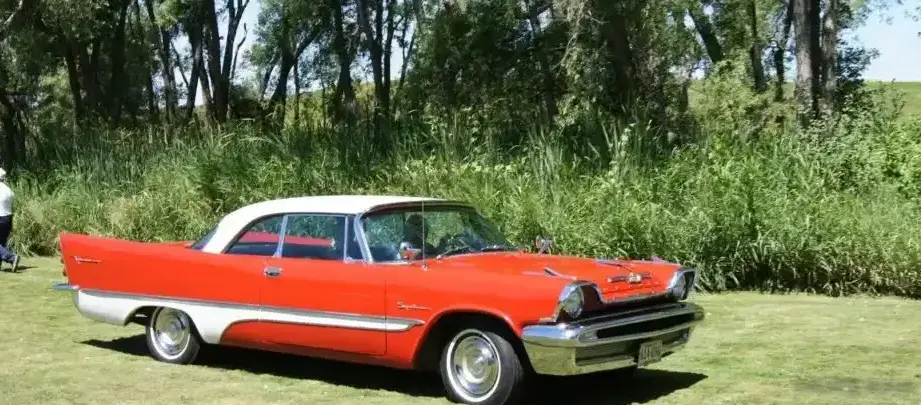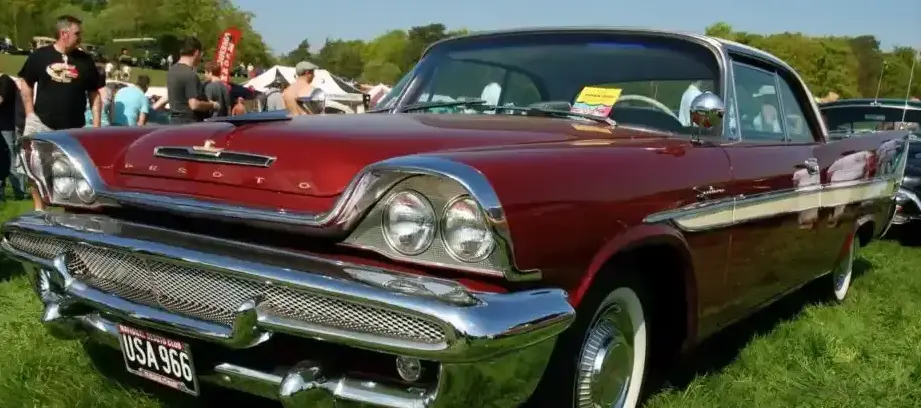
The DeSoto Firesweep I 2-Door Sportsman, specifically the 1958 facelifted model with the 5.7L V8 engine producing 280 horsepower, represents a pivotal, though ultimately short-lived, moment in DeSoto’s history. Produced from 1957 to 1958, the Firesweep was DeSoto’s entry into the burgeoning “muscle car” segment, albeit one still heavily influenced by the styling conventions of the 1950s. This particular variant, positioned as a sporty coupe, aimed to attract buyers seeking a blend of performance and family comfort. The Firesweep was built on the Chrysler corporation’s forward-look platform, sharing components with Dodge and Plymouth models, but offering a more upscale experience. The 1958 facelift brought revised styling, including a more prominent grille and altered tailfin design, attempting to keep the Firesweep competitive in a rapidly changing market.
Technical Specifications
| Brand | DeSoto |
| Model | Firesweep |
| Generation | Firesweep I 2-Door Sportsman (facelift 1958) |
| Type (Engine) | 5.7 V8 (280 Hp) |
| Start of production | 1957 |
| End of production | 1958 |
| Powertrain Architecture | Internal Combustion engine |
| Body type | Coupe |
| Seats | 6 |
| Doors | 2 |
| Fuel Type | Petrol (Gasoline) |
| Weight-to-power ratio | 6.2 kg/Hp, 160.1 Hp/tonne |
| Weight-to-torque ratio | 3.4 kg/Nm, 294.5 Nm/tonne |
| Power | 280 Hp @ 4600 rpm |
| Power per litre | 48.8 Hp/l |
| Torque | 515 Nm @ 2400 rpm, 379.84 lb.-ft. @ 2400 rpm |
| Engine displacement | 5735 cm3, 349.97 cu. in. |
| Number of cylinders | 8 |
| Engine configuration | V-engine |
| Cylinder Bore | 103.12 mm, 4.06 in. |
| Piston Stroke | 85.85 mm, 3.38 in. |
| Compression ratio | 10:1 |
| Number of valves per cylinder | 2 |
| Fuel injection system | Carburettor |
| Engine aspiration | Naturally aspirated engine |
| Valvetrain | OHV |
| Engine oil capacity | 3.8 l, 4.02 US qt | 3.34 UK qt |
| Coolant | 16.1 l, 17.01 US qt | 14.17 UK qt |
| Kerb Weight | 1749 kg, 3855.88 lbs |
| Fuel tank capacity | 76 l, 20.08 US gal | 16.72 UK gal |
| Length | 5499 mm, 216.5 in |
| Width | 1989 mm, 78.31 in |
| Height | 1443 mm, 56.81 in |
| Wheelbase | 3099 mm, 122.01 in |
| Front track | 1547 mm, 60.91 in |
| Rear (Back) track | 1516 mm, 59.69 in |
| Front overhang | 940 mm, 37.01 in |
| Rear overhang | 1461 mm, 57.52 in |
| Ride height (ground clearance) | 142 mm, 5.59 in |
| Minimum turning circle (turning diameter) | 14.2 m, 46.59 ft |
| Approach angle | 16.5° |
| Departure angle | 11.4° |
| Ramp-over (brakeover) angle | 10.5° |
| Drivetrain Architecture | The Internal combustion engine (ICE) drives the rear wheels of the vehicle. |
| Drive wheel | Rear wheel drive |
| Number of gears and type of gearbox | 3 gears, manual transmission |
| Front suspension | Independent coil spring |
| Rear suspension | Leaf spring |
| Front brakes | Drum, 279 mm |
| Rear brakes | Drum, 279 mm |
| Steering type | Worm-reduction unit |
Powertrain & Engine Architecture
The heart of the 1958 Firesweep Sportsman was the Chrysler’s 5.7-liter (349.97 cubic inch) V8 engine. This engine, designated within Chrysler as the “B” engine family, was a robust and relatively simple design. It featured a cast iron block and cylinder heads, with an overhead valve (OHV) configuration. The 280 horsepower output was achieved through a four-barrel carburetor, a 10:1 compression ratio, and a relatively aggressive camshaft profile for the era. The engine’s torque peak of 379.84 lb-ft at 2400 rpm provided ample low-end grunt, making it suitable for both cruising and spirited driving. The standard transmission for this model was a three-speed manual, although a TorqueFlite automatic transmission was available as an option. The automatic, while offering convenience, did slightly diminish the car’s acceleration potential.
Driving Characteristics
The 1958 Firesweep 2-Door Sportsman with the 5.7L V8 and manual transmission offered a surprisingly engaging driving experience for a car of its size and era. The 280 horsepower provided brisk acceleration, and the engine’s torque made it feel strong even at lower speeds. The three-speed manual gearbox, while not particularly sophisticated by modern standards, allowed for precise control over the engine’s power. Compared to the automatic transmission version, the manual offered a more direct connection to the engine and improved fuel economy. However, the Firesweep’s large size and relatively soft suspension meant it wasn’t a corner carver. The leaf spring rear suspension, while durable, could lead to some axle hop during hard acceleration. The steering, utilizing a worm-reduction unit, was somewhat vague and required a good amount of effort.
Equipment & Trim Levels
The Firesweep Sportsman was positioned as a mid-range offering within the DeSoto lineup. Standard equipment included a full wheel cover, two-tone paint, a deluxe steering wheel, and a generously sized bench seat upholstered in durable cloth and vinyl. Optional extras included power steering, power brakes, a radio, and whitewall tires. The interior, while stylish, was typical of American cars of the late 1950s, featuring a large dashboard with prominent gauges and a focus on comfort. The two-door coupe body style offered easy access to the rear seats, making it a practical choice for families.
Chassis & Braking
The Firesweep’s chassis was a traditional body-on-frame construction, providing a comfortable ride but also contributing to its substantial weight. The front suspension utilized independent coil springs, while the rear suspension employed leaf springs. This setup prioritized ride comfort over handling precision. The braking system consisted of drum brakes on all four wheels, measuring 279mm in diameter. While adequate for the car’s weight and performance, the drum brakes lacked the stopping power and fade resistance of disc brakes, which were still relatively uncommon at the time.
Market Reception & Comparison
The 1958 Firesweep received mixed reviews from automotive critics. While the engine was praised for its power and smoothness, the car’s styling was considered somewhat conservative compared to the more flamboyant designs offered by competitors like Chevrolet and Ford. The Firesweep’s relatively high price also hindered its sales. Compared to the base DeSoto Firesweep models with smaller engines, the 5.7L V8 version offered a significant performance upgrade, but at a considerable cost. The automatic transmission version, while popular with buyers seeking convenience, was generally considered less desirable by enthusiasts due to its reduced performance. Fuel economy, unsurprisingly, was poor by modern standards, averaging around 15-18 miles per gallon.
Legacy
The DeSoto Firesweep, and the DeSoto brand as a whole, was discontinued after the 1961 model year. The Firesweep’s short production run and relatively low sales numbers mean it’s a relatively rare car today. The 5.7L V8 engine, however, proved to be a durable and reliable powerplant, and many examples are still running today. In the used car market, well-maintained Firesweeps are sought after by collectors and enthusiasts who appreciate their classic styling and robust mechanicals. While not a groundbreaking performance car, the 1958 Firesweep 2-Door Sportsman represents a fascinating chapter in American automotive history, embodying the optimism and excess of the late 1950s.