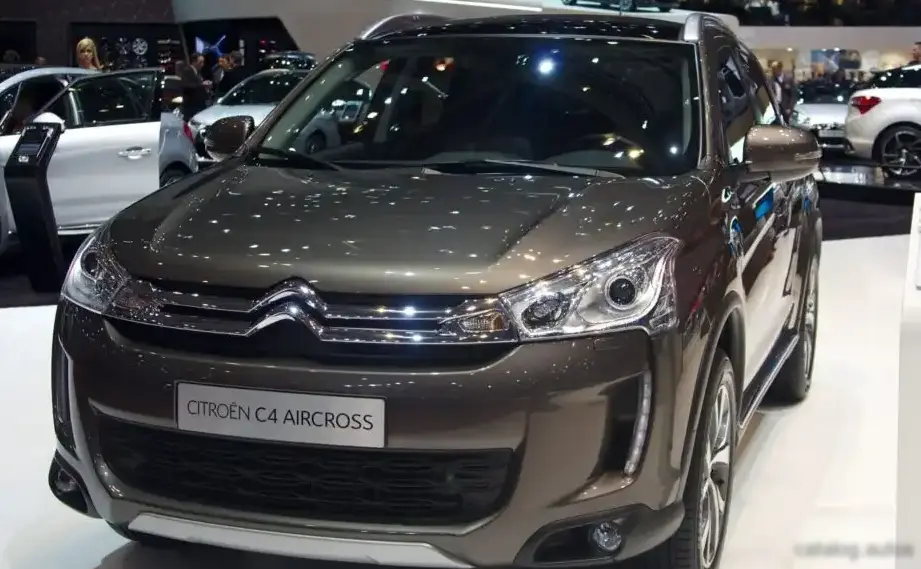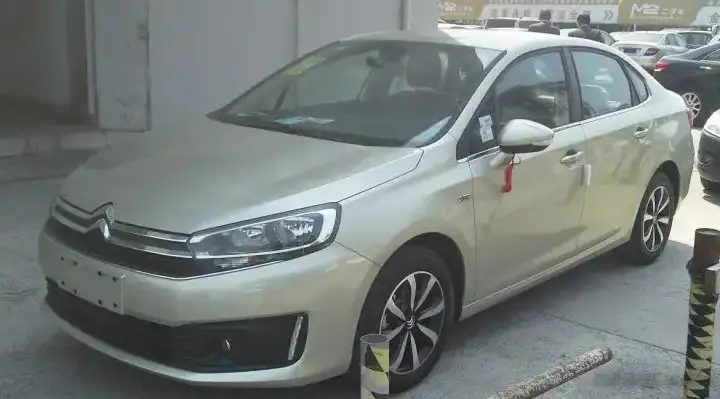
The Citroën C4 I Hatchback, specifically the 2.0 HDi 16V (136 hp) FAP variant produced between 2004 and 2008, represents a significant offering in the compact family car segment. Introduced as part of the first generation C4 (Typ B7) range, this model aimed to provide a blend of comfort, practicality, and fuel efficiency, appealing to buyers seeking a modern and refined hatchback. It was positioned as a mid-range option within the C4 lineup, offering a step up in performance and features compared to the lower-powered petrol engines, while remaining more accessible than the range-topping models. The C4 itself was a replacement for both the Xsara and the Berlingo, consolidating Citroën’s offerings in the compact and family car sectors.
Technical Specifications
| Brand | Citroen |
| Model | C4 |
| Generation | C4 I Hatchback (Phase I, 2004) |
| Type (Engine) | 2.0 HDi 16V (136 Hp) FAP |
| Start of production | 2004 |
| End of production | 2008 |
| Powertrain Architecture | Internal Combustion engine |
| Body type | Hatchback |
| Seats | 5 |
| Doors | 5 |
| Fuel consumption (urban) | 7.1 l/100 km (33.1 US mpg, 39.8 UK mpg, 14.1 km/l) |
| Fuel consumption (extra urban) | 4.5 l/100 km (52.3 US mpg, 62.8 UK mpg, 22.2 km/l) |
| Fuel consumption (combined) | 5.4 l/100 km (43.6 US mpg, 52.3 UK mpg, 18.5 km/l) |
| CO2 emissions | 142 g/km |
| Fuel Type | Diesel |
| Acceleration 0 – 100 km/h | 10.5 sec |
| Acceleration 0 – 62 mph | 10.5 sec |
| Acceleration 0 – 60 mph | 10 sec |
| Maximum speed | 207 km/h (128.62 mph) |
| Emission standard | Euro 4 |
| Weight-to-power ratio | 10.2 kg/Hp, 98.5 Hp/tonne |
| Weight-to-torque ratio | 4.1 kg/Nm, 246.2 Nm/tonne |
| Power | 136 Hp @ 4000 rpm |
| Power per litre | 68.1 Hp/l |
| Torque | 340 Nm @ 2000 rpm (250.77 lb.-ft. @ 2000 rpm) |
| Engine layout | Front, Transverse |
| Engine Model/Code | RHR DW10BTED4 |
| Engine displacement | 1997 cm3 (121.86 cu. in.) |
| Number of cylinders | 4 |
| Engine configuration | Inline |
| Cylinder Bore | 85 mm (3.35 in.) |
| Piston Stroke | 88 mm (3.46 in.) |
| Compression ratio | 17.6:1 |
| Number of valves per cylinder | 4 |
| Fuel injection system | Diesel Commonrail |
| Engine aspiration | Turbocharger, Intercooler |
| Valvetrain | DOHC |
| Engine oil capacity | 5.25 l (5.55 US qt | 4.62 UK qt) |
| Coolant | 10 l (10.57 US qt | 8.8 UK qt) |
| Kerb Weight | 1381 kg (3044.58 lbs.) |
| Max. weight | 1849 kg (4076.35 lbs.) |
| Max load | 468 kg (1031.76 lbs.) |
| Trunk (boot) space – minimum | 320 l (11.3 cu. ft.) |
| Trunk (boot) space – maximum | 1023 l (36.13 cu. ft.) |
| Fuel tank capacity | 60 l (15.85 US gal | 13.2 UK gal) |
| Max. roof load | 75 kg (165.35 lbs.) |
| Permitted trailer load with brakes (8%) | 1800 kg (3968.32 lbs.) |
| Permitted trailer load with brakes (12%) | 1500 kg (3306.93 lbs.) |
| Permitted trailer load without brakes | 728 kg (1604.97 lbs.) |
| Permitted towbar download | 73 kg (160.94 lbs.) |
| Length | 4260 mm (167.72 in.) |
| Width | 1773 mm (69.8 in.) |
| Width including mirrors | 1964 mm (77.32 in.) |
| Height | 1471 mm (57.91 in.) |
| Wheelbase | 2608 mm (102.68 in.) |
| Front track | 1497 mm (58.94 in.) |
| Rear (Back) track | 1510 mm (59.45 in.) |
| Front overhang | 935 mm (36.81 in.) |
| Rear overhang | 717 mm (28.23 in.) |
| Drag coefficient (Cd) | 0.29 |
| Minimum turning circle | 12 m (39.37 ft.) |
| Drivetrain Architecture | The Internal combustion engine (ICE) drives the front wheels of the vehicle. |
| Drive wheel | Front wheel drive |
| Number of gears and type of gearbox | 6 gears, manual transmission |
| Front suspension | Independent, type McPherson with coil spring and anti-roll bar |
| Rear suspension | Semi-independent, coil spring |
| Front brakes | Ventilated discs |
| Rear brakes | Disc |
| Assisting systems | ABS (Anti-lock braking system) |
| Steering type | Steering rack and pinion |
| Power steering | Electric Steering |
| Tires size | 205/50 R17 |
| Wheel rims size | 6.5J x 17 |
INTRODUCTION
The Citroën C4 I Hatchback 2.0 HDi 16V FAP, launched in 2004, was a key component of Citroën’s strategy to modernize its model range. Built on the PSA Group’s Platform 2 (also known as the 1HX0/A3 platform, shared with the Peugeot 307), the C4 aimed to offer a more sophisticated and comfortable driving experience than its predecessors. The 2.0 HDi 16V variant, equipped with a Diesel Particulate Filter (FAP), was designed to meet increasingly stringent European emission standards while delivering strong performance and fuel economy. This engine and trim level occupied a middle ground in the C4 lineup, appealing to drivers who needed more power than the base petrol engines but didn’t require the higher costs associated with the flagship models.
Powertrain & Engine Architecture
At the heart of this C4 variant lies the DW10BTED4 engine, a 1997cc four-cylinder diesel engine. This engine, designated with the code RHR, is a common-rail direct injection diesel, producing 136 horsepower at 4000 rpm and 340 Nm (250.77 lb-ft) of torque at 2000 rpm. The common-rail system, supplied by Bosch, allowed for precise fuel delivery and optimized combustion, contributing to both performance and efficiency. The engine features a 16-valve DOHC (Double Overhead Camshaft) valvetrain and a turbocharger with an intercooler to boost power output. The inclusion of a Diesel Particulate Filter (FAP) was crucial for meeting Euro 4 emission regulations, trapping soot particles from the exhaust. The engine was typically paired with a 6-speed manual transmission, although an automatic transmission was also available, albeit less common. The automatic transmission was a conventional torque converter type, offering smooth shifts but at the expense of some fuel economy compared to the manual.
Driving Characteristics
The 2.0 HDi 16V offered a noticeable step up in performance compared to the smaller-engined C4 models. The 340 Nm of torque, available from a relatively low 2000 rpm, provided strong acceleration in everyday driving situations. While not a sports car, the C4 2.0 HDi felt capable and responsive, particularly when overtaking or merging onto highways. The 6-speed manual transmission allowed drivers to keep the engine in its optimal power band, while the automatic transmission provided convenience, albeit with slightly slower response times. Compared to the higher-output 2.2 HDi variant, the 2.0 HDi offered a more balanced driving experience, prioritizing fuel economy and refinement over outright performance. The manual transmission versions generally offered slightly better fuel economy and a more engaging driving experience.
Equipment & Trim Levels
The 2.0 HDi 16V FAP typically came equipped with a reasonable level of standard features. These included air conditioning, power windows, central locking, an RDS stereo, and ABS brakes. Higher trim levels, such as Exclusive, added features like alloy wheels, automatic headlights and wipers, a multi-function steering wheel, and upgraded interior trim. Optional extras included a panoramic sunroof, leather upholstery, and a navigation system. Interior upholstery was typically cloth, with higher trims offering partial leather options. The dashboard layout was modern for its time, with a centrally mounted instrument cluster and a user-friendly control layout.
Chassis & Braking
The C4 I Hatchback utilized a McPherson strut front suspension and a semi-independent torsion beam rear suspension. This setup provided a comfortable ride quality, absorbing bumps and imperfections in the road surface effectively. The front brakes were ventilated discs, while the rear brakes were solid discs, providing adequate stopping power for the vehicle’s weight and performance. ABS (Anti-lock Braking System) was standard, enhancing safety during emergency braking situations. Stabilizer bars were fitted to both the front and rear axles to reduce body roll during cornering.
Market Reception & Comparison
The Citroën C4 2.0 HDi 16V FAP was generally well-received by automotive critics. It was praised for its comfortable ride, refined engine, and good fuel economy. However, some critics noted that the steering lacked feel and that the interior plastics could have been of higher quality. Compared to rivals like the Ford Focus, Volkswagen Golf, and Peugeot 307, the C4 offered a unique blend of comfort and practicality. The 2.0 HDi variant provided a compelling alternative to the petrol engines, offering significantly better fuel economy and torque. The 1.6 HDi, while more economical, lacked the outright performance of the 2.0-liter engine. The 2.2 HDi offered more power but came at a higher price point.
Legacy
The DW10BTED4 engine, found in the C4 2.0 HDi, proved to be a relatively reliable unit when properly maintained. Common issues included FAP clogging (particularly with frequent short journeys) and occasional turbocharger failures. However, these issues were not widespread, and many examples of this engine are still on the road today. In the used car market, the C4 2.0 HDi 16V FAP represents a good value proposition, offering a comfortable and economical driving experience. Its reputation for reliability, combined with its relatively low running costs, makes it a popular choice for budget-conscious buyers seeking a practical and well-equipped hatchback.