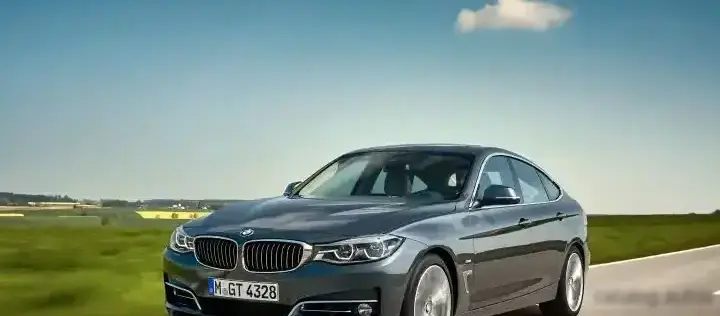
The BMW 3 Series Gran Turismo (F34) LCI, specifically the 320i variant with 184 horsepower, represents a unique offering within the broader 3 Series lineup. Introduced with the Life Cycle Impulse (LCI) facelift in 2016 and continuing through the 2020 model year, this model aimed to blend the sporty character of the 3 Series with the increased practicality of a Gran Turismo body style. Positioned as a mid-range option, the 320i Gran Turismo provided a balance between performance and fuel efficiency, appealing to buyers seeking a comfortable and versatile premium vehicle. It was built on the F34 platform, a derivative of the F30 3 Series sedan, but with a longer wheelbase and a distinctive sloping roofline designed to maximize rear passenger space and cargo capacity.
Technical Specifications
| Brand | BMW |
| Model | 3 Series |
| Generation | 3 Series Gran Turismo (F34 LCI, Facelift 2016) |
| Type (Engine) | 320i (184 Hp) |
| Start of production | 2016 |
| End of production | 2020 |
| Powertrain Architecture | Internal Combustion engine |
| Body type | Grand Tourer |
| Seats | 5 |
| Doors | 5 |
| Fuel consumption (urban) | 8.1-7.7 l/100 km (29 – 30.5 US mpg) |
| Fuel consumption (extra urban) | 5.4-5.1 l/100 km (43.6 – 46.1 US mpg) |
| Fuel consumption (combined) | 6.4-6.1 l/100 km (36.8 – 38.6 US mpg) |
| CO2 emissions | 146-139 g/km |
| Fuel Type | Petrol (Gasoline) |
| Acceleration 0 – 100 km/h | 8 sec |
| Acceleration 0 – 62 mph | 8 sec |
| Acceleration 0 – 60 mph | 7.6 sec |
| Maximum speed | 230 km/h (142.92 mph) |
| Emission standard | Euro 6 |
| Weight-to-power ratio | 8.6 kg/Hp, 116.5 Hp/tonne |
| Weight-to-torque ratio | 5.4 kg/Nm, 183.5 Nm/tonne |
| Power | 184 Hp @ 5000 rpm |
| Torque | 290 Nm @ 1350-4250 rpm (213.89 lb.-ft. @ 1350-4250 rpm) |
| Engine layout | Front, Longitudinal |
| Engine Model/Code | B48B20A |
| Engine displacement | 1998 cm3 (121.93 cu. in.) |
| Number of cylinders | 4 |
| Engine configuration | Inline |
| Cylinder Bore | 82 mm (3.23 in.) |
| Piston Stroke | 94.6 mm (3.72 in.) |
| Compression ratio | 11:1 |
| Number of valves per cylinder | 4 |
| Fuel injection system | Direct injection |
| Engine aspiration | Twin-power turbo, Intercooler |
| Engine oil capacity | 5 l (5.28 US qt | 4.4 UK qt) |
| Coolant | 7.8 l (8.24 US qt | 6.86 UK qt) |
| Kerb Weight | 1580 kg (3483.3 lbs.) |
| Max. weight | 2155 kg (4750.96 lbs.) |
| Max load | 575 kg (1267.66 lbs.) |
| Trunk (boot) space – minimum | 520 l (18.36 cu. ft.) |
| Trunk (boot) space – maximum | 1600 l (56.5 cu. ft.) |
| Fuel tank capacity | 60 l (15.85 US gal | 13.2 UK gal) |
| Max. roof load | 75 kg (165.35 lbs.) |
| Permitted trailer load with brakes (12%) | 1400 kg (3086.47 lbs.) |
| Permitted trailer load without brakes | 695 kg (1532.21 lbs.) |
| Permitted towbar download | 75 kg (165.35 lbs.) |
| Length | 4824 mm (189.92 in.) |
| Width | 1828 mm (71.97 in.) |
| Height | 1508 mm (59.37 in.) |
| Wheelbase | 2920 mm (114.96 in.) |
| Front track | 1541 mm (60.67 in.) |
| Rear (Back) track | 1586 mm (62.44 in.) |
| Ride height (ground clearance) | 165 mm (6.5 in.) |
| Drag coefficient (Cd) | 0.29 |
| Minimum turning circle (turning diameter) | 11.8 m (38.71 ft.) |
| Drivetrain Architecture | The Internal combustion engine (ICE) drives the rear wheels of the vehicle. |
| Drive wheel | Rear wheel drive |
| Number of gears and type of gearbox | 6 gears, manual transmission |
| Front suspension | Double wishbone |
| Rear suspension | Independent multi-link suspension |
| Front brakes | Ventilated discs |
| Rear brakes | Ventilated discs |
| Assisting systems | ABS (Anti-lock braking system) |
| Steering type | Steering rack and pinion |
| Power steering | Electric Steering |
| Tires size | 225/55 R17 97V |
| Wheel rims size | 8.0J x 17 |
Powertrain & Engine Architecture
At the heart of the 320i Gran Turismo LCI lies the BMW B48B20A 2.0-liter inline-four cylinder engine. This engine is a member of BMW’s modular engine family, known for its efficiency and performance. It utilizes direct fuel injection, a single twin-scroll turbocharger, and variable valve timing (VANOS) and valve lift (Valvetronic) technologies to optimize power delivery and fuel economy. The B48 engine produces 184 horsepower at 5,000 rpm and 290 Nm (213.89 lb-ft) of torque between 1,350 and 4,250 rpm. The engine is longitudinally mounted, driving the rear wheels. The 320i Gran Turismo was typically equipped with a 6-speed manual transmission, although an 8-speed automatic transmission was also available as an option. The automatic transmission offered smoother shifts and enhanced convenience, but at a slight cost to fuel efficiency.
Driving Characteristics
The 320i Gran Turismo with the manual transmission provided a reasonably engaging driving experience, though it wasn’t as overtly sporty as some of its 3 Series siblings. The 184 hp engine offered adequate power for everyday driving, with the turbocharger providing a noticeable boost in acceleration. The 6-speed manual gearbox was well-matched to the engine’s torque curve, allowing for precise gear changes. Compared to the more powerful 330i or the diesel-powered 320d, the 320i felt less urgent in its acceleration. However, it offered a more refined and comfortable ride, thanks to the Gran Turismo’s longer wheelbase and softer suspension tuning. The automatic transmission versions prioritized comfort and ease of use, offering seamless gear changes and a relaxed driving experience.
Equipment & Trim Levels
The 320i Gran Turismo LCI came standard with a comprehensive list of features, including automatic climate control, a 6.5-inch iDrive infotainment system, power-adjustable front seats, and a leather-wrapped steering wheel. Optional extras included a larger 8.8-inch iDrive screen with navigation, a Harman Kardon premium sound system, a panoramic sunroof, and adaptive LED headlights. Interior upholstery options typically included cloth or leatherette, with full leather available as an upgrade. Trim levels varied depending on the market, but generally offered packages that bundled together popular options, such as the Sport Line, Luxury Line, and M Sport packages, each adding unique styling cues and features.
Chassis & Braking
The F34 Gran Turismo featured a double wishbone front suspension and an independent multi-link rear suspension, providing a comfortable and controlled ride. The suspension was tuned to prioritize comfort over outright sportiness, making it well-suited for long-distance driving. Braking duties were handled by ventilated disc brakes on all four wheels, providing ample stopping power. Anti-lock braking system (ABS) and electronic stability control (ESC) were standard safety features. The 320i Gran Turismo’s weight of approximately 1580 kg (3483.3 lbs) meant that the braking system needed to work effectively to provide confident stopping performance.
Market Reception & Comparison
The 320i Gran Turismo LCI received generally positive reviews from automotive critics. It was praised for its spacious interior, comfortable ride, and practical hatchback design. However, some critics noted that it lacked the sporty driving dynamics of the 3 Series sedan. Compared to the 320d Gran Turismo, the 320i offered slightly less torque but a more responsive engine. The 330i Gran Turismo provided significantly more power but came at a higher price point. Fuel economy for the 320i was respectable, averaging around 36.8 – 38.6 US mpg in combined driving, making it a relatively efficient option in its class.
Legacy
The BMW 3 Series Gran Turismo (F34) was discontinued in 2020, replaced by other models in BMW’s lineup. The B48 engine, however, continues to be used in a wide range of BMW vehicles and has proven to be a reliable and durable powerplant. On the used car market, the 320i Gran Turismo LCI represents a good value proposition for buyers seeking a comfortable, practical, and well-equipped premium vehicle. While not the most exciting car to drive, it offers a compelling blend of space, comfort, and efficiency, making it a sensible choice for families and long-distance commuters.