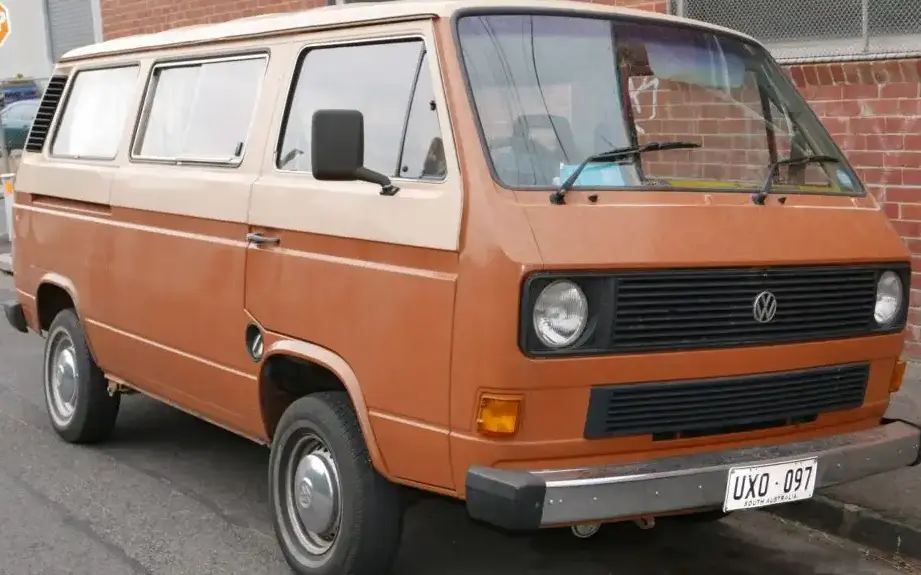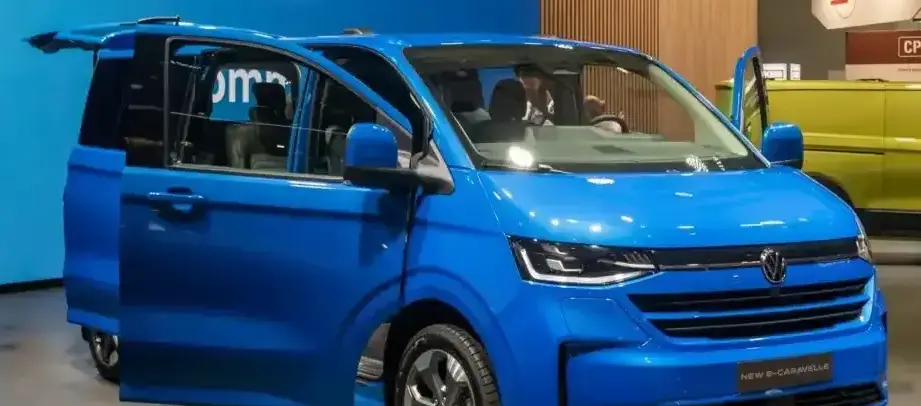
The Volkswagen Caravelle (T7) Long 2.0 TDI 110 hp represents a practical and efficient people-mover within the seventh generation of the Caravelle line, launched in August 2024. Positioned as an entry-level diesel option in the T7 range, it caters to buyers prioritizing fuel economy and functionality over outright performance. The T7 Caravelle builds upon the foundation of the Volkswagen Transporter/Multivan platform, offering a spacious interior configurable for up to nine passengers. This variant specifically targets families and businesses needing a versatile vehicle for both commuting and longer journeys, primarily in European markets where diesel engines remain popular.
Technical Specifications
| Brand | Volkswagen |
| Model | Caravelle |
| Generation | Caravelle (T7) Long |
| Type (Engine) | 2.0 TDI (110 Hp) |
| Start of production | August, 2024 |
| Powertrain Architecture | Internal Combustion engine |
| Body type | Van |
| Seats | 8-9 |
| Doors | 4-5 |
| Combined fuel consumption (WLTP) | 7.3-7.4 l/100 km |
| Combined fuel consumption (US mpg) | 32.2 – 31.8 |
| Combined fuel consumption (UK mpg) | 38.7 – 38.2 |
| Combined fuel consumption (km/l) | 13.7 – 13.5 |
| CO2 emissions (WLTP) | 191-195 g/km |
| Fuel Type | Diesel |
| Acceleration 0 – 100 km/h | 16.9 sec |
| Acceleration 0 – 62 mph | 16.9 sec |
| Acceleration 0 – 60 mph | 16.1 sec |
| Maximum speed | 155 km/h (96.31 mph) |
| Emission standard | Euro 6e |
| Weight-to-power ratio | 19.7 kg/Hp, 50.9 Hp/tonne |
| Weight-to-torque ratio | 7 kg/Nm, 143.4 Nm/tonne |
| Power | 110 Hp |
| Power per litre | 55.1 Hp/l |
| Torque | 310 Nm (228.64 lb.-ft.) |
| Engine layout | Front, Transverse |
| Engine Model/Code | Panther |
| Engine displacement | 1996 cm3 (121.8 cu. in.) |
| Number of cylinders | 4 |
| Engine configuration | Inline |
| Cylinder Bore | 84.01 mm (3.31 in.) |
| Piston Stroke | 90.03 mm (3.54 in.) |
| Number of valves per cylinder | 4 |
| Fuel injection system | Diesel Commonrail |
| Engine aspiration | Turbocharger, Intercooler |
| Valvetrain | DOHC |
| Engine systems | Start & Stop System, Particulate filter |
| Kerb Weight | 2162-2224 kg (4766.39 – 4903.08 lbs.) |
| Max. weight | 3175 kg (6999.68 lbs.) |
| Max load | 951-1013 kg (2096.6 – 2233.28 lbs.) |
| Fuel tank capacity | 55 l (14.53 US gal | 12.1 UK gal) |
| AdBlue tank | 20 l (5.28 US gal | 4.4 UK gal) |
| Max. roof load | 170 kg (374.79 lbs.) |
| Permitted trailer load with brakes (12%) | 2000 kg (4409.25 lbs.) |
| Permitted trailer load without brakes | 750 kg (1653.47 lbs.) |
| Permitted towbar download | 100 kg (220.46 lbs.) |
| Length | 5450 mm (214.57 in.) |
| Width | 2032 mm (80 in.) |
| Width including mirrors | 2275 mm (89.57 in.) |
| Height | 1979 mm (77.91 in.) |
| Wheelbase | 3500 mm (137.8 in.) |
| Front overhang | 958 mm (37.72 in.) |
| Rear overhang | 992 mm (39.06 in.) |
| Minimum turning circle | 13.8 m (45.28 ft.) |
| Approach angle | 17.2° |
| Departure angle | 16.4° |
| Ramp-over angle | 11.7° |
| Drivetrain Architecture | ICE, Front wheel drive |
| Drive wheel | Front wheel drive |
| Number of gears | 6 |
| Gearbox type | Manual transmission |
| Assisting systems | ABS (Anti-lock braking system) |
| Steering type | Steering rack and pinion |
| Power steering | Electric Steering |
| Tires size | 215/65 R16; 215/60 R17 |
| Wheel rims size | 6.5J x 16; 6.5J x 17 |
INTRODUCTION
The Volkswagen Caravelle T7 Long 2.0 TDI 110 hp, introduced in 2024, is a long-wheelbase variant of the seventh-generation Caravelle. It’s built on the modular transverse matrix (MQB) platform, also known as the 1HX0/A3 platform, shared with other Volkswagen Group vehicles. This generation represents a significant evolution in comfort and technology compared to its predecessor, the T6.1. The 2.0 TDI 110 hp engine option serves as the entry point to the T7 Caravelle range, offering a balance between affordability and practicality for those prioritizing fuel efficiency and lower running costs. The “Long” designation indicates an extended wheelbase, providing increased passenger space and cargo capacity compared to the standard-length Caravelle.
Powertrain & Engine Architecture
At the heart of this Caravelle variant lies the Volkswagen Group’s 2.0-liter four-cylinder diesel engine, internally designated as the ‘Panther’ engine family. This engine utilizes a common rail direct injection system, delivering fuel directly into the combustion chamber at extremely high pressure for optimized combustion. The engine employs a turbocharger with an intercooler to boost power and torque. The 110 hp output is achieved through careful calibration of the engine management system. The engine features a Double Overhead Camshaft (DOHC) valvetrain with four valves per cylinder, enhancing breathing and efficiency. This specific model is paired with a six-speed manual transmission, chosen for its efficiency and lower cost compared to the optional DSG (Direct-Shift Gearbox) automatic. The engine also incorporates a diesel particulate filter (DPF) and a Start/Stop system to meet stringent Euro 6e emission standards.
Driving Characteristics
The 110 hp 2.0 TDI engine, coupled with the manual transmission, delivers adequate but not exhilarating performance. Acceleration is leisurely, with a 0-60 mph time of around 16.1 seconds. The focus is on usability and fuel economy rather than outright speed. The six-speed manual gearbox allows for precise control and helps to keep the engine within its optimal power band. Gear ratios are tuned for efficiency, prioritizing lower engine speeds during cruising. Compared to higher-output TDI variants (e.g., 150 hp or 200 hp), this version feels noticeably slower, particularly when fully loaded with passengers and luggage. However, the lower power output also contributes to improved fuel economy, making it a suitable choice for long-distance travel. The front-wheel-drive configuration provides predictable handling, but it lacks the all-weather capability of the optional 4MOTION all-wheel-drive system.
Equipment & Trim Levels
The Caravelle T7 Long 2.0 TDI 110 hp typically comes with a respectable level of standard equipment. This generally includes features like air conditioning, a touchscreen infotainment system with Bluetooth connectivity, power windows, and central locking. Interior upholstery is typically cloth, with options for upgraded materials available. The dashboard layout is modern and functional, with a focus on ergonomics. Optional extras often include features like navigation, parking sensors, adaptive cruise control, and upgraded sound systems. Trim levels vary depending on the market, but generally, this engine/transmission combination represents a mid-range offering, positioned above the base-level Transporter but below the more luxurious Multivan models.
Chassis & Braking
The Caravelle T7 Long utilizes a MacPherson strut front suspension and a semi-independent trailing arm rear suspension. The suspension is tuned for comfort, providing a relatively smooth ride even on uneven surfaces. Braking is handled by disc brakes on the front wheels and drum brakes on the rear wheels, a cost-saving measure for this entry-level variant. Anti-lock Braking System (ABS) is standard. Stabilizer bars are fitted to both the front and rear axles to reduce body roll during cornering. The steering is electrically assisted, providing light and precise control.
Market Reception & Comparison
The Caravelle T7 Long 2.0 TDI 110 hp has been generally well-received as a practical and economical people-carrier. Critics have praised its spacious interior, comfortable ride, and fuel efficiency. However, some have noted its relatively modest performance, particularly when fully loaded. Compared to the more powerful TDI variants, this version offers a lower purchase price and improved fuel economy, but at the expense of acceleration and overall driving enjoyment. Against competitors like the Mercedes-Benz Vito and Ford Tourneo Custom, the Caravelle T7 offers a compelling combination of space, comfort, and value.
Legacy
The 2.0 TDI engine family has a long and proven track record within the Volkswagen Group, known for its reliability and durability. While the T7 is a relatively new model, early indications suggest that the 2.0 TDI 110 hp powertrain is proving to be a dependable unit. The manual transmission is also known for its robustness. On the used car market, this variant is likely to hold its value reasonably well, appealing to buyers seeking a practical and economical people-mover. Regular maintenance, including timely oil changes and DPF servicing, will be crucial to ensuring the long-term reliability of this powertrain.