
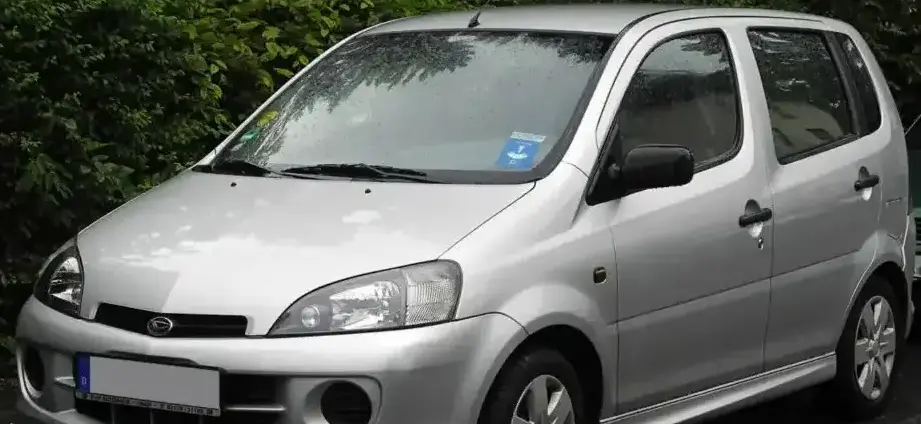
The Daihatsu YRV 1.3 i 16V, producing 90 horsepower, with a four-wheel drive (4WD) configuration, was a compact minivan produced by the Japanese manufacturer Daihatsu between 2000 and 2005. Positioned as an entry-level offering within the broader YRV (Youthful Revolutionary Vehicle) range, it aimed to provide affordable and practical transportation with the added security and capability of all-wheel drive. The YRV, internally designated as the P100 series, was primarily marketed in Japan and Europe, offering a unique blend of space efficiency and maneuverability in a relatively small package. This particular 1.3L variant served as the gateway to the YRV lineup, appealing to buyers seeking a versatile vehicle for urban driving and occasional leisure activities.
Technical Specifications
| Brand | Daihatsu |
| Model | YRV |
| Generation | YRV |
| Type | 1.3 i 16V (90 Hp) 4WD |
| Start of production | 2000 |
| End of production | 2005 |
| Powertrain Architecture | Internal Combustion engine |
| Body type | Minivan |
| Seats | 5 |
| Doors | 5 |
| Fuel Type | Petrol (Gasoline) |
| Weight-to-power ratio | 10.7 kg/Hp |
| Power | 90 Hp @ 6000 rpm |
| Power per litre | 69.4 Hp/l |
| Torque | 123 Nm @ 4400 rpm (90.72 lb.-ft. @ 4400 rpm) |
| Engine layout | Front, Longitudinal |
| Engine displacement | 1297 cm3 (79.15 cu. in.) |
| Number of cylinders | 4 |
| Engine configuration | Inline |
| Cylinder Bore | 72 mm (2.83 in.) |
| Piston Stroke | 79.5 mm (3.13 in.) |
| Compression ratio | 10:1 |
| Number of valves per cylinder | 4 |
| Fuel injection system | Multi-port manifold injection |
| Engine aspiration | Naturally aspirated engine |
| Valvetrain | DOHC |
| Kerb Weight | 960 kg (2116.44 lbs.) |
| Trunk (boot) space – minimum | 238 l (8.4 cu. ft.) |
| Trunk (boot) space – maximum | 1026 l (36.23 cu. ft.) |
| Fuel tank capacity | 37 l (9.77 US gal | 8.14 UK gal) |
| Length | 3765 mm (148.23 in.) |
| Width | 1620 mm (63.78 in.) |
| Height | 1550 mm (61.02 in.) |
| Wheelbase | 2355 mm (92.72 in.) |
| Front track | 1395 mm (54.92 in.) |
| Rear (Back) track | 1365 mm (53.74 in.) |
| Minimum turning circle | 8.8 m (28.87 ft.) |
| Drive wheel | All wheel drive (4×4) |
| Number of gears | 5 |
| Gearbox type | Manual transmission |
| Front suspension | Spring Strut |
| Rear suspension | Coil spring |
| Front brakes | Ventilated discs |
| Rear brakes | Drum |
| Assisting systems | ABS (Anti-lock braking system) |
| Steering type | Steering rack and pinion |
| Power steering | Hydraulic Steering |
| Tires size | 165/70R13 |
Powertrain & Engine Architecture
The heart of the YRV 1.3 i 16V is the Daihatsu K3-VE engine, a 1.3-liter inline-four cylinder gasoline engine. This engine utilizes a multi-point fuel injection system and a double overhead camshaft (DOHC) valvetrain, contributing to its relatively efficient operation. The engine code ‘K3-VE’ signifies a specific iteration of the K3 series, known for its compact size and reasonable power output. The 16-valve configuration (four valves per cylinder) enhances breathing and contributes to the engine’s 90 horsepower at 6000 rpm and 123 Nm (90.72 lb-ft) of torque at 4400 rpm. The engine is longitudinally mounted in the front of the vehicle. The 4WD system employed in this variant is typically a part-time system, engaging the rear wheels when traction is needed, enhancing stability in slippery conditions. The five-speed manual transmission was the standard offering for this trim, providing a direct connection between the engine and the wheels.
Driving Characteristics
The YRV 1.3 i 16V 4WD, with its 90 horsepower and relatively light weight of 960 kg (2116 lbs), offered adequate, though not exhilarating, performance. Acceleration was modest, with a focus on fuel efficiency rather than outright speed. The five-speed manual transmission allowed drivers to keep the engine in its optimal power band, but the engine lacked significant low-end torque, requiring frequent downshifts when encountering hills or overtaking. Compared to the higher-spec YRV variants with larger engines, this 1.3L model felt noticeably less powerful. However, the 4WD system provided enhanced grip and stability, particularly on loose surfaces, making it a more confident option in inclement weather. The steering was light and precise, making it easy to maneuver in urban environments.
Equipment & Trim Levels
The YRV 1.3 i 16V 4WD typically came with a fairly basic level of equipment, reflecting its position as the entry-level model. Standard features generally included power steering, central locking, electric front windows, and an AM/FM radio. Interior upholstery was typically cloth, with a functional, rather than luxurious, design. Optional extras could include air conditioning, alloy wheels, and a CD player. The dashboard layout was straightforward and easy to use, prioritizing practicality over aesthetic flair. Safety features were limited by the standards of the time, typically including ABS brakes and driver/passenger airbags.
Chassis & Braking
The YRV utilized a relatively simple chassis design, featuring a MacPherson strut suspension at the front and a coil spring suspension at the rear. This setup provided a comfortable ride quality, although it wasn’t particularly sporty. The front brakes were ventilated discs, offering adequate stopping power, while the rear brakes were drums, a cost-saving measure common in this class of vehicle. The 4WD system added to the vehicle’s weight, but also improved its handling and stability. The relatively narrow tires (165/70R13) contributed to fuel efficiency but limited grip in demanding driving situations.
Market Reception & Comparison
The Daihatsu YRV 1.3 i 16V 4WD was generally well-received as an affordable and practical small minivan. Critics praised its spacious interior, maneuverability, and the added security of all-wheel drive. However, the engine’s lack of power was a common criticism, particularly when compared to competitors with larger engines. Fuel economy was a strong point, making it an attractive option for budget-conscious buyers. Compared to other YRV variants, such as those with the 1.5-liter engine, the 1.3L model offered a lower purchase price but sacrificed performance. Its reliability was generally considered good, typical of Daihatsu products.
Legacy
The Daihatsu YRV, including the 1.3 i 16V 4WD variant, has developed a modest following among enthusiasts who appreciate its unique blend of practicality, affordability, and all-wheel drive capability. While not a high-performance vehicle, the K3-VE engine proved to be reasonably durable and reliable. On the used car market, these YRVs are often sought after as affordable and dependable transportation, particularly in regions where all-wheel drive is valued. Parts availability can be a challenge in some markets, but the relatively simple mechanical design makes them accessible to DIY mechanics. The YRV represents a unique chapter in Daihatsu’s history, showcasing their ability to create innovative and practical vehicles for a specific niche market.
