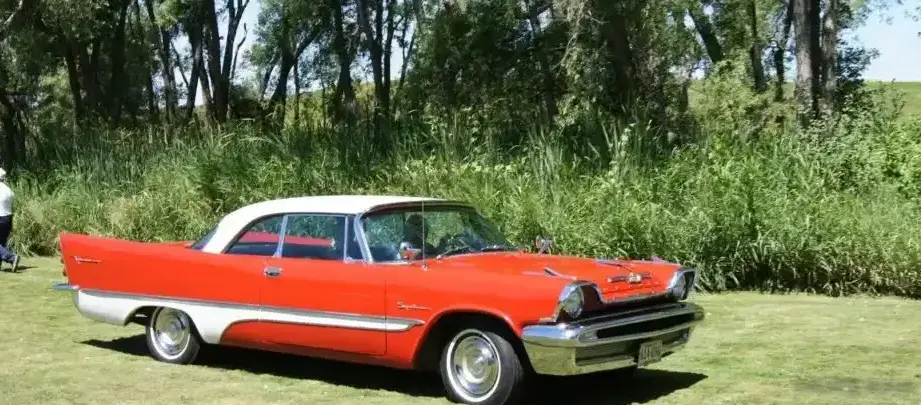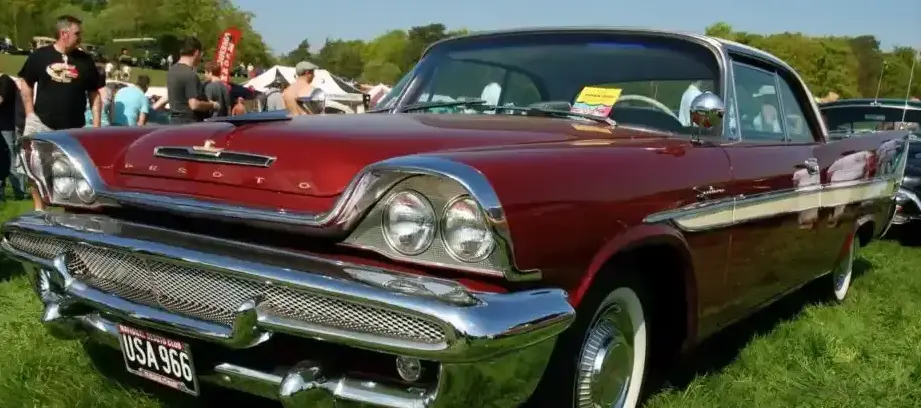
The DeSoto Firesweep I 2-Door Sportsman, particularly the 1958 facelifted model, represented a significant offering from the Chrysler Corporation’s mid-range brand. Produced for a relatively short period, from 1957 to 1958, the Firesweep aimed to bridge the gap between the more affordable Plymouth and the luxury-oriented Chrysler models. This specific variant, equipped with the 5.7-liter V8 engine producing 280 horsepower and paired with a TorqueFlite automatic transmission, was positioned as a performance-oriented option within the Firesweep lineup, appealing to buyers seeking a blend of style, power, and convenience. The Firesweep, built on the Chrysler A-body platform, was a response to changing consumer tastes and the growing demand for more visually striking automobiles in the late 1950s.
Technical Specifications
| Brand | DeSoto |
| Model | Firesweep |
| Generation | Firesweep I 2-Door Sportsman (facelift 1958) |
| Type (Engine) | 5.7 V8 (280 Hp) TorqueFlite |
| Start of production | 1957 |
| End of production | 1958 |
| Powertrain Architecture | Internal Combustion engine |
| Body type | Coupe |
| Seats | 6 |
| Doors | 2 |
| Fuel Type | Petrol (Gasoline) |
| Power | 280 Hp @ 4600 rpm |
| Power per litre | 48.8 Hp/l |
| Torque | 515 Nm @ 2400 rpm / 379.84 lb.-ft. @ 2400 rpm |
| Engine displacement | 5735 cm3 / 349.97 cu. in. |
| Number of cylinders | 8 |
| Engine configuration | V-engine |
| Cylinder Bore | 103.12 mm / 4.06 in. |
| Piston Stroke | 85.85 mm / 3.38 in. |
| Compression ratio | 10:1 |
| Number of valves per cylinder | 2 |
| Fuel injection system | Carburettor |
| Engine aspiration | Naturally aspirated engine |
| Valvetrain | OHV |
| Engine oil capacity | 3.8 l / 4.02 US qt | 3.34 UK qt |
| Coolant | 16.1 l / 17.01 US qt | 14.17 UK qt |
| Fuel tank capacity | 76 l / 20.08 US gal | 16.72 UK gal |
| Length | 5499 mm / 216.5 in. |
| Width | 1989 mm / 78.31 in. |
| Height | 1443 mm / 56.81 in. |
| Wheelbase | 3099 mm / 122.01 in. |
| Front track | 1547 mm / 60.91 in. |
| Rear track | 1516 mm / 59.69 in. |
| Front overhang | 940 mm / 37.01 in. |
| Rear overhang | 1461 mm / 57.52 in. |
| Ride height (ground clearance) | 142 mm / 5.59 in. |
| Minimum turning circle | 14.2 m / 46.59 ft. |
| Approach angle | 16.5° |
| Departure angle | 11.4° |
| Ramp-over angle | 10.5° |
| Drivetrain Architecture | Rear wheel drive. Internal Combustion engine (ICE) |
| Drive wheel | Rear wheel drive |
| Number of gears and type of gearbox | 3 gears, automatic transmission TorqueFlite |
| Front suspension | Independent coil spring |
| Rear suspension | Leaf spring |
| Front brakes | Drum, 279 mm |
| Rear brakes | Drum, 279 mm |
| Steering type | Worm-reduction unit |
Powertrain & Engine Architecture
The heart of the 1958 Firesweep Sportsman was the DeSoto 5.7-liter (349.97 cubic inch) V8 engine. This engine, designated within Chrysler as the “A” engine family, featured a cast iron block and aluminum cylinder heads. The 280 horsepower output was achieved through a four-barrel carburetor, a 10:1 compression ratio, and a relatively aggressive camshaft profile for the era. The engine utilized an overhead valve (OHV) configuration with two valves per cylinder. The TorqueFlite automatic transmission, a three-speed unit, was a key component of this variant. It was known for its smooth shifting and durability, contributing to the Firesweep’s comfortable driving experience. The TorqueFlite was a fully automatic transmission, meaning it didn’t require manual gear selection, a feature highly valued by American drivers in the late 1950s.
Driving Characteristics
The combination of the 280 hp V8 and the TorqueFlite automatic provided a respectable level of performance for the time. While not a sports car in the modern sense, the Firesweep Sportsman offered brisk acceleration and effortless cruising. The automatic transmission, while convenient, did result in some power loss compared to the available manual transmission options. The gear ratios were optimized for highway driving, making long trips comfortable, but potentially feeling slightly sluggish during quick acceleration from a standstill. The rear-wheel-drive configuration and relatively soft suspension settings prioritized ride comfort over handling precision. Compared to other Firesweep trims, like those with smaller engines, this V8/automatic combination offered a noticeable performance advantage, but at the cost of slightly reduced fuel economy.
Equipment & Trim Levels
The Firesweep Sportsman, even in its base form, was reasonably well-equipped for 1958. Standard features included a full wheel cover, two-tone paint options, a spacious interior with comfortable bench seats, and a basic AM radio. The interior typically featured cloth and vinyl upholstery. Optional extras included power steering, power brakes, a continental kit (spare tire mounted at the rear), and upgraded audio systems. The Sportsman trim level generally included more exterior chrome trim and a slightly more upscale interior finish compared to the base Firesweep models.
Chassis & Braking
The Firesweep utilized a body-on-frame construction, typical of American cars of the era. The front suspension was independent, employing coil springs, while the rear suspension relied on a traditional leaf spring setup. This configuration prioritized ride comfort over sporty handling. Braking was accomplished via drum brakes on all four wheels, measuring 279mm in diameter. While adequate for the time, the drum brakes lacked the stopping power and fade resistance of modern disc brake systems. Steering was handled by a worm-reduction unit, which provided relatively easy steering effort but lacked precision.
Market Reception & Comparison
The 1958 DeSoto Firesweep, including the 280 hp V8/automatic variant, received mixed reviews from automotive critics. While praised for its styling and comfortable ride, it was often criticized for its relatively high price compared to competitors like Ford and Chevrolet. The Firesweep’s fuel economy was also a concern, typical of large-displacement V8 engines of the period. Compared to other Firesweep trims, the V8/automatic version offered a significant performance boost, but it also came with a higher price tag and slightly increased maintenance costs. The 1.8L and smaller engine options were aimed at more budget-conscious buyers.
Legacy
The DeSoto Firesweep, and the DeSoto brand as a whole, had a relatively short lifespan. Production ceased in 1961 due to declining sales and internal competition within the Chrysler Corporation. However, the Firesweep remains a popular choice among classic car enthusiasts. The 5.7-liter V8 engine, while not known for exceptional longevity, is generally considered reliable when properly maintained. Parts availability can be a challenge, but a dedicated network of classic DeSoto owners and suppliers exists. Today, the 1958 Firesweep Sportsman represents a stylish and iconic example of late-1950s American automotive design, offering a glimpse into a bygone era of large, powerful, and visually striking automobiles.