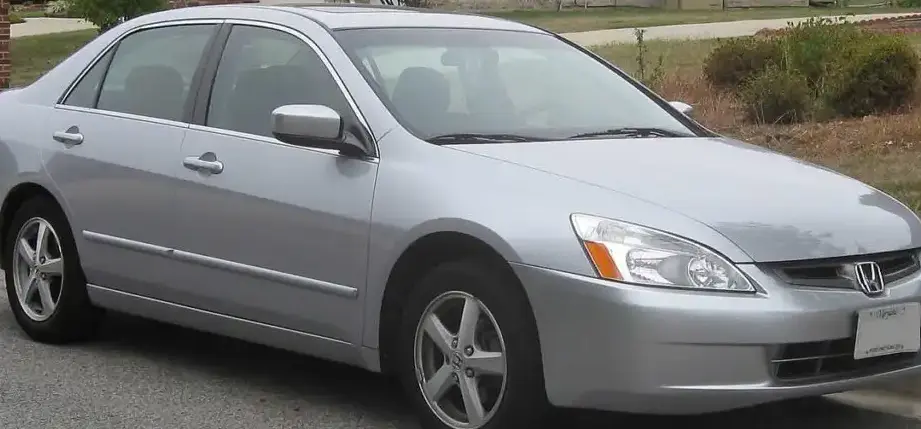
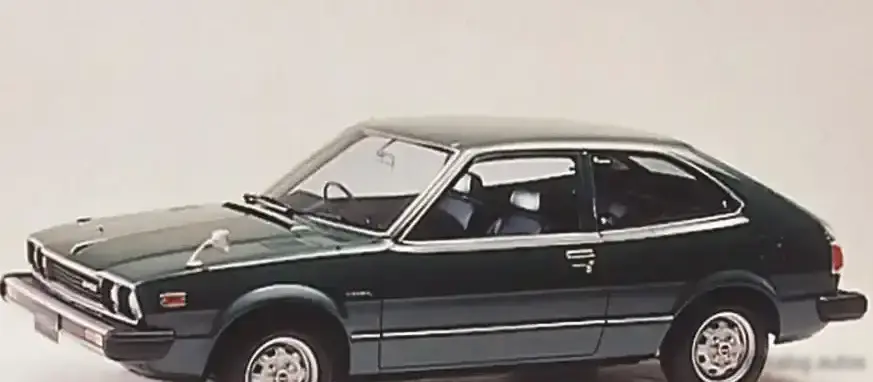
The Honda Accord III Wagon CA5 2.0 EXi, produced between 1985 and 1987, represents a significant iteration in Honda’s popular Accord line. This variant, a station wagon (estate) body style, was primarily aimed at the North American market, where practicality and family-oriented vehicles were gaining prominence. The CA5 designation specifically refers to the chassis code for this generation Accord wagon. It sat within the third generation of the Accord (1985-1989), offering a more versatile alternative to the sedan and coupe models. The 2.0 EXi trim level denoted a step up in features and performance compared to the base models, positioning it as a comfortable and well-equipped family vehicle.
Technical Specifications
| Brand | Honda |
| Model | Accord |
| Generation | Accord III Wagon CA5 |
| Type (Engine) | 2.0 EXi (CA5) (122 Hp) |
| Start of production | 1985 |
| End of production | 1987 |
| Powertrain Architecture | Internal Combustion engine |
| Body type | Station wagon (estate) |
| Fuel Type | Petrol (Gasoline) |
| Power | 122 Hp |
| Engine aspiration | Naturally aspirated engine |
Powertrain & Engine Architecture
The heart of the Accord III Wagon CA5 2.0 EXi is the F20A SOHC 16-valve inline-four cylinder engine. This 1955cc engine, producing 122 horsepower, was a notable upgrade from the smaller engines offered in lower Accord trims. The “EXi” designation signified the inclusion of Honda’s Programmed Fuel Injection (PGM-FI) system, a sophisticated electronic fuel injection system for its time. This system utilized sensors to monitor engine conditions and precisely control fuel delivery, optimizing performance and fuel efficiency. The engine featured a single overhead camshaft (SOHC) design, which simplified the valvetrain and contributed to its reliability. The engine block was constructed from cast iron, while the cylinder head was made of aluminum, helping to reduce weight. The transmission paired with the 2.0 EXi was typically a 3-speed automatic, although a 5-speed manual was also available. The automatic transmission was designed for smooth and comfortable shifting, prioritizing ease of use over outright performance.
Driving Characteristics
The 122 horsepower and approximately 133 lb-ft of torque offered by the 2.0 EXi engine provided adequate, though not exhilarating, performance for the Accord Wagon. Acceleration was respectable for the era, allowing for confident merging and highway cruising. The automatic transmission, while smooth, did result in some power loss compared to the manual transmission option. Gear ratios were tuned for fuel economy and everyday drivability, rather than sporty acceleration. The wagon’s added weight, compared to the sedan or coupe, further impacted performance. However, the engine’s responsiveness and the transmission’s smooth operation made it a pleasant vehicle to drive in typical commuting and family hauling scenarios. Compared to the base model 1.5L engine, the 2.0 EXi offered a noticeable improvement in power and responsiveness, making it a more capable vehicle for carrying passengers and cargo.
Equipment & Trim Levels
The 2.0 EXi trim level represented a well-equipped version of the Accord Wagon. Standard features typically included power steering, power brakes, and an upgraded interior with cloth upholstery. The EXi also featured a more comprehensive instrument cluster, including a tachometer, and often included features like a factory AM/FM stereo. Optional extras available for the 2.0 EXi included air conditioning, cruise control, and upgraded sound systems. The interior design was functional and comfortable, with a focus on practicality. The wagon’s rear cargo area was spacious and versatile, offering ample room for luggage, groceries, or other cargo. The dashboard layout was straightforward and easy to use, with clearly labeled controls.
Chassis & Braking
The Accord III Wagon CA5 utilized a MacPherson strut front suspension and a rear torsion beam suspension. This suspension setup provided a comfortable ride and predictable handling. The front suspension featured coil springs and shock absorbers, while the rear torsion beam offered a compact and efficient design. Braking duties were handled by disc brakes in the front and drum brakes in the rear. This configuration was typical for vehicles in this class during the mid-1980s. The braking system provided adequate stopping power for everyday driving, although it lacked the stopping power of more modern braking systems. Stabilizer bars were included in both the front and rear suspension to reduce body roll during cornering.
Market Reception & Comparison
The Honda Accord III Wagon, particularly the 2.0 EXi trim, was generally well-received by automotive critics and consumers alike. It was praised for its reliability, fuel efficiency, and spacious interior. The 2.0 EXi engine offered a good balance of performance and economy, making it a popular choice for families. Compared to other wagons of the time, such as the Toyota Camry Wagon or the Ford Tempo Wagon, the Accord Wagon was often lauded for its superior build quality and refined driving experience. Fuel economy was a strong point, with the 2.0 EXi achieving around 25-30 mpg in combined driving. Reliability was also a key strength, with the Accord consistently ranking high in consumer reports.
Legacy
The Honda Accord III Wagon CA5 2.0 EXi has become a sought-after classic among Honda enthusiasts. The F20A engine is known for its durability and relatively simple maintenance requirements. While finding well-maintained examples can be challenging, the Accord Wagon remains a reliable and enjoyable vehicle to own. The 3-speed automatic transmission, while not the most technologically advanced, has proven to be quite durable over time. Today, these wagons are often seen as a testament to Honda’s commitment to quality and reliability. The 2.0 EXi trim, with its added features and performance, is particularly desirable in the used car market. Parts availability is generally good, although some trim-specific components may be difficult to find. The Accord III Wagon continues to represent a practical and dependable choice for those seeking a classic Japanese automobile.