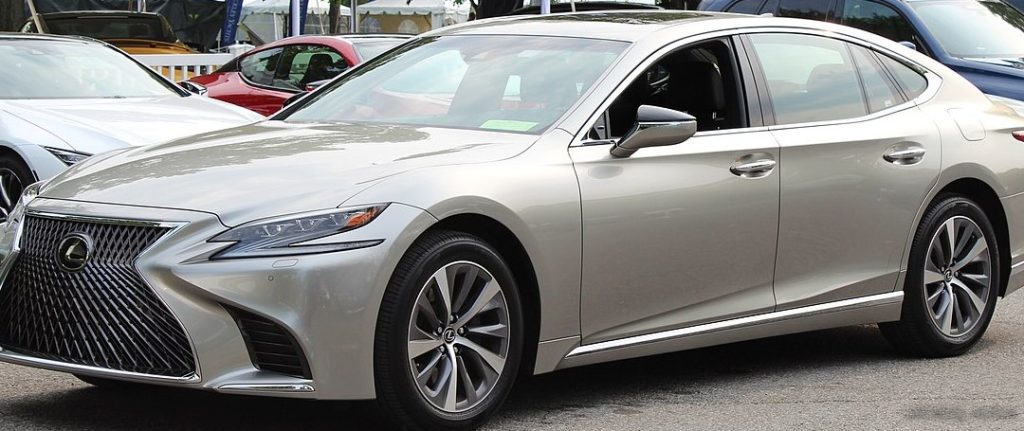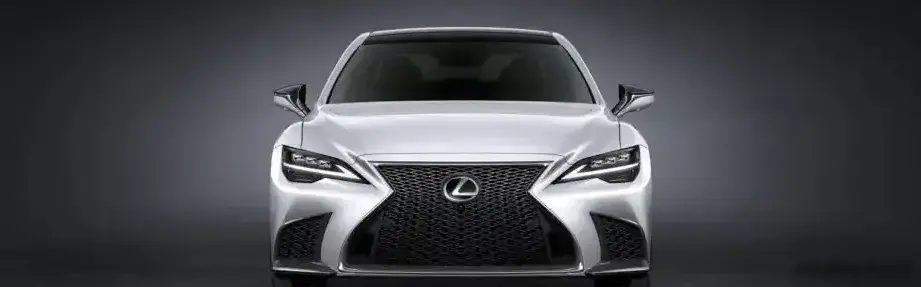
The Lexus LS 500, specifically the facelifted 2020 model year equipped with the 3.5-liter V6 engine and a 10-speed automatic transmission, represents the fifth generation of Lexus’ flagship sedan. Introduced in July 2020, this iteration builds upon the foundation laid by the initial LS 500 launch, focusing on refinement, technology upgrades, and enhanced driving dynamics. Positioned as the standard engine option for the LS in many markets, including the United States, it serves as a balance between the more performance-oriented LS 500h hybrid and the emphasis on luxury and comfort that defines the LS lineage. The 2020 facelift brought subtle styling revisions, improved infotainment, and enhanced safety features, solidifying the LS 500’s position in the competitive luxury sedan segment.
Technical Specifications
| Brand | Lexus |
| Model | LS |
| Generation | LS V (facelift 2020) |
| Type (Engine) | 500 V6 (416 Hp) Automatic |
| Start of production | July, 2020 |
| Powertrain Architecture | Internal Combustion engine |
| Body type | Sedan |
| Seats | 5 |
| Doors | 4 |
| Fuel consumption (economy) – urban | 13.1 l/100 km (18 US mpg, 21.6 UK mpg, 7.6 km/l) |
| Fuel consumption (economy) – extra urban | 8.1 l/100 km (29 US mpg, 34.9 UK mpg, 12.3 km/l) |
| Fuel consumption (economy) – combined | 10.7 l/100 km (22 US mpg, 26.4 UK mpg, 9.3 km/l) |
| Fuel Type | Petrol (Gasoline) |
| Acceleration 0 – 60 mph | 4.6 sec |
| Maximum speed | 219 km/h (136.08 mph) |
| Emission standard | ULEV70 |
| Weight-to-power ratio | 5.1 kg/Hp, 195.3 Hp/tonne |
| Weight-to-torque ratio | 3.6 kg/Nm, 281.2 Nm/tonne |
| Power | 416 Hp @ 6000 rpm |
| Power per litre | 120.8 Hp/l |
| Torque | 599 Nm @ 1600-4800 rpm (441.8 lb.-ft. @ 1600-4800 rpm) |
| Engine layout | Front, Longitudinal |
| Engine Model/Code | V35A-FTS |
| Engine displacement | 3445 cm3 (210.23 cu. in.) |
| Number of cylinders | 6 |
| Engine configuration | V-engine |
| Cylinder Bore | 85.6 mm (3.37 in.) |
| Piston Stroke | 100.08 mm (3.94 in.) |
| Compression ratio | 10.478:1 |
| Number of valves per cylinder | 4 |
| Fuel injection system | Direct injection and Multi-port manifold injection |
| Engine aspiration | Twin-Turbo, Intercooler |
| Valvetrain | DOHC, VVT-i |
| Engine oil capacity | 6.3 l (6.66 US qt | 5.54 UK qt) |
| Coolant | 10.6 l (11.2 US qt | 9.33 UK qt) |
| Kerb Weight | 2130-2225 kg (4695.85 – 4905.29 lbs.) |
| Max. weight | 2685 kg (5919.41 lbs.) |
| Max load | 460-555 kg (1014.13 – 1223.57 lbs.) |
| Trunk (boot) space – minimum | 480 l (16.95 cu. ft.) |
| Fuel tank capacity | 82 l (21.66 US gal | 18.04 UK gal) |
| Length | 5235 mm (206.1 in.) |
| Width with mirrors folded | 1900 mm (74.8 in.) |
| Height | 1450 mm (57.09 in.) |
| Wheelbase | 3124 mm (122.99 in.) |
| Front track | 1631 mm (64.21 in.) |
| Rear (Back) track | 1617-1637 mm (63.66 – 64.45 in.) |
| Ride height (ground clearance) | 145-165 mm (5.71 – 6.5 in.) |
| Drag coefficient (Cd) | 0.28 |
| Minimum turning circle (turning diameter) | 11.2 m (36.75 ft.) |
| Drivetrain Architecture | The Internal combustion engine (ICE) drives the rear wheels of the vehicle. |
| Drive wheel | Rear wheel drive |
| Number of gears and type of gearbox | 10 gears, automatic transmission |
| Front suspension | Independent multi-link suspension |
| Rear suspension | Independent multi-link suspension |
| Front brakes | Ventilated discs, 355.6-398.78 mm |
| Rear brakes | Ventilated discs, 332.74-358.14 mm |
| Assisting systems | ABS (Anti-lock braking system) |
| Steering type | Steering rack and pinion |
| Power steering | Electric Steering |
| Tires size | 245/50 R19; 245/45 R20 |
| Wheel rims size | 8J x 19; 8.5J x 20 |
Powertrain & Engine Architecture
At the heart of the 2020 Lexus LS 500 lies the V35A-FTS, a 3.4-liter twin-turbocharged V6 engine. This engine represents a departure from the naturally aspirated V8s that previously characterized the LS. The twin-turbocharging system utilizes a sophisticated setup to minimize turbo lag and deliver a broad torque curve. The engine employs both direct injection and multi-port fuel injection, optimizing combustion efficiency and reducing emissions. The valvetrain features Dual Overhead Camshafts (DOHC) with Variable Valve Timing-intelligent (VVT-i) technology, further enhancing performance and fuel economy. Paired with the engine is a 10-speed automatic transmission, designed for smooth and responsive shifting. This transmission allows for a wide range of gear ratios, optimizing both acceleration and highway cruising efficiency. The transmission is electronically controlled, adapting to driving conditions and driver input.
Driving Characteristics
The 2020 LS 500 delivers a refined and composed driving experience. The 416 horsepower and 441.8 lb.-ft. of torque provide ample power for effortless acceleration and confident highway passing. The 10-speed automatic transmission contributes to this, offering quick and seamless gear changes. While not as overtly sporty as some of its German rivals, the LS 500 prioritizes comfort and isolation. The suspension effectively absorbs road imperfections, providing a smooth and quiet ride. Compared to the LS 500h hybrid, the V6 model offers a slightly more direct and engaging driving feel, lacking the electric motor’s instantaneous torque but providing a more traditional engine response. The rear-wheel-drive configuration contributes to balanced handling, although it doesn’t offer the all-weather capability of all-wheel-drive systems found in some competitors.
Equipment & Trim Levels
The 2020 Lexus LS 500 came generously equipped as standard. Typical features included leather upholstery, heated and ventilated front seats, a 12.3-inch infotainment display with navigation, a premium sound system, and a comprehensive suite of safety features including Lexus Safety System+. Optional extras included a Mark Levinson premium audio system, a rear-seat entertainment system, semi-aniline leather, and various interior trim options. The LS 500 was generally offered in a single, well-equipped trim level, with options packages allowing buyers to customize their vehicle to their preferences.
Chassis & Braking
The LS 500 utilizes an independent multi-link suspension system at both the front and rear, providing a comfortable and controlled ride. The chassis is designed for rigidity, minimizing body roll and enhancing handling precision. Braking duties are handled by ventilated disc brakes at all four corners, providing ample stopping power. The braking system is augmented by ABS (Anti-lock Braking System), ensuring stability during emergency braking maneuvers. The steering system employs an electric power steering system, offering precise and responsive steering feel.
Market Reception & Comparison
The 2020 Lexus LS 500 was generally well-received by automotive critics. Praise was directed towards its comfortable ride, luxurious interior, and advanced technology. Some critics noted that the V6 engine, while powerful, lacked the character and sound of the previous generation’s V8. Fuel economy was considered competitive for its class, with combined ratings around 22 US mpg. Compared to rivals like the BMW 7 Series and Mercedes-Benz S-Class, the LS 500 offered a compelling value proposition, often undercutting its competitors in price while offering a comparable level of luxury and features. Reliability was also a strong point, with Lexus consistently ranking highly in dependability studies.
Legacy
The V35A-FTS engine and 10-speed automatic transmission combination in the 2020 Lexus LS 500 has proven to be a reliable powertrain. Early reports suggest good long-term durability, with few widespread mechanical issues. On the used car market, the 2020 LS 500 holds its value well, benefiting from Lexus’ reputation for quality and reliability. The introduction of the twin-turbo V6 marked a significant shift for the LS, embracing modern engine technology while maintaining the brand’s commitment to luxury and refinement. It continues to be a sought-after option for buyers seeking a comfortable, well-equipped, and dependable luxury sedan.