
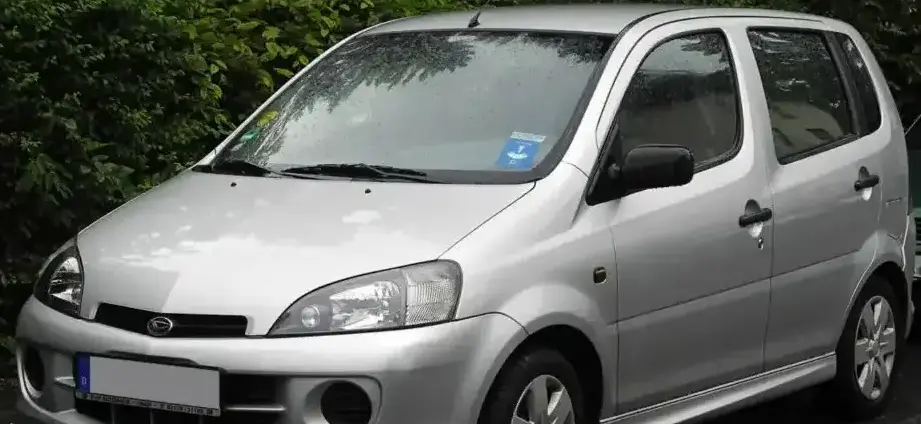
The Daihatsu YRV 1.3 i 16V Turbo Automatic, produced between 2002 and 2005, represents a unique offering within the compact MPV (Multi-Purpose Vehicle) segment. Positioned as a slightly more upscale and performance-oriented variant of the YRV line, it aimed to provide a blend of practicality, fuel efficiency, and spirited driving. This particular model, powered by the K3-VET engine and paired with a four-speed automatic transmission, was primarily sold in the Japanese domestic market (JDM) and select European countries. The YRV, internally designated as the P100 series, was Daihatsu’s attempt to capitalize on the growing demand for small, versatile family vehicles.
Technical Specifications
| Brand | Daihatsu |
| Model | YRV |
| Generation | YRV |
| Type (Engine) | 1.3 i 16V Turbo (129 Hp) Automatic |
| Start of production | 2002 |
| End of production | 2005 |
| Powertrain Architecture | Internal Combustion engine |
| Body type | Minivan |
| Seats | 5 |
| Doors | 5 |
| Fuel consumption (urban) | 9.4 l/100 km (25 US mpg) |
| Fuel consumption (extra urban) | 5.6 l/100 km (42 US mpg) |
| Fuel consumption (combined) | 7 l/100 km (33.6 US mpg) |
| Fuel Type | Petrol (Gasoline) |
| Acceleration 0 – 100 km/h | 8.4 sec |
| Acceleration 0 – 62 mph | 8.4 sec |
| Acceleration 0 – 60 mph | 8 sec |
| Maximum speed | 180 km/h (111.85 mph) |
| Weight-to-power ratio | 7.2 kg/Hp |
| Weight-to-torque ratio | 5.5 kg/Nm |
| Power | 129 Hp @ 6400 rpm |
| Torque | 170 Nm @ 3200 rpm (125.39 lb.-ft. @ 3200 rpm) |
| Engine layout | Front, Longitudinal |
| Engine Model/Code | K3-VET |
| Engine displacement | 1298 cm3 (79.21 cu. in.) |
| Number of cylinders | 4 |
| Engine configuration | Inline |
| Cylinder Bore | 72 mm (2.83 in.) |
| Piston Stroke | 79.7 mm (3.14 in.) |
| Compression ratio | 8.5:1 |
| Number of valves per cylinder | 4 |
| Fuel injection system | Multi-port manifold injection |
| Engine aspiration | Turbocharger, Intercooler |
| Valvetrain | DOHC |
| Engine oil capacity | 3.6 l (3.8 US qt | 3.17 UK qt) |
| Coolant capacity | 4.3 l (4.54 US qt | 3.78 UK qt) |
| Kerb Weight | 935 kg (2061.32 lbs.) |
| Max. weight | 1445 kg (3185.68 lbs.) |
| Max load | 510 kg (1124.36 lbs.) |
| Trunk (boot) space – minimum | 165 l (5.83 cu. ft.) |
| Trunk (boot) space – maximum | 1075 l (37.96 cu. ft.) |
| Fuel tank capacity | 40 l (10.57 US gal | 8.8 UK gal) |
| Length | 3765 mm (148.23 in.) |
| Width | 1625 mm (63.98 in.) |
| Height | 1565 mm (61.61 in.) |
| Wheelbase | 2370 mm (93.31 in.) |
| Front track | 1380 mm (54.33 in.) |
| Rear track | 1365 mm (53.74 in.) |
| Minimum turning circle | 8.8 m (28.87 ft.) |
| Drivetrain Architecture | Front wheel drive |
| Number of gears | 4 |
| Gearbox type | Automatic transmission |
| Front suspension | Coil spring |
| Rear suspension | Coil spring |
| Front brakes | Ventilated discs |
| Rear brakes | Drum |
| Assisting systems | ABS (Anti-lock braking system) |
| Steering type | Steering rack and pinion |
| Power steering | Hydraulic |
| Tires size | 175/55 R15 |
| Wheel rims size | 5J x 15 |
Powertrain & Engine Architecture
The heart of the YRV 1.3 i 16V Turbo is the Daihatsu K3-VET engine. This 1.3-liter, inline-four cylinder engine utilizes a single scroll turbocharger with an intercooler to boost power output. The engine features a double overhead camshaft (DOHC) valvetrain with four valves per cylinder, contributing to its relatively high specific output. Fuel delivery is managed by a multi-port fuel injection system. The K3-VET engine code signifies a specific iteration of the K3 series, optimized for turbocharging. The engine’s 8.5:1 compression ratio is a compromise between performance and reliability when used with a turbocharger. Paired with this engine is a four-speed automatic transmission, designed for smooth operation and ease of use. This transmission, while not offering the most modern gear ratios, was well-suited to the engine’s torque curve and the intended use case of the vehicle.
Driving Characteristics
The 129 horsepower and 170 Nm (125 lb-ft) of torque provided by the K3-VET engine, when coupled with the four-speed automatic, resulted in a surprisingly lively driving experience for a vehicle of this size. Acceleration from 0-60 mph was achieved in around 8 seconds, and a top speed of 112 mph was attainable. While not a sports car, the turbocharger provided a noticeable boost in power during acceleration, making overtaking maneuvers relatively effortless. The automatic transmission, however, did exhibit some typical characteristics of older four-speed units – occasional hunting for gears and a lack of the responsiveness found in more modern transmissions. Compared to the naturally aspirated versions of the YRV, the turbo model offered a significant performance advantage. The manual transmission variants, when available, provided even quicker acceleration and a more engaging driving experience, but at the expense of convenience.
Equipment & Trim Levels
The YRV 1.3 i 16V Turbo Automatic typically came equipped with a reasonable level of standard features. These included power windows, power steering, central locking, and an air conditioning system. Interior upholstery was generally cloth, with a functional and durable design. Optional extras could include alloy wheels, a CD player, and upgraded interior trim. The trim level often dictated the availability of these options. The YRV aimed for a balance between affordability and comfort, offering a practical and well-equipped interior for its price point.
Chassis & Braking
The YRV utilized a relatively simple chassis design, featuring coil spring suspension at both the front and rear. The front suspension employed MacPherson struts, while the rear utilized a torsion beam setup. Braking duties were handled by ventilated discs at the front and drum brakes at the rear. Anti-lock Braking System (ABS) was standard, enhancing safety. The suspension tuning prioritized ride comfort over outright handling prowess, making it suitable for everyday driving conditions. The relatively lightweight construction of the YRV helped to offset the limitations of the braking system.
Market Reception & Comparison
The Daihatsu YRV 1.3 i 16V Turbo Automatic received generally positive reviews for its combination of practicality, fuel efficiency, and performance. Critics praised the engine’s responsiveness and the vehicle’s overall versatility. However, the four-speed automatic transmission was sometimes criticized for its lack of refinement. Compared to other compact MPVs of the time, such as the Renault Scenic or the Opel/Vauxhall Zafira, the YRV offered a more affordable and fuel-efficient alternative, albeit with a less spacious interior. The turbo variant was often seen as a more appealing option than the naturally aspirated models, offering a noticeable performance boost without a significant penalty in fuel economy.
Legacy
The Daihatsu YRV, particularly the 1.3 i 16V Turbo Automatic variant, has developed a modest following among enthusiasts. The K3-VET engine is known for its reliability when properly maintained, although turbocharger-related issues can occur with age. In the used car market, these models are relatively affordable and offer a unique blend of practicality and performance. Parts availability can be a challenge in some regions, as Daihatsu withdrew from many European markets in the mid-2000s. However, the YRV remains a testament to Daihatsu’s engineering ingenuity and its ability to create compact, versatile vehicles.
