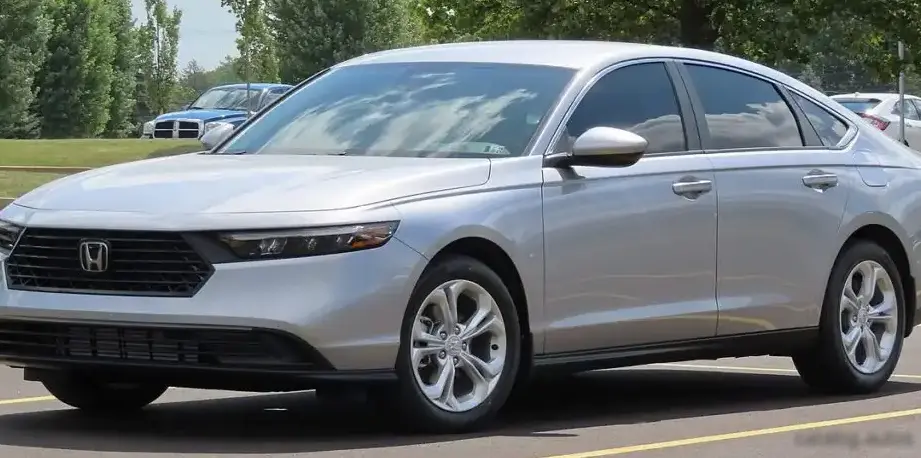
The Honda Accord Inspire (CB5) AZ-i 2.0, produced between October 1989 and December 1991, represents a significant iteration of Honda’s upscale sedan offering, primarily targeted at the Japanese domestic market (JDM). Positioned above the standard Accord, the Inspire aimed to provide a more luxurious and refined experience. The CB5 generation, built on the Accord platform, distinguished itself through unique styling, enhanced interior appointments, and a range of engine options, including the 2.0-liter AZ-i variant detailed here. This model served as a competitor to other Japanese luxury sedans, offering a blend of comfort, performance, and Honda’s renowned reliability.
Technical Specifications
| Brand | Honda |
| Model | Inspire |
| Generation | Accord Inspire (CB5) |
| Type (Engine) | AZ-i 2.0 (160 Hp) |
| Start of production | October, 1989 |
| End of production | December, 1991 |
| Powertrain Architecture | Internal Combustion engine |
| Body type | Sedan |
| Seats | 5 |
| Doors | 4 |
| Fuel consumption (combined) | 9.6 l/100 km (24.5 US mpg, 29.4 UK mpg, 10.4 km/l) |
| Fuel Type | Petrol (Gasoline) |
| Weight-to-power ratio | 7.9 kg/Hp, 126 Hp/tonne |
| Weight-to-torque ratio | 6.8 kg/Nm, 146.5 Nm/tonne |
| Power | 160 Hp @ 6700 rpm |
| Power per litre | 80.2 Hp/l |
| Torque | 186 Nm @ 4000 rpm (137.19 lb.-ft. @ 4000 rpm) |
| Engine layout | Front, Longitudinal |
| Engine Model/Code | G20A |
| Engine displacement | 1996 cm3 (121.8 cu. in.) |
| Number of cylinders | 5 |
| Engine configuration | Inline |
| Cylinder Bore | 82 mm (3.23 in.) |
| Piston Stroke | 75.6 mm (2.98 in.) |
| Compression ratio | 9.7:1 |
| Number of valves per cylinder | 4 |
| Fuel injection system | Multi-port manifold injection |
| Engine aspiration | Naturally aspirated engine |
| Valvetrain | SOHC |
| Engine oil capacity | 5.2 l (5.49 US qt | 4.58 UK qt) |
| Kerb Weight | 1270 kg (2799.87 lbs.) |
| Fuel tank capacity | 65 l (17.17 US gal | 14.3 UK gal) |
| Length | 4690 mm (184.65 in.) |
| Width | 1695 mm (66.73 in.) |
| Height | 1355 mm (53.35 in.) |
| Wheelbase | 2805 mm (110.43 in.) |
| Front track | 1465 mm (57.68 in.) |
| Rear (Back) track | 1470 mm (57.87 in.) |
| Ride height (ground clearance) | 155 mm (6.1 in.) |
| Minimum turning circle (turning diameter) | 11 m (36.09 ft.) |
| Drivetrain Architecture | The Internal combustion engine (ICE) drives the front wheels of the vehicle. |
| Drive wheel | Front wheel drive |
| Number of gears and type of gearbox | 5 gears, manual transmission |
| Front suspension | Double wishbone |
| Rear suspension | Double wishbone |
| Front brakes | Ventilated discs |
| Rear brakes | Disc |
| Steering type | Steering rack and pinion |
| Power steering | Hydraulic Steering |
| Tires size | 175/70 R14 |
Powertrain & Engine Architecture
The heart of the Inspire AZ-i 2.0 is the G20A engine, a 1996cc inline-five cylinder powerplant. This engine configuration was relatively uncommon, offering a balance between smoothness and performance. The G20A featured a single overhead camshaft (SOHC) valvetrain operating four valves per cylinder. Fuel delivery was managed by a multi-port fuel injection system, contributing to improved efficiency and responsiveness. The engine produced 160 horsepower at 6700 rpm and 186 Nm (137.19 lb-ft) of torque at 4000 rpm. The engine’s longitudinal mounting allowed for a front-wheel-drive configuration, a common layout for Japanese sedans of this era. The five-speed manual transmission was the standard offering, providing drivers with direct control over the engine’s power.
Driving Characteristics
The 160 hp AZ-i 2.0 offered a respectable level of performance for its time. While not overtly sporty, the engine provided sufficient power for comfortable highway cruising and confident overtaking. The five-speed manual transmission allowed drivers to exploit the engine’s torque curve, delivering brisk acceleration. Compared to other engine options available in the Inspire lineup, such as potential turbocharged variants, the AZ-i 2.0 prioritized smooth, linear power delivery over outright speed. The front-wheel-drive configuration provided predictable handling, although it lacked the all-wheel-drive sophistication found in some competing models. The gear ratios were tuned for a balance of fuel economy and usability, making it a practical choice for daily driving.
Equipment & Trim Levels
The Inspire AZ-i 2.0 typically came well-equipped, reflecting its positioning as a premium sedan. Standard features often included power windows, power locks, air conditioning, and a quality audio system. Interior upholstery consisted of comfortable cloth seats, with options for leather upgrades. The dashboard layout was functional and aesthetically pleasing, featuring clear instrumentation and user-friendly controls. Optional extras could include features like a sunroof, upgraded sound systems, and alloy wheels. The AZ-i trim level generally represented a mid-range offering within the Inspire lineup, providing a good balance of features and value.
Chassis & Braking
The Inspire CB5 utilized a double wishbone suspension system both front and rear, providing a comfortable and controlled ride. This suspension design helped to absorb road imperfections and maintain stability during cornering. The front brakes were ventilated discs, offering strong stopping power, while the rear brakes were solid discs. Hydraulic power steering was standard, making maneuvering easy and effortless. The tires were typically 175/70 R14, providing a good compromise between ride comfort and handling. The chassis was designed to provide a quiet and refined driving experience, minimizing noise and vibration.
Market Reception & Comparison
The Honda Accord Inspire AZ-i 2.0 was generally well-received by Japanese automotive critics. It was praised for its comfortable ride, refined interior, and reliable engine. Fuel economy was considered reasonable for a vehicle of its size and class, averaging around 9.6 l/100 km (24.5 US mpg). Compared to other trims in the Inspire lineup, the AZ-i 2.0 offered a good balance of performance and fuel efficiency. While some critics noted that it lacked the outright sportiness of some competitors, it was considered a practical and well-rounded choice for buyers seeking a comfortable and reliable luxury sedan.
Legacy
The Honda G20A engine, found in the Inspire AZ-i 2.0, is known for its durability and reliability. With proper maintenance, these engines can last for many years and accumulate high mileage. In the used car market today, the Inspire CB5 AZ-i 2.0 is considered a desirable classic, particularly among Honda enthusiasts. Its unique inline-five engine and comfortable ride make it a standout vehicle. Parts availability can be a challenge, but a dedicated community of owners and online resources help to keep these cars on the road. The Inspire CB5 represents a significant chapter in Honda’s history, showcasing the company’s commitment to quality, innovation, and driving pleasure.