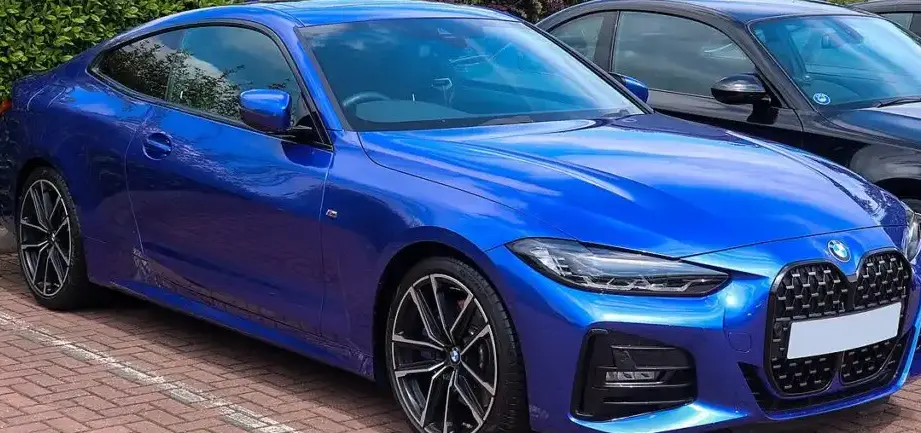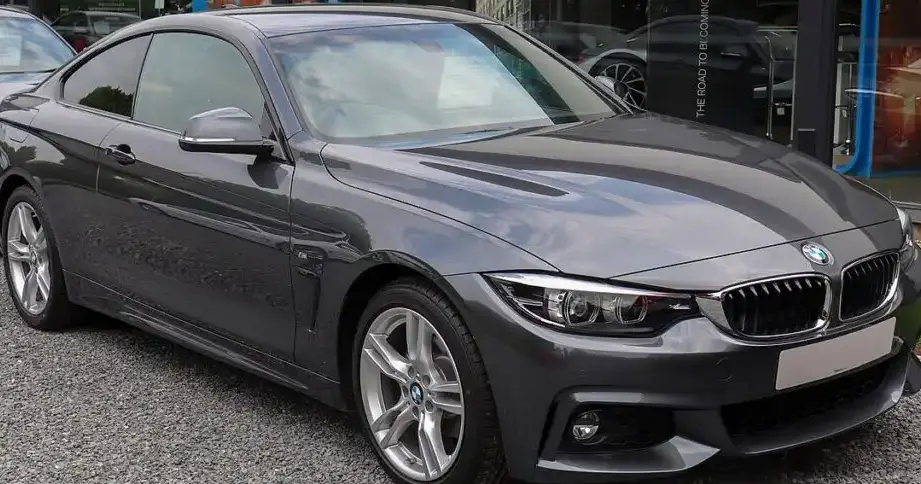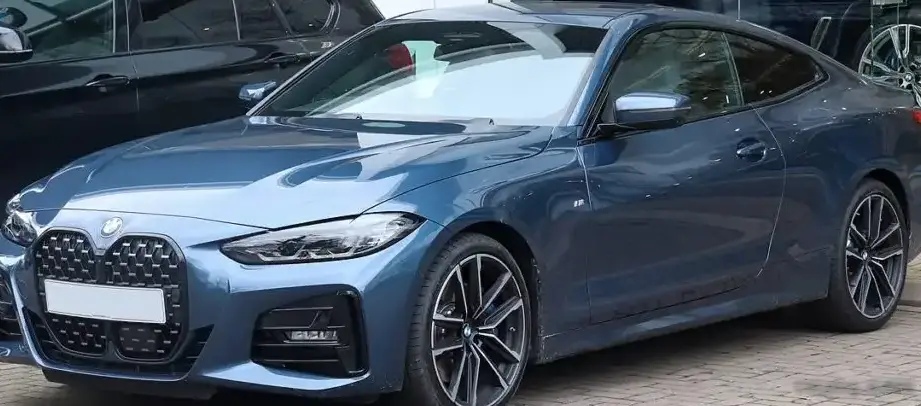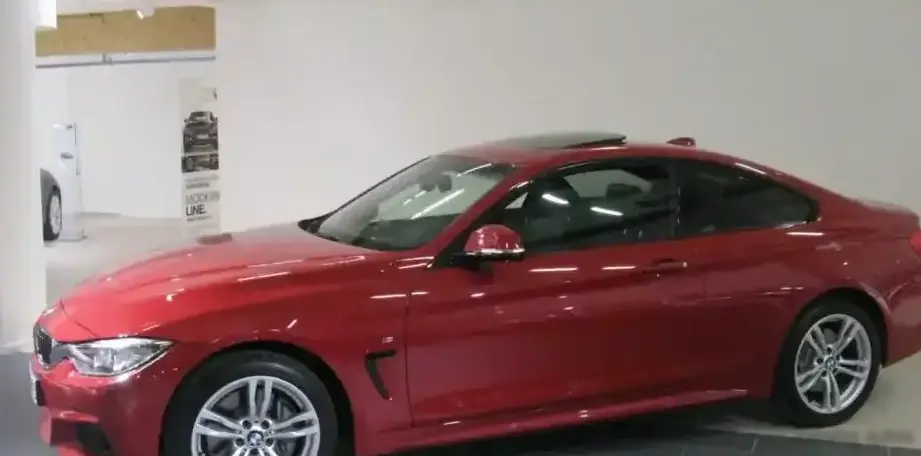
The BMW 4 Series Coupe (F32) 418d, produced from 2015 to 2016, represented an entry point into the 4 Series range, offering a blend of sporty styling and relatively economical diesel power. Positioned below the 420d and 435i models, the 418d was aimed at buyers prioritizing fuel efficiency and lower running costs without entirely sacrificing the BMW driving experience. It utilized the F32 chassis, part of the broader BMW 4 Series family built on the 1HX0 platform, and was exclusively offered as a two-door coupe. This variant was primarily sold in the European market, where diesel engines held a significant market share, though limited numbers were available in other regions.
Technical Specifications
| Brand | BMW |
| Model | 4 Series |
| Generation | 4 Series Coupe (F32) |
| Type (Engine) | 418d (150 Hp) |
| Start of production | 2015 |
| End of production | 2016 |
| Powertrain Architecture | Internal Combustion engine |
| Body type | Coupe |
| Seats | 4 |
| Doors | 2 |
| Fuel consumption (urban) | 5.0-5.4 l/100 km (47 – 43.6 US mpg) |
| Fuel consumption (extra urban) | 3.7-3.9 l/100 km (63.6 – 60.3 US mpg) |
| Fuel consumption (combined) | 4.2-4.5 l/100 km (56 – 52.3 US mpg) |
| CO2 emissions | 110-118 g/km |
| Fuel Type | Diesel |
| Acceleration 0 – 100 km/h | 8.6 sec |
| Acceleration 0 – 62 mph | 8.6 sec |
| Acceleration 0 – 60 mph | 8.2 sec |
| Maximum speed | 215 km/h (133.59 mph) |
| Emission standard | Euro 6 |
| Weight-to-power ratio | 9.7 kg/Hp |
| Weight-to-torque ratio | 4.6 kg/Nm |
| Power | 150 Hp @ 4000 rpm |
| Torque | 320 Nm @ 1500-3000 rpm (236.02 lb.-ft.) |
| Engine layout | Front, Longitudinal |
| Engine Model/Code | B47D20A |
| Engine displacement | 1995 cm3 (121.74 cu. in.) |
| Number of cylinders | 4 |
| Engine configuration | Inline |
| Cylinder Bore | 84 mm (3.31 in.) |
| Piston Stroke | 90 mm (3.54 in.) |
| Compression ratio | 16.5:1 |
| Number of valves per cylinder | 4 |
| Fuel injection system | Diesel Commonrail |
| Engine aspiration | Twin-power turbo, Intercooler |
| Engine oil capacity | 5 l (5.28 US qt | 4.4 UK qt) |
| Coolant | 7 l (7.4 US qt | 6.16 UK qt) |
| Kerb Weight | 1460 kg (3218.75 lbs.) |
| Max. weight | 1980 kg (4365.15 lbs.) |
| Max load | 520 kg (1146.4 lbs.) |
| Trunk (boot) space – minimum | 445 l (15.72 cu. ft.) |
| Fuel tank capacity | 57 l (15.06 US gal | 12.54 UK gal) |
| Max. roof load | 75 kg (165.35 lbs.) |
| Permitted trailer load with brakes (12%) | 1600 kg (3527.4 lbs.) |
| Permitted trailer load without brakes | 745 kg (1642.44 lbs.) |
| Permitted towbar download | 75 kg (165.35 lbs.) |
| Length | 4638 mm (182.6 in.) |
| Width | 1825 mm (71.85 in.) |
| Height | 1377 mm (54.21 in.) |
| Wheelbase | 2810 mm (110.63 in.) |
| Front track | 1545 mm (60.83 in.) |
| Rear (Back) track | 1594 mm (62.76 in.) |
| Ride height (ground clearance) | 130 mm (5.12 in.) |
| Drag coefficient (Cd) | 0.28 |
| Minimum turning circle (turning diameter) | 11.3 m (37.07 ft.) |
| Drivetrain Architecture | Rear wheel drive |
| Drive wheel | Rear wheel drive |
| Number of gears and type of gearbox | 6 gears, manual transmission |
| Front suspension | Independent coil spring |
| Rear suspension | Independent multi-link suspension |
| Front brakes | Ventilated discs |
| Rear brakes | Ventilated discs |
| Assisting systems | ABS (Anti-lock braking system) |
| Steering type | Steering rack and pinion |
| Power steering | Electric Steering |
| Tires size | 225/50 R17 94V; 225/45 R18; 255/40 R18; 225/40 R19; 255/35 R19 |
| Wheel rims size | 7.5J x 17; 8J x 18; 8.5J x 18; 8J x 19; 8.5J x 19 |
Powertrain & Engine Architecture
The heart of the 418d was the BMW B47D20A, a 2.0-liter inline-four diesel engine. This engine was part of BMW’s modular engine family, known for its efficiency and refinement. The B47 featured a single turbocharger with variable geometry turbine (VGT) technology, along with direct common-rail fuel injection operating at pressures up to 2,000 bar. This high-pressure injection system contributed to improved combustion efficiency and reduced emissions. The engine also incorporated BMW’s TwinPower Turbo technology, though in this application, it utilized a single, more advanced turbocharger rather than the twin-turbo setup found in higher-output variants. The engine produced 150 horsepower at 4,000 rpm and 320 Nm (236 lb-ft) of torque between 1,500 and 3,000 rpm. The 418d was exclusively offered with a six-speed manual transmission, sending power to the rear wheels.
Driving Characteristics
The 418d, with its 150 hp and 320 Nm of torque, offered a respectable, if not exhilarating, driving experience. Acceleration from 0 to 62 mph (0-100 km/h) took approximately 8.6 seconds. While not a performance-oriented model, the engine provided sufficient power for everyday driving and comfortable highway cruising. The manual transmission allowed for a more engaging driving experience compared to an automatic, and the rear-wheel-drive layout contributed to the BMW’s characteristic handling balance. Compared to the 420d, the 418d felt noticeably less powerful, particularly during overtaking maneuvers. However, the lower power output also meant reduced stress on the engine components, potentially contributing to improved long-term reliability. The gear ratios were tuned for fuel efficiency, meaning the engine sometimes felt strained when pushed hard.
Equipment & Trim Levels
The 418d typically came with a reasonable level of standard equipment, including automatic climate control, a BMW iDrive infotainment system with a 6.5-inch display, and cloth upholstery. Common options included leather upholstery, a larger iDrive screen, navigation, parking sensors, and a sunroof. Trim levels were relatively simple, with most customization options available as individual extras. The interior design followed the BMW aesthetic, with a driver-focused cockpit and high-quality materials. While not as luxurious as the higher-end 4 Series models, the 418d offered a comfortable and well-appointed cabin.
Chassis & Braking
The 418d utilized the standard 4 Series chassis, featuring independent suspension all around – coil springs at the front and a multi-link setup at the rear. The suspension was tuned for a balance between comfort and handling. Braking duties were handled by ventilated disc brakes on all four wheels, providing adequate stopping power. The car was equipped with ABS (Anti-lock Braking System) and electronic stability control as standard safety features. The weight distribution was relatively balanced, contributing to the car’s neutral handling characteristics.
Market Reception & Comparison
The 418d was generally well-received by automotive critics as an economical and practical entry point into the 4 Series range. Reviewers praised its fuel efficiency and comfortable ride, but some noted its lack of outright performance compared to the more powerful models. Compared to the 420d, the 418d offered a lower purchase price and slightly better fuel economy, but at the expense of performance. The 418d’s main competitors included other compact executive coupes with diesel engines, such as the Audi A5 Coupe 2.0 TDI and the Mercedes-Benz C-Class Coupe 220d.
Legacy
The B47 engine, used in the 418d, has proven to be a relatively reliable powertrain, although some early examples experienced issues with the timing chain. Regular maintenance, including oil changes and timing chain inspections, is crucial for ensuring long-term reliability. On the used car market, the 418d represents a relatively affordable way to enter the BMW 4 Series ownership experience. Its fuel efficiency and lower running costs make it an attractive option for buyers seeking a stylish and practical coupe. However, potential buyers should be aware of the potential timing chain issues and ensure a thorough inspection before purchase.