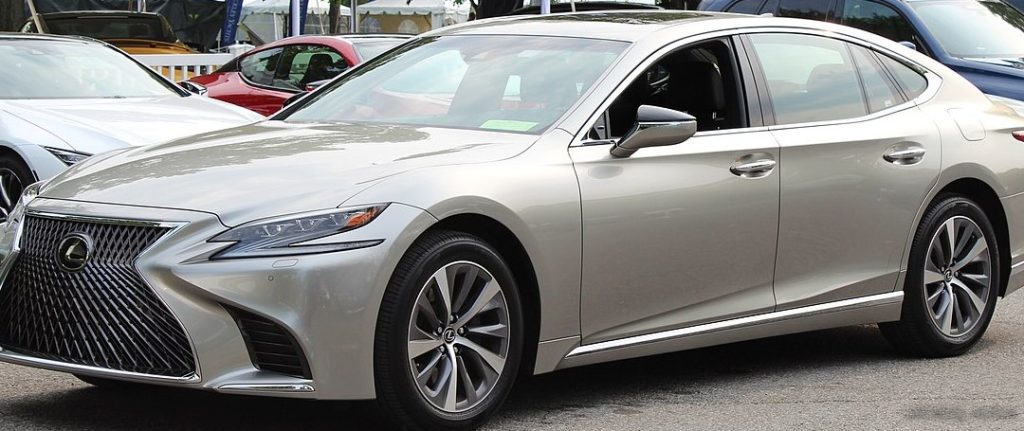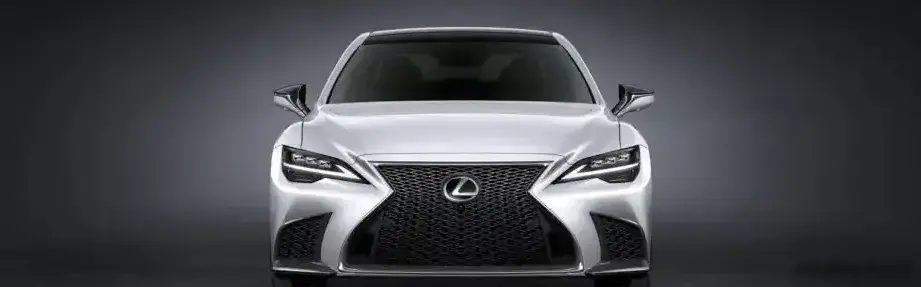
The Lexus LS 500, specifically the facelifted 2020 model year with the 3.5-liter V6 engine producing 416 horsepower and paired with a 10-speed automatic transmission and all-wheel drive, represents the fifth generation of Lexus’ flagship sedan. Introduced in July 2020, this variant aimed to balance the traditional Lexus luxury experience with enhanced performance and modern technology. It sits at the top of the LS lineup, offering a more potent alternative to the rear-wheel drive LS 500 and the hybrid LS 500h. The 2020 facelift brought styling updates, improved infotainment, and refinements to the driving dynamics, solidifying the LS’s position as a competitor to established luxury sedans from Mercedes-Benz, BMW, and Audi.
Technical Specifications
| Brand | Lexus |
| Model | LS |
| Generation | LS V (facelift 2020) |
| Type (Engine) | 500 V6 (416 Hp) AWD Automatic |
| Start of production | July, 2020 |
| Powertrain Architecture | Internal Combustion engine |
| Body type | Sedan |
| Seats | 5 |
| Doors | 4 |
| Fuel consumption (economy) – urban | 13.8 l/100 km (17 US mpg, 20.5 UK mpg, 7.2 km/l) |
| Fuel consumption (economy) – extra urban | 8.7 l/100 km (27 US mpg, 32.5 UK mpg, 11.5 km/l) |
| Fuel consumption (economy) – combined | 11.2 l/100 km (21 US mpg, 25.2 UK mpg, 8.9 km/l) |
| Fuel Type | Petrol (Gasoline) |
| Acceleration 0 – 60 mph | 4.6 sec |
| Maximum speed | 219 km/h (136.08 mph) |
| Emission standard | ULEV70 |
| Weight-to-power ratio | 5.3 kg/Hp, 187 Hp/tonne |
| Weight-to-torque ratio | 3.7 kg/Nm, 269.2 Nm/tonne |
| Power | 416 Hp @ 6000 rpm |
| Power per litre | 120.8 Hp/l |
| Torque | 599 Nm @ 1600-4800 rpm (441.8 lb.-ft. @ 1600-4800 rpm) |
| Engine layout | Front, Longitudinal |
| Engine Model/Code | V35A-FTS |
| Engine displacement | 3445 cm3 (210.23 cu. in.) |
| Number of cylinders | 6 |
| Engine configuration | V-engine |
| Cylinder Bore | 85.6 mm (3.37 in.) |
| Piston Stroke | 100.08 mm (3.94 in.) |
| Compression ratio | 10.478:1 |
| Number of valves per cylinder | 4 |
| Fuel injection system | Direct injection and Multi-port manifold injection |
| Engine aspiration | Twin-Turbo, Intercooler |
| Valvetrain | DOHC, VVT-i |
| Engine oil capacity | 7.1 l (7.5 US qt | 6.25 UK qt) |
| Coolant | 10.6 l (11.2 US qt | 9.33 UK qt) |
| Kerb Weight | 2225-2315 kg (4905.29 – 5103.7 lbs.) |
| Max. weight | 2747 kg (6056.1 lbs.) |
| Max load | 432-522 kg (952.4 – 1150.81 lbs.) |
| Trunk (boot) space – minimum | 480 l (16.95 cu. ft.) |
| Fuel tank capacity | 82 l (21.66 US gal | 18.04 UK gal) |
| Length | 5235 mm (206.1 in.) |
| Width with mirrors folded | 1900 mm (74.8 in.) |
| Height | 1461 mm (57.52 in.) |
| Wheelbase | 3124 mm (122.99 in.) |
| Front track | 1633 mm (64.29 in.) |
| Rear (Back) track | 1614-1634 mm (63.54 – 64.33 in.) |
| Ride height (ground clearance) | 137-150 mm (5.39 – 5.91 in.) |
| Drag coefficient (Cd) | 0.30 |
| Minimum turning circle (turning diameter) | 12 m (39.37 ft.) |
| Drivetrain Architecture | The Internal combustion engine (ICE) drives the rear wheels permanently, and the front wheels are driven through an electrically or mechanically operated clutch if necessary. |
| Drive wheel | All wheel drive (4×4) |
| Number of gears and type of gearbox | 10 gears, automatic transmission |
| Front suspension | Independent multi-link suspension |
| Rear suspension | Independent multi-link suspension |
| Front brakes | Ventilated discs, 355.6-398.78 mm |
| Rear brakes | Ventilated discs, 332.74-358.14 mm |
| Assisting systems | ABS (Anti-lock braking system) |
| Steering type | Steering rack and pinion |
| Power steering | Electric Steering |
| Tires size | 245/50 R19; 245/45 R20 |
| Wheel rims size | 8J x 19; 8.5J x 20 |
Powertrain & Engine Architecture
At the heart of the LS 500 AWD is the 3.5-liter V35A-FTS V6 engine. This engine utilizes a twin-turbocharged configuration, with one turbocharger dedicated to each bank of cylinders, providing a broad torque curve and minimal turbo lag. Direct injection and multi-port fuel injection are combined to optimize combustion efficiency and power output. The engine employs a double overhead camshaft (DOHC) valvetrain with Variable Valve Timing-intelligent Wide range (VVT-iW) technology, further enhancing performance and fuel economy. The 10-speed automatic transmission, a Lexus first, is designed for smooth and responsive shifting. It features lock-up torque converters and precisely calibrated gear ratios to maximize efficiency and deliver strong acceleration. The all-wheel-drive system employs a Torsen limited-slip center differential, distributing torque between the front and rear axles for optimal traction in various driving conditions.
Driving Characteristics
The LS 500 AWD delivers a refined and powerful driving experience. The twin-turbo V6 provides ample torque from low engine speeds, resulting in brisk acceleration. The 0-60 mph sprint is achieved in approximately 4.6 seconds. The 10-speed automatic transmission contributes to smooth gear changes, and the all-wheel-drive system inspires confidence in all weather conditions. Compared to the rear-wheel-drive LS 500, the AWD variant offers enhanced stability and traction, particularly on slippery surfaces. While not as overtly sporty as some of its German rivals, the LS 500 prioritizes comfort and refinement, offering a serene and composed ride quality. The gear ratios are tuned for both acceleration and highway cruising, providing a balance between performance and fuel efficiency.
Equipment & Trim Levels
The 2020 Lexus LS 500 AWD came standard with a comprehensive suite of features, including a 12.3-inch infotainment display with remote touch interface, Mark Levinson premium sound system, semi-aniline leather upholstery, heated and ventilated front seats, and a panoramic glass roof. Standard safety features included Lexus Safety System+ 2.0, which incorporates adaptive cruise control, lane departure alert with steering assist, and automatic emergency braking. Optional extras included a rear-seat entertainment system, massaging rear seats, and a heads-up display. The interior trim options included various wood and metal accents, allowing buyers to personalize the cabin to their preferences.
Chassis & Braking
The LS 500 utilizes an independent multi-link suspension system at both the front and rear, providing a comfortable and controlled ride. The suspension is tuned to minimize body roll and maximize stability. Ventilated disc brakes are fitted on all four wheels, providing ample stopping power. The front brakes measure 355.6-398.78 mm, while the rear brakes measure 332.74-358.14 mm. An Anti-lock Braking System (ABS) is standard, along with Electronic Brake-force Distribution (EBD) and Brake Assist. The steering system is an electric power-assisted rack-and-pinion setup, offering precise and responsive steering feel.
Market Reception & Comparison
The 2020 Lexus LS 500 AWD was generally well-received by automotive critics. It was praised for its luxurious interior, comfortable ride, and powerful engine. However, some reviewers noted that the infotainment system could be complex to use. Compared to the rear-wheel-drive LS 500, the AWD variant offered a slight penalty in fuel economy, but the added traction and stability were considered worthwhile by many buyers. The LS 500’s fuel economy of 11.2 l/100 km (21 US mpg) was competitive with other luxury sedans in its class. Reliability ratings were consistently high, reflecting Lexus’ reputation for build quality and dependability.
Legacy
The Lexus LS 500 AWD, particularly the 2020 facelifted model, has proven to be a reliable and desirable luxury sedan in the used car market. The V35A-FTS engine and 10-speed automatic transmission have demonstrated good long-term durability. While maintenance costs for a luxury vehicle are inherently higher than for more mainstream models, the LS 500’s reputation for reliability helps to mitigate these expenses. The combination of luxury, performance, and dependability has ensured that the LS 500 remains a popular choice for discerning buyers seeking a refined and comfortable driving experience.