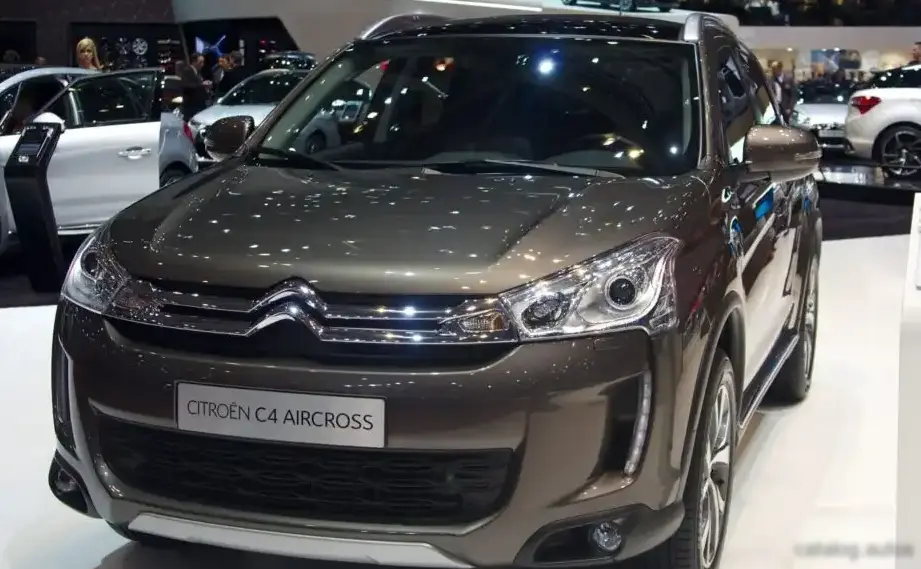
The Citroën C4 I Hatchback, specifically the 1.6 HDi 109 hp variant produced between 2008 and 2010, represents a significant iteration of Citroën’s compact family car. This version, falling within the Phase II update of the first-generation C4 (introduced in 2004), was positioned as a fuel-efficient and practical option within the C4 lineup. It utilized the PSA Group’s DV6 engine family and was primarily aimed at European markets where diesel engines held a dominant share of the compact car segment. The C4 I, built on the PSA Group’s Platform 2 (shared with the Peugeot 307), sought to blend comfort, practicality, and a distinctive design aesthetic. This particular 1.6 HDi model served as a core offering, bridging the gap between the base petrol engines and the more powerful HDi variants.
Technical Specifications
| Brand | Citroen |
| Model | C4 |
| Generation | C4 I Hatchback (Phase II, 2008) |
| Type (Engine) | 1.6 HDi (109 Hp) FAP |
| Start of production | 2008 |
| End of production | 2010 |
| Powertrain Architecture | Internal Combustion engine |
| Body type | Hatchback |
| Seats | 5 |
| Doors | 5 |
| Fuel consumption (urban) | 6 l/100 km (39.2 US mpg, 47.1 UK mpg, 16.7 km/l) |
| Fuel consumption (extra urban) | 4 l/100 km (58.8 US mpg, 70.6 UK mpg, 25 km/l) |
| Fuel consumption (combined) | 4.7 l/100 km (50 US mpg, 60.1 UK mpg, 21.3 km/l) |
| CO2 emissions | 125 g/km |
| Fuel Type | Diesel |
| Acceleration 0 – 100 km/h | 11.2 sec |
| Acceleration 0 – 62 mph | 11.2 sec |
| Acceleration 0 – 60 mph | 10.6 sec |
| Maximum speed | 192 km/h (119.3 mph) |
| Emission standard | Euro 4 |
| Weight-to-power ratio | 11.7 kg/Hp, 85.2 Hp/tonne |
| Weight-to-torque ratio | 4.9 kg/Nm, 203.1 Nm/tonne |
| Power | 109 Hp @ 4000 rpm |
| Power per litre | 69.9 Hp/l |
| Torque | 260 Nm @ 1750 rpm (191.77 lb.-ft. @ 1750 rpm) |
| Engine layout | Front, Transverse |
| Engine Model/Code | 9HY DV6TED4 |
| Engine displacement | 1560 cm3 (95.2 cu. in.) |
| Number of cylinders | 4 |
| Engine configuration | Inline |
| Cylinder Bore | 75 mm (2.95 in.) |
| Piston Stroke | 88.3 mm (3.48 in.) |
| Compression ratio | 18:1 |
| Number of valves per cylinder | 4 |
| Fuel injection system | Diesel Commonrail |
| Engine aspiration | Turbocharger, Intercooler |
| Valvetrain | DOHC |
| Engine oil capacity | 3.8 l (4.02 US qt | 3.34 UK qt) |
| Coolant | 6.5 l (6.87 US qt | 5.72 UK qt) |
| Kerb Weight | 1280 kg (2821.92 lbs.) |
| Max. weight | 1800 kg (3968.32 lbs.) |
| Max load | 520 kg (1146.4 lbs.) |
| Trunk (boot) space – minimum | 320 l (11.3 cu. ft.) |
| Trunk (boot) space – maximum | 1023 l (36.13 cu. ft.) |
| Fuel tank capacity | 60 l (15.85 US gal | 13.2 UK gal) |
| Max. roof load | 75 kg (165.35 lbs.) |
| Permitted trailer load with brakes (8%) | 1300 kg (2866.01 lbs.) |
| Permitted trailer load with brakes (12%) | 1300 kg (2866.01 lbs.) |
| Permitted trailer load without brakes | 677 kg (1492.53 lbs.) |
| Permitted towbar download | 66 kg (145.51 lbs.) |
| Length | 4275 mm (168.31 in.) |
| Width | 1773 mm (69.8 in.) |
| Width including mirrors | 1964 mm (77.32 in.) |
| Height | 1496 mm (58.9 in.) |
| Wheelbase | 2608 mm (102.68 in.) |
| Front track | 1505 mm (59.25 in.) |
| Rear (Back) track | 1510 mm (59.45 in.) |
| Front overhang | 950 mm (37.4 in.) |
| Rear overhang | 717 mm (28.23 in.) |
| Drag coefficient (Cd) | 0.31 |
| Minimum turning circle (turning diameter) | 11.3 m (37.07 ft.) |
| Drivetrain Architecture | The Internal combustion engine (ICE) drives the front wheels of the vehicle. |
| Drive wheel | Front wheel drive |
| Number of gears and type of gearbox | 5 gears, manual transmission |
| Front suspension | Independent, type McPherson with coil spring and anti-roll bar |
| Rear suspension | Semi-independent, coil spring |
| Front brakes | Ventilated discs |
| Rear brakes | Disc |
| Assisting systems | ABS (Anti-lock braking system) |
| Steering type | Steering rack and pinion |
| Tires size | 205/50 R17 |
| Wheel rims size | 17 |
Powertrain & Engine Architecture
The heart of this C4 variant is the 9HY DV6TED4 engine, a 1.6-liter inline-four diesel. This engine is a member of the DV6 family, widely used by PSA Group and Ford. It features a common rail direct injection system, delivering fuel at extremely high pressure for optimized combustion. The engine utilizes a turbocharger with an intercooler to boost power and torque. The 16-valve DOHC (Double Overhead Camshaft) valvetrain ensures efficient gas exchange. The FAP (Filtre à Particules) or Diesel Particulate Filter, was standard equipment, reducing particulate matter emissions to meet Euro 4 standards. This engine produced 109 horsepower at 4000 rpm and 260 Nm (192 lb-ft) of torque at 1750 rpm. The engine was paired with a 5-speed manual transmission, chosen for its balance of cost-effectiveness and fuel efficiency.
Driving Characteristics
The 1.6 HDi 109 hp C4 offered a comfortable and economical driving experience. Acceleration from 0-60 mph took around 10.6 seconds, and top speed was 119 mph. While not particularly sporty, the engine provided adequate power for everyday driving and highway cruising. The 5-speed gearbox was well-matched to the engine’s torque curve, allowing for relaxed cruising at highway speeds. Compared to the more powerful 2.0 HDi variants, this engine prioritized fuel economy over outright performance. The manual transmission offered more driver engagement than the optional automatic, but the automatic was favored by those seeking maximum convenience. The relatively low power output meant that the chassis wasn’t stressed, contributing to a comfortable ride.
Equipment & Trim Levels
The 1.6 HDi 109 hp model typically came equipped with air conditioning, power windows, central locking, and an RDS radio. Higher trim levels, such as Exclusive, added features like alloy wheels, automatic headlights and wipers, a trip computer, and upgraded interior trim. Safety features included ABS, front airbags, and seatbelt pretensioners. Optional extras included a panoramic sunroof, parking sensors, and a navigation system. Interior upholstery was typically cloth, with the option of leather on higher-spec models. The dashboard layout was modern for its time, with a focus on ergonomics and ease of use.
Chassis & Braking
The C4 I utilized a McPherson strut front suspension and a semi-independent coil spring rear suspension. This setup provided a good balance of ride comfort and handling. The front brakes were ventilated discs, while the rear brakes were solid discs. ABS (Anti-lock Braking System) was standard. The suspension was tuned for comfort, prioritizing a smooth ride over sharp handling. Stabilizer bars were fitted to both the front and rear axles to reduce body roll. The steering was a rack and pinion system, providing precise and responsive control.
Market Reception & Comparison
The Citroën C4 1.6 HDi 109 hp was well-received by critics for its fuel efficiency and comfortable ride. It was seen as a practical and affordable option for families and commuters. Compared to the 2.0 HDi variants, it offered lower running costs but less performance. The 1.6 HDi engine was generally considered reliable, although the FAP (Diesel Particulate Filter) could require occasional maintenance. Fuel economy was a key selling point, with combined figures of around 50 mpg being achievable in real-world driving.
Legacy
The 1.6 HDi engine, in its various iterations, became a mainstay of the European diesel market. The C4 I 1.6 HDi 109 hp remains a relatively common sight on used car lots today. While older examples may require maintenance on the FAP and other diesel components, the engine is generally considered durable. The C4 I, as a whole, is remembered for its distinctive styling and comfortable ride. This variant represents a sweet spot in the C4 lineup, offering a good balance of fuel economy, practicality, and affordability.