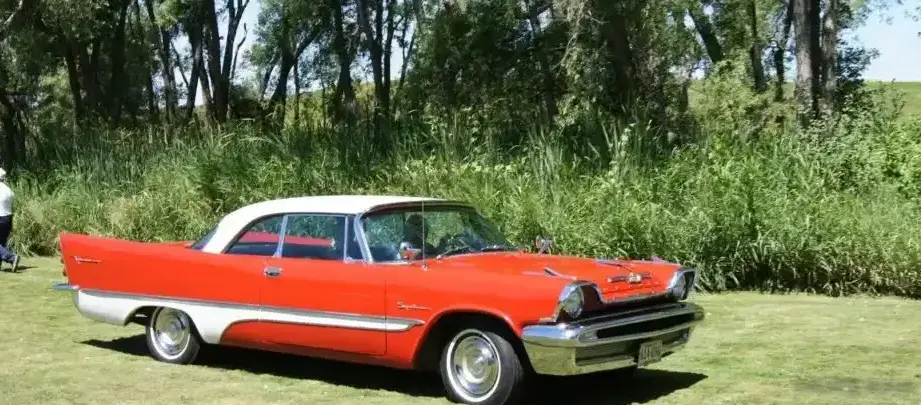
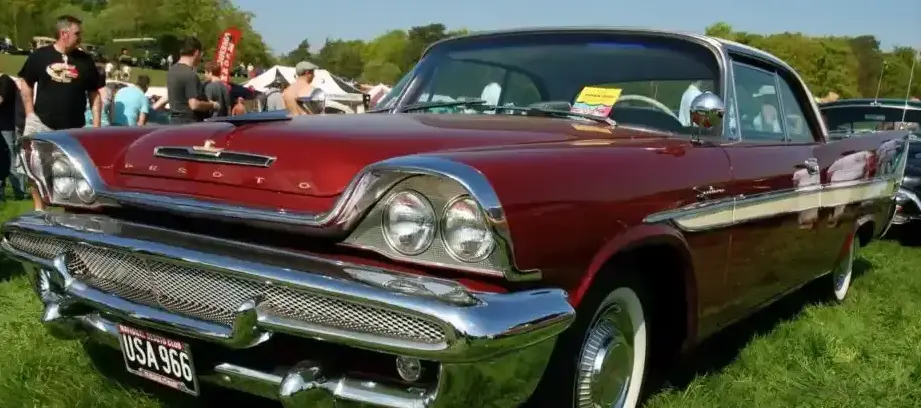
The DeSoto Firesweep I 2-Door Sportsman, specifically the 1959 facelifted model equipped with the 5.9-liter V8 engine and TorqueFlite automatic transmission, represents a pivotal, though ultimately short-lived, moment in the history of the DeSoto division of Chrysler Corporation. Produced for only two model years (1958-1959), the Firesweep was intended to fill a gap in the Chrysler lineup between the more affordable Dodge and the luxury-oriented Chrysler models. The 1959 model year saw a significant restyling, with a more restrained and refined appearance compared to the flamboyant designs of the mid-1950s. This particular configuration – the 295 horsepower V8 paired with the TorqueFlite – positioned the Firesweep as a comfortable and powerful grand tourer, aimed at buyers seeking a blend of style, performance, and convenience.
Technical Specifications
| Brand | DeSoto |
| Model | Firesweep |
| Generation | Firesweep I 2-Door Sportsman (facelift 1959) |
| Type (Engine) | 5.9 V8 (295 Hp) TorqueFlite |
| Start of production | 1958 |
| End of production | 1959 |
| Powertrain Architecture | Internal Combustion engine |
| Body type | Coupe |
| Seats | 6 |
| Doors | 2 |
| Fuel Type | Petrol (Gasoline) |
| Power | 295 Hp @ 4600 rpm |
| Power per litre | 49.9 Hp/l |
| Torque | 529 Nm @ 2400 rpm / 390.17 lb.-ft. @ 2400 rpm |
| Engine displacement | 5916 cm3 / 361.02 cu. in. |
| Number of cylinders | 8 |
| Engine configuration | V-engine |
| Cylinder Bore | 104.65 mm / 4.12 in. |
| Piston Stroke | 85.85 mm / 3.38 in. |
| Compression ratio | 10:1 |
| Number of valves per cylinder | 2 |
| Fuel injection system | Carburettor |
| Engine aspiration | Naturally aspirated engine |
| Valvetrain | OHV |
| Engine oil capacity | 4.7 l / 4.97 US qt | 4.14 UK qt |
| Coolant | 16.1 l / 17.01 US qt | 14.17 UK qt |
| Fuel tank capacity | 76 l / 20.08 US gal | 16.72 UK gal |
| Length | 5514 mm / 217.09 in. |
| Width | 1999 mm / 78.7 in. |
| Height | 1438 mm / 56.61 in. |
| Wheelbase | 3099 mm / 122.01 in. |
| Front track | 1547 mm / 60.91 in. |
| Rear track | 1516 mm / 59.69 in. |
| Ride height (ground clearance) | 140 mm / 5.51 in. |
| Minimum turning circle | 14.2 m / 46.59 ft. |
| Approach angle | 15° |
| Departure angle | 10° |
| Ramp-over angle | 10.4° |
| Drivetrain Architecture | Rear wheel drive, Internal Combustion engine (ICE) |
| Drive wheel | Rear wheel drive |
| Number of gears and type of gearbox | 3 gears, automatic transmission TorqueFlite |
| Front suspension | Independent torsion bar, double wishbone |
| Rear suspension | Leaf spring |
| Front brakes | Drum, 279 mm |
| Rear brakes | Drum, 279 mm |
| Steering type | Worm-reduction unit |
Powertrain & Engine Architecture
The heart of the 1959 Firesweep Sportsman was the Chrysler-built 5.9-liter (361 cubic inch) V8 engine. This engine, designated within Chrysler as the “B” engine family, featured a cast iron block and aluminum cylinder heads. The 1959 iteration produced 295 horsepower at 4600 rpm and a substantial 529 Nm (390 lb-ft) of torque at 2400 rpm. It utilized a single Carter carburetor and an overhead valve (OHV) valvetrain. The 10:1 compression ratio contributed to the engine’s robust power output. The TorqueFlite automatic transmission, a three-speed unit, was standard equipment. This transmission was known for its smoothness and durability, and it was a key selling point for buyers who preferred the convenience of an automatic over a manual gearbox. The TorqueFlite’s gear ratios were optimized for both cruising and acceleration, providing a balance between performance and fuel economy.
Driving Characteristics
The combination of the 295 hp V8 and the TorqueFlite automatic transmission delivered a comfortable and capable driving experience. While not a sports car in the modern sense, the Firesweep offered brisk acceleration and ample power for highway cruising. The automatic transmission, while smooth, did result in some power loss compared to the available manual transmission options. The gear ratios were geared towards providing strong low-end torque, making the car feel responsive in everyday driving situations. However, the automatic transmission lacked the driver control and responsiveness of a manual, and the Firesweep wasn’t as engaging to drive as some of its more performance-oriented competitors. The relatively heavy weight of the car (approximately 1,864 kg or 4,112 lbs) also contributed to a less nimble feel.
Equipment & Trim Levels
The Firesweep Sportsman was positioned as a mid-range offering within the DeSoto lineup. Standard equipment included a generously sized interior with comfortable bench seats, a full-length floor console, and a steering wheel. Exterior features included distinctive chrome trim, dual exhaust outlets, and whitewall tires. Optional extras included power steering, power brakes, air conditioning, and a radio. Interior upholstery was typically cloth and vinyl, with a range of color options available. The dashboard featured a straightforward layout with clearly marked gauges. The 1959 facelift brought a more refined interior design with improved materials and a more modern appearance.
Chassis & Braking
The Firesweep rode on a sturdy chassis featuring independent torsion bar suspension in the front and a leaf spring suspension in the rear. This suspension setup provided a comfortable ride, although it wasn’t particularly sporty. Braking was accomplished via drum brakes on all four wheels. While adequate for the time, the drum brakes lacked the stopping power and fade resistance of disc brakes, which were becoming increasingly common on higher-end vehicles. The steering system utilized a worm-reduction unit, which provided relatively heavy but precise steering feel.
Market Reception & Comparison
The 1959 DeSoto Firesweep received mixed reviews from automotive critics. While praised for its stylish design, comfortable ride, and powerful engine, it was also criticized for its relatively high price and lack of truly sporty handling. Compared to its siblings, the Firesweep offered a balance between the more basic Dodge Coronet and the more luxurious Chrysler New Yorker. The Firesweep’s fuel economy was typical for a full-size American car of the era, averaging around 15-18 miles per gallon. Reliability was generally good, although the carburetor could sometimes require adjustment.
Legacy
The DeSoto Firesweep, despite its short production run, holds a special place in automotive history as a symbol of 1950s American design and engineering. The 5.9-liter V8 engine and TorqueFlite automatic transmission proved to be durable and reliable powertrains, and many examples are still on the road today. In the used car market, the 1959 Firesweep Sportsman is a sought-after classic, particularly among collectors and enthusiasts who appreciate its unique styling and vintage charm. While parts availability can be a challenge, a dedicated community of DeSoto owners and restorers ensures that these cars will continue to be enjoyed for generations to come. The Firesweep represents a final flourish for the DeSoto brand before its eventual demise in 1961.