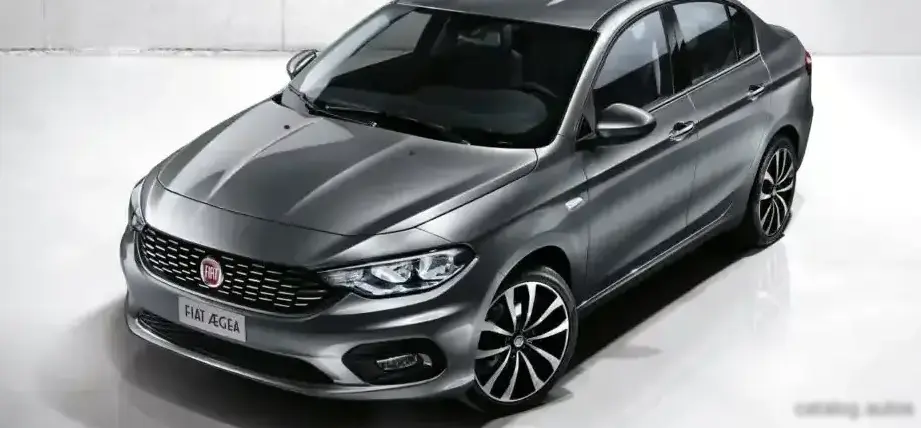
The Fiat Egea Hatchback, specifically the 1.3 Multijet II variant producing 95 horsepower, was a key offering in the European market from 2016 to 2019. Positioned as an entry-level to mid-range option within the Egea (also known as the Tipo outside of Italy) lineup, this model aimed to provide fuel efficiency and practicality for everyday commuting and family use. It was built on the 357 platform, a compact hatchback designed to compete with rivals like the Volkswagen Golf, Ford Focus, and Peugeot 308. The Egea represented Fiat’s attempt to re-enter the competitive C-segment hatchback market with a focus on value and modern features.
Technical Specifications
| Brand | Fiat |
| Model | Egea |
| Generation | Egea Hatchback (357) |
| Type (Engine) | 1.3 Multijet II (95 Hp) |
| Start of production | 2016 |
| End of production | 2019 |
| Powertrain Architecture | Internal Combustion engine |
| Body type | Hatchback |
| Seats | 5 |
| Doors | 5 |
| Fuel consumption (urban) | 4.5 l/100 km (52.3 US mpg, 62.8 UK mpg, 22.2 km/l) |
| Fuel consumption (extra urban) | 3.3 l/100 km (71.3 US mpg, 85.6 UK mpg, 30.3 km/l) |
| Fuel consumption (combined) | 3.7 l/100 km (63.6 US mpg, 76.3 UK mpg, 27 km/l) |
| CO2 emissions | 99 g/km |
| Fuel Type | Diesel |
| Acceleration 0 – 100 km/h | 12 sec |
| Acceleration 0 – 62 mph | 12 sec |
| Acceleration 0 – 60 mph | 11.4 sec |
| Maximum speed | 180 km/h (111.85 mph) |
| Emission standard | Euro 6 |
| Weight-to-power ratio | 13.6 kg/Hp, 73.6 Hp/tonne |
| Weight-to-torque ratio | 6.5 kg/Nm, 155 Nm/tonne |
| Power | 95 Hp @ 3750 rpm |
| Power per litre | 76.1 Hp/l |
| Torque | 200 Nm @ 1500 rpm (147.51 lb.-ft. @ 1500 rpm) |
| Engine layout | Front, Transverse |
| Engine Model/Code | 55266963 |
| Engine displacement | 1248 cm3 (76.16 cu. in.) |
| Number of cylinders | 4 |
| Engine configuration | Inline |
| Cylinder Bore | 69.6 mm (2.74 in.) |
| Piston Stroke | 82 mm (3.23 in.) |
| Compression ratio | 16.8:1 |
| Number of valves per cylinder | 4 |
| Fuel injection system | Diesel Commonrail |
| Engine aspiration | Turbocharger, Intercooler |
| Valvetrain | DOHC |
| Engine oil capacity | 3.9 l (4.12 US qt | 3.43 UK qt) |
| Coolant | 6.1 l (6.45 US qt | 5.37 UK qt) |
| Kerb Weight | 1290 kg (2843.96 lbs.) |
| Max. weight | 1790 kg (3946.27 lbs.) |
| Max load | 500 kg (1102.31 lbs.) |
| Trunk (boot) space – minimum | 440 l (15.54 cu. ft.) |
| Fuel tank capacity | 50 l (13.21 US gal | 11 UK gal) |
| Max. roof load | 55 kg (121.25 lbs.) |
| Permitted trailer load with brakes (12%) | 1200 kg (2645.55 lbs.) |
| Permitted trailer load without brakes | 500 kg (1102.31 lbs.) |
| Permitted towbar download | 60 kg (132.28 lbs.) |
| Length | 4368 mm (171.97 in.) |
| Width | 1792 mm (70.55 in.) |
| Width including mirrors | 2002 mm (78.82 in.) |
| Height | 1495 mm (58.86 in.) |
| Wheelbase | 2638 mm (103.86 in.) |
| Front track | 1542 mm (60.71 in.) |
| Rear (Back) track | 1543 mm (60.75 in.) |
| Front overhang | 893 mm (35.16 in.) |
| Rear overhang | 837 mm (32.95 in.) |
| Minimum turning circle | 10.9 m (35.76 ft.) |
| Drivetrain Architecture | ICE, Front wheel drive |
| Drive wheel | Front wheel drive |
| Number of gears and type of gearbox | 5 gears, manual transmission |
| Front suspension | Independent type McPherson |
| Rear suspension | Torsion |
| Front brakes | Disc, 284×22 mm |
| Rear brakes | Disc, 251×10 mm |
| Assisting systems | ABS (Anti-lock braking system) |
| Steering type | Steering rack and pinion |
| Power steering | Electric Steering |
| Tires size | 195/55 R15; 205/55 R16; 225/45 R17 |
| Wheel rims size | 6J x 15; 6.5J x 16; 7J x 17 |
Powertrain & Engine Architecture
The heart of this Egea variant is the 1.3 Multijet II diesel engine, bearing the code 55266963. This engine is a four-cylinder, inline configuration, displacing 1248 cc. It utilizes a turbocharger with an intercooler to boost power and efficiency. The engine employs a common rail direct injection system, delivering fuel at extremely high pressure for optimized combustion. A double overhead camshaft (DOHC) valvetrain with four valves per cylinder further enhances breathing and performance. The 16.8:1 compression ratio is typical for a diesel engine, contributing to its thermal efficiency. The engine is transversely mounted at the front of the vehicle, driving the front wheels. The 95 horsepower and 200 Nm (147.51 lb-ft) of torque are respectable figures for a small-displacement diesel, prioritizing fuel economy over outright performance.
Driving Characteristics
The 1.3 Multijet II with the five-speed manual transmission in the Egea Hatchback delivers a driving experience focused on practicality and fuel efficiency. Acceleration to 60 mph takes around 11.4 seconds, and 0-100 km/h (0-62 mph) in 12 seconds. While not sporty, the engine provides adequate power for everyday driving situations, including highway cruising. The turbocharger provides a noticeable boost in torque at lower RPMs, making it easy to navigate city traffic. Compared to higher-output versions of the Egea, such as those with larger engines or more powerful turbochargers, this variant feels less responsive. However, the trade-off is significantly improved fuel economy. The five-speed gearbox is well-matched to the engine’s characteristics, offering smooth shifts and reasonable gear spacing.
Equipment & Trim Levels
The 1.3 Multijet II 95 hp variant of the Egea Hatchback typically came with a standard equipment list geared towards practicality and value. This included air conditioning, power steering, electric front windows, a basic audio system with USB connectivity, and ABS brakes. Safety features like driver and passenger airbags were standard. Interior upholstery was typically cloth, with a functional, if not luxurious, dashboard layout. Optional extras included alloy wheels, rear parking sensors, a touchscreen infotainment system with navigation, and cruise control. Trim levels varied by market, but this engine was generally offered in base or mid-range trims.
Chassis & Braking
The Egea Hatchback utilizes an independent McPherson strut suspension setup at the front, providing a comfortable ride and decent handling. The rear suspension employs a torsion beam, a cost-effective solution that offers adequate stability. Brakes are disc brakes on all four wheels, with dimensions of 284×22 mm at the front and 251×10 mm at the rear. ABS (Anti-lock Braking System) is standard. The chassis is tuned to prioritize comfort and ride quality over sporty handling, making it well-suited for everyday driving. The electric power steering provides light and easy steering feel.
Market Reception & Comparison
The Fiat Egea 1.3 Multijet II was generally well-received by critics as a practical and fuel-efficient hatchback. Its strong point was its impressive fuel economy – achieving around 63.6 US mpg combined – making it an attractive option for budget-conscious buyers. Compared to other trims in the Egea lineup, this variant offered the best fuel economy but the lowest performance. The 1.6-liter gasoline engine offered more power but at the expense of fuel efficiency. The 1.6 Multijet diesel provided a balance between power and economy. Reliability reports suggest the 1.3 Multijet II is a relatively robust engine, but like all diesel engines, it requires regular maintenance and quality fuel.
Legacy
The Fiat Egea 1.3 Multijet II has established a reputation as a reliable and economical used car. The 1.3 Multijet engine is known for its durability, provided it has been properly maintained. Parts availability is generally good, and maintenance costs are reasonable. While not a particularly exciting car to drive, it offers a practical and affordable transportation solution. In the used car market, this variant represents good value for money, particularly for those seeking a fuel-efficient and dependable hatchback.