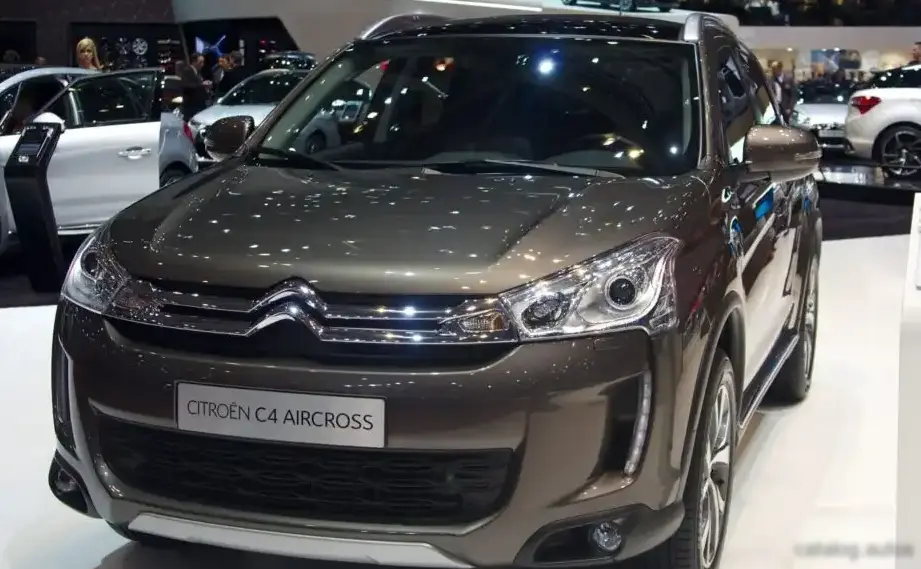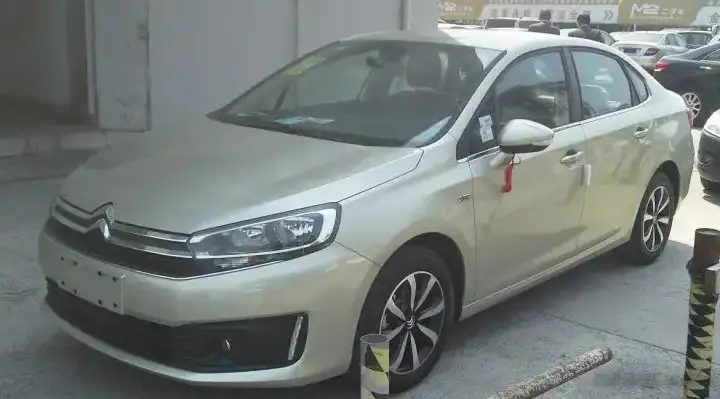
The Citroen C4 I Hatchback, specifically the Phase II model produced between 2008 and 2010, represented a significant evolution of Citroen’s compact family car. The 1.6 THP 16V (140 hp) Automatic variant occupied a mid-range position within the C4 lineup, offering a balance between performance, fuel efficiency, and comfort. This version was designed to appeal to buyers seeking a more refined driving experience than the base models, without the higher price tag of the flagship trims. It was primarily marketed in Europe, where compact hatchbacks are a dominant vehicle segment, and aimed at drivers prioritizing practicality and a comfortable ride.
Technical Specifications
| Brand | Citroen |
| Model | C4 |
| Generation | C4 I Hatchback (Phase II, 2008) |
| Type (Engine) | 1.6 THP 16V (140 Hp) Automatic |
| Start of production | 2008 |
| End of production | 2010 |
| Powertrain Architecture | Internal Combustion engine |
| Body type | Hatchback |
| Seats | 5 |
| Doors | 5 |
| Fuel consumption (urban) | 11.2 l/100 km (21 US mpg, 25.2 UK mpg, 8.9 km/l) |
| Fuel consumption (extra urban) | 5.7 l/100 km (41.3 US mpg, 49.6 UK mpg, 17.5 km/l) |
| Fuel consumption (combined) | 7.7 l/100 km (30.5 US mpg, 36.7 UK mpg, 13 km/l) |
| CO2 emissions | 183 g/km |
| Fuel Type | Petrol (Gasoline) |
| Acceleration 0 – 100 km/h | 9.7 sec |
| Acceleration 0 – 62 mph | 9.7 sec |
| Acceleration 0 – 60 mph | 9.2 sec |
| Maximum speed | 202 km/h (125.52 mph) |
| Emission standard | Euro 4 |
| Weight-to-power ratio | 9.2 kg/Hp, 108.5 Hp/tonne |
| Weight-to-torque ratio | 5.4 kg/Nm, 186 Nm/tonne |
| Power | 140 Hp @ 6000 rpm |
| Power per litre | 87.6 Hp/l |
| Torque | 240 Nm @ 1400 rpm (177.01 lb.-ft. @ 1400 rpm) |
| Engine layout | Front, Transverse |
| Engine Model/Code | 5FT EP6DT |
| Engine displacement | 1598 cm3 (97.52 cu. in.) |
| Number of cylinders | 4 |
| Engine configuration | Inline |
| Cylinder Bore | 77 mm (3.03 in.) |
| Piston Stroke | 85.8 mm (3.38 in.) |
| Compression ratio | 11:1 |
| Number of valves per cylinder | 4 |
| Fuel injection system | Multi-port manifold injection |
| Engine aspiration | Turbocharger, Intercooler |
| Valvetrain | DOHC |
| Engine oil capacity | 4.25 l (4.49 US qt | 3.74 UK qt) |
| Coolant | 6.2 l (6.55 US qt | 5.46 UK qt) |
| Kerb Weight | 1290 kg (2843.96 lbs.) |
| Max. weight | 1776 kg (3915.41 lbs.) |
| Max load | 486 kg (1071.45 lbs.) |
| Trunk (boot) space – minimum | 320 l (11.3 cu. ft.) |
| Trunk (boot) space – maximum | 1023 l (36.13 cu. ft.) |
| Fuel tank capacity | 60 l (15.85 US gal | 13.2 UK gal) |
| Max. roof load | 75 kg (165.35 lbs.) |
| Permitted trailer load with brakes (8%) | 1350 kg (2976.24 lbs.) |
| Permitted trailer load with brakes (12%) | 1300 kg (2866.01 lbs.) |
| Permitted trailer load without brakes | 680 kg (1499.14 lbs.) |
| Permitted towbar download | 70 kg (154.32 lbs.) |
| Length | 4275 mm (168.31 in.) |
| Width | 1773 mm (69.8 in.) |
| Width including mirrors | 1964 mm (77.32 in.) |
| Height | 1496 mm (58.9 in.) |
| Wheelbase | 2608 mm (102.68 in.) |
| Front track | 1505 mm (59.25 in.) |
| Rear (Back) track | 1510 mm (59.45 in.) |
| Front overhang | 950 mm (37.4 in.) |
| Rear overhang | 717 mm (28.23 in.) |
| Drag coefficient (Cd) | 0.31 |
| Minimum turning circle (turning diameter) | 11.3 m (37.07 ft.) |
| Drivetrain Architecture | The Internal combustion engine (ICE) drives the front wheels of the vehicle. |
| Drive wheel | Front wheel drive |
| Number of gears and type of gearbox | 4 gears, automatic transmission |
| Front suspension | Independent, type McPherson with coil spring and anti-roll bar |
| Rear suspension | Semi-independent, coil spring |
| Front brakes | Ventilated discs |
| Rear brakes | Disc |
| Assisting systems | ABS (Anti-lock braking system) |
| Steering type | Steering rack and pinion |
| Tires size | 205/50 R17 |
| Wheel rims size | 17 |
Powertrain & Engine Architecture
The heart of this C4 variant is the 5FT EP6DT, a 1.6-liter turbocharged four-cylinder petrol engine. This engine is part of the Prince engine family, a collaborative development between PSA Peugeot Citroën and BMW. The ‘THP’ designation stands for ‘Turbo High Pressure’, indicating the use of a turbocharger and direct fuel injection. The engine utilizes a multi-point fuel injection system, delivering fuel directly into the intake ports. The 16-valve DOHC (Double Overhead Camshaft) configuration optimizes airflow for improved performance. The turbocharger, coupled with an intercooler, significantly boosts power output compared to naturally aspirated engines of similar displacement. The engine is transversely mounted at the front of the vehicle. The automatic transmission is a conventional four-speed unit, chosen for its smoothness and ease of use, though it lacks the efficiency of more modern transmissions.
Driving Characteristics
The 140 hp output, combined with 240 Nm (177 lb-ft) of torque available from 1400 rpm, provides adequate performance for everyday driving. Acceleration from 0-60 mph takes approximately 9.2 seconds, and the top speed is around 125 mph. However, compared to the manual transmission version or higher-powered C4 variants, this automatic feels somewhat less responsive. The four-speed automatic transmission, while smooth, has relatively wide gear ratios, which can lead to the engine feeling strained during hard acceleration or when climbing hills. The focus is on comfortable cruising rather than sporty driving dynamics. The turbocharger does provide a noticeable boost in power, but there is some degree of turbo lag.
Equipment & Trim Levels
The 1.6 THP 16V Automatic typically came equipped with features such as air conditioning, power windows, central locking, and an integrated audio system. Higher trim levels offered options like alloy wheels, a multi-function steering wheel, automatic headlights and rain sensors, and upgraded interior upholstery. Interior materials were generally of good quality for the segment, with a focus on practicality and durability. Safety features included ABS brakes, front and side airbags, and a height-adjustable steering column.
Chassis & Braking
The C4 I utilized a McPherson strut front suspension and a semi-independent coil spring rear suspension. This setup provided a comfortable ride, absorbing bumps and imperfections in the road effectively. The front brakes were ventilated discs, offering good stopping power, while the rear brakes were solid discs. The steering was a rack and pinion system, providing reasonably precise control. Stabilizer bars were fitted to both the front and rear axles to reduce body roll during cornering.
Market Reception & Comparison
The 1.6 THP 16V Automatic C4 was generally well-received by automotive critics as a practical and comfortable family car. However, the automatic transmission was often criticized for its lack of responsiveness and relatively low fuel economy compared to the manual version. The combined fuel consumption of 7.7 l/100 km (30.5 US mpg) was respectable for its time, but not class-leading. Compared to diesel-powered C4 variants, the petrol engine offered less fuel efficiency but a quieter and smoother driving experience. The 1.6 THP offered a good compromise for drivers who preferred the convenience of an automatic transmission and didn’t require the ultimate in performance.
Legacy
The 5FT EP6DT engine, while generally reliable, has been known to exhibit issues with carbon buildup on the intake valves, particularly with frequent short journeys. Regular servicing and the use of quality fuel are essential to mitigate this risk. The four-speed automatic transmission, while durable, is becoming increasingly outdated. Today, the 2008-2010 Citroen C4 1.6 THP 16V Automatic represents an affordable and practical used car option. Its comfortable ride, spacious interior, and reasonable running costs make it a suitable choice for families and commuters. However, potential buyers should be aware of the potential for carbon buildup and ensure the vehicle has been well-maintained.