Technical Specifications
| Brand | Great Wall |
| Model | Cowry |
| Generation | Cowry |
| Type (Engine) | 2.0 (143 Hp) |
| Start of production | 2007 |
| End of production | 2015 |
| Powertrain Architecture | Internal Combustion engine |
| Body type | Minivan |
| Seats | 8 |
| Doors | 4 |
| Fuel consumption (combined) | 9 l/100 km (26.1 US mpg, 31.4 UK mpg, 11.1 km/l) |
| Fuel Type | Petrol (Gasoline) |
| Maximum speed | 170 km/h (105.63 mph) |
| Emission standard | Euro 4 |
| Weight-to-power ratio | 10.6 kg/Hp, 94.7 Hp/tonne |
| Weight-to-torque ratio | 8.2 kg/Nm, 122.5 Nm/tonne |
| Power | 143 Hp @ 6000 rpm |
| Power per litre | 71.6 Hp/l |
| Torque | 185 Nm @ 3000-4500 rpm (136.45 lb.-ft. @ 3000-4500 rpm) |
| Engine layout | Front, Longitudinal |
| Engine displacement | 1997 cm3 (121.86 cu. in.) |
| Number of cylinders | 4 |
| Engine configuration | Inline |
| Number of valves per cylinder | 2 |
| Fuel injection system | Multi-port manifold injection |
| Engine aspiration | Naturally aspirated engine |
| Kerb Weight | 1510 kg (3328.98 lbs.) |
| Max. weight | 2110 kg (4651.75 lbs.) |
| Max load | 600 kg (1322.77 lbs.) |
| Trunk (boot) space – minimum | 809 l (28.57 cu. ft.) |
| Trunk (boot) space – maximum | 1059 l (37.4 cu. ft.) |
| Length | 4574 mm (180.08 in.) |
| Width | 1704 mm (67.09 in.) |
| Height | 1845 mm (72.64 in.) |
| Wheelbase | 2825 mm (111.22 in.) |
| Front track | 1480 mm (58.27 in.) |
| Rear (Back) track | 1466 mm (57.72 in.) |
| Drivetrain Architecture | The Internal combustion engine (ICE) drives the front wheels of the vehicle. |
| Drive wheel | Front wheel drive |
| Number of gears and type of gearbox | 5 gears, manual transmission |
| Front suspension | Independent type McPherson |
| Rear suspension | Semi-dependent beam with stabilizer lateral stability |
| Front brakes | Disc |
| Rear brakes | Drum |
| Tires size | 195/65 R15; 205/55 R16 |
| Wheel rims size | 15; 16 |
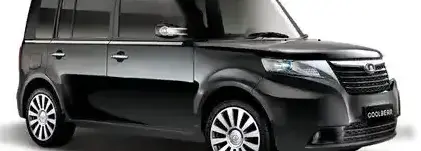
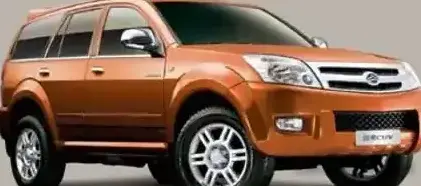
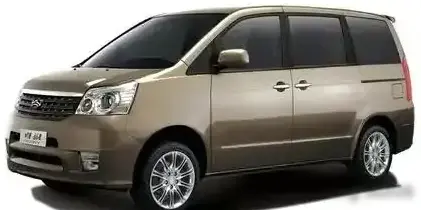
The Great Wall Cowry 2.0 (143 Hp) was a minivan produced by the Chinese automaker Great Wall Motors from 2007 to 2015. Positioned as a budget-friendly, spacious family vehicle, the Cowry aimed to provide affordable transportation for larger families in the rapidly growing Chinese automotive market. While never officially sold in the United States, understanding its specifications and characteristics provides insight into the capabilities of early Chinese automotive engineering and the demands of the Asian minivan segment. This particular variant, equipped with the 2.0-liter gasoline engine and a 5-speed manual transmission, represented a mid-range offering within the Cowry lineup, bridging the gap between more basic trims and potentially higher-specification models.
Powertrain & Engine Architecture
The Cowry 2.0 utilized a naturally aspirated, 1.997-liter (121.86 cubic inches) inline-four cylinder gasoline engine. This engine, while relatively simple in its design, was intended to provide a balance of acceptable performance and fuel efficiency for the target market. The engine featured a multi-port fuel injection system, a common technology during its production years, and a two-valve per cylinder configuration. This configuration prioritized simplicity and cost-effectiveness over more complex multi-valve designs. The engine’s peak power output of 143 horsepower was achieved at 6000 rpm, while its maximum torque of 185 Nm (136.45 lb.-ft.) was available between 3000 and 4500 rpm. The engine was mounted longitudinally in the front of the vehicle, driving the front wheels. The 5-speed manual transmission was the standard offering for this variant, providing drivers with full control over gear selection. The transmission’s gear ratios were tuned for everyday driving, prioritizing fuel economy and smooth operation over outright acceleration. The gear ratios were likely relatively tall, emphasizing fuel efficiency at cruising speeds.
Driving Characteristics
The driving experience in the Great Wall Cowry 2.0 was characterized by its practicality rather than sporty performance. The 143 hp engine, while adequate for moving the relatively heavy minivan, didn’t offer particularly brisk acceleration. Expect a 0-60 mph time well over 10 seconds. The 5-speed manual transmission allowed drivers to keep the engine in its optimal power band, but the overall experience was geared towards comfortable cruising and efficient transportation. Compared to potential higher-output variants (which were not widely available), the 2.0-liter engine offered a more economical option, sacrificing some performance for improved fuel consumption. The front-wheel-drive configuration provided predictable handling, but lacked the all-weather capability of an all-wheel-drive system. The steering was likely unassisted or lightly assisted, providing a more direct feel but requiring more effort at low speeds. The suspension, while aiming for comfort, likely exhibited some body roll during cornering due to the vehicle’s high center of gravity.
Equipment & Trim Levels
The Cowry 2.0, in its standard configuration, offered a basic level of equipment. Interior features typically included cloth upholstery, a simple dashboard layout, and manual air conditioning. Power windows and central locking were often included, but higher-end features like a radio/CD player or alloy wheels were typically optional extras. The Cowry was designed to be a value-oriented vehicle, so the focus was on providing essential features at an affordable price point. Trim levels varied depending on the market, but generally offered incremental upgrades in terms of interior materials, exterior styling, and available options. Higher trims might have included features like a more modern instrument cluster, upgraded seat fabrics, and exterior chrome accents.
Chassis & Braking
The Cowry 2.0 featured a front independent suspension with McPherson struts, providing a reasonable level of ride comfort. The rear suspension utilized a semi-dependent beam axle with a stabilizer bar, which helped to reduce body roll during cornering. This suspension setup was a common compromise between cost, comfort, and handling in vehicles of this class. The braking system consisted of disc brakes on the front wheels and drum brakes on the rear wheels. This configuration was common for vehicles in this price range at the time, offering adequate stopping power for everyday driving. The tires were typically sized 195/65 R15 or 205/55 R16, depending on the trim level. The relatively narrow tires contributed to fuel efficiency but offered limited grip in demanding driving situations.
Market Reception & Comparison
The Great Wall Cowry 2.0 was primarily targeted at the Chinese domestic market, where it found a degree of success due to its affordability and spaciousness. Reviews within China generally praised the Cowry for its practicality and value for money, but also noted its relatively basic interior and lack of refinement compared to more established international brands. Fuel economy was considered to be acceptable, and the vehicle’s reliability was generally reported to be reasonable. Compared to other minivans available in the Chinese market, the Cowry offered a competitive price point, but lacked the brand recognition and technological sophistication of some of its rivals. It competed with models from domestic manufacturers like Chery and Geely, as well as joint-venture brands offering more affordable options.
Legacy
The Great Wall Cowry represented an early attempt by a Chinese automaker to compete in the minivan segment. While it may not have achieved widespread international recognition, it played a role in the development of the Chinese automotive industry and helped to establish Great Wall Motors as a significant player in the domestic market. The 2.0-liter engine and 5-speed manual transmission combination proved to be relatively reliable, and many Cowry models remain on the road today. In the used car market, the Cowry 2.0 is often sought after by buyers looking for an affordable and spacious family vehicle, although potential buyers should be aware of the vehicle’s age and the availability of spare parts. The Cowry’s legacy lies in demonstrating the growing capabilities of Chinese automotive manufacturers and providing affordable transportation to a large segment of the population.