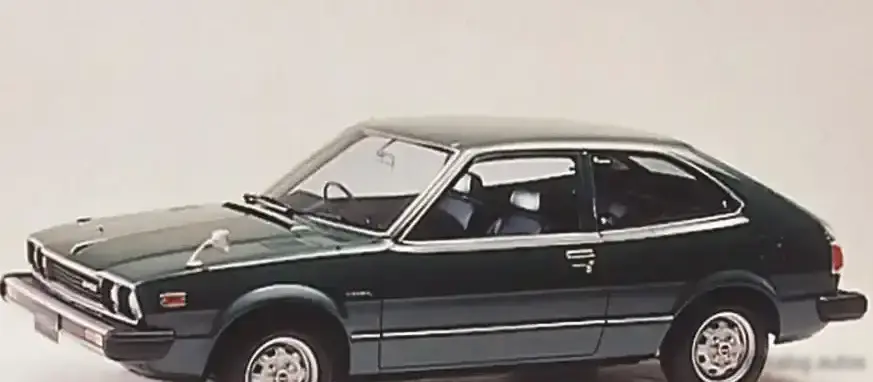
The Honda Accord IV Coupe (CC1) 2.0 i 16V, produced between 1991 and 1993, represented a significant evolution in Honda’s popular Accord line. This variant, part of the fourth-generation Accord (1989-1993), was specifically tailored for markets seeking a blend of sporty styling and respectable performance within the compact coupe segment. The CC1 chassis code designates the coupe body style, differentiating it from the sedan and wagon versions. This 2.0-liter, 16-valve engine and 5-speed manual transmission combination aimed to provide a more engaging driving experience than the base models, while remaining practical for daily use. It occupied a mid-range position in the Accord Coupe lineup, offering a step up in power and features compared to the 1.8L variants, but falling short of the more performance-focused options available in other markets.
Technical Specifications
| Brand | Honda |
| Model | Accord |
| Generation | Accord IV Coupe (CC1) |
| Type (Engine) | 2.0 i 16V (150 Hp) |
| Start of production | 1991 |
| End of production | 1993 |
| Powertrain Architecture | Internal Combustion engine |
| Body type | Coupe |
| Seats | 5 |
| Doors | 2 |
| Fuel consumption (urban) | 14 l/100 km (16.8 US mpg, 20.2 UK mpg, 7.1 km/l) |
| Fuel consumption (extra urban) | 8 l/100 km (29.4 US mpg, 35.3 UK mpg, 12.5 km/l) |
| Fuel Type | Petrol (Gasoline) |
| Maximum speed | 215 km/h (133.59 mph) |
| Weight-to-power ratio | 8.6 kg/Hp, 116.3 Hp/tonne |
| Weight-to-torque ratio | 6.9 kg/Nm, 144.2 Nm/tonne |
| Power | 150 Hp @ 6100 rpm |
| Power per litre | 75.2 Hp/l |
| Torque | 186 Nm @ 5000 rpm (137.19 lb.-ft. @ 5000 rpm) |
| Engine layout | Front, Transverse |
| Engine displacement | 1996 cm3 (121.8 cu. in.) |
| Number of cylinders | 4 |
| Engine configuration | Inline |
| Cylinder Bore | 85 mm (3.35 in.) |
| Piston Stroke | 88 mm (3.46 in.) |
| Compression ratio | 9.8:1 |
| Number of valves per cylinder | 4 |
| Fuel injection system | Multi-port manifold injection |
| Engine aspiration | Naturally aspirated engine |
| Valvetrain | OHC |
| Engine oil capacity | 3.8 l (4.02 US qt | 3.34 UK qt) |
| Kerb Weight | 1290 kg (2843.96 lbs.) |
| Trunk (boot) space – minimum | 488 l (17.23 cu. ft.) |
| Fuel tank capacity | 64 l (16.91 US gal | 14.08 UK gal) |
| Length | 4685 mm (184.45 in.) |
| Width | 1695 mm (66.73 in.) |
| Height | 1375 mm (54.13 in.) |
| Wheelbase | 2720 mm (107.09 in.) |
| Front track | 1475 mm (58.07 in.) |
| Rear (Back) track | 1480 mm (58.27 in.) |
| Drivetrain Architecture | The Internal combustion engine (ICE) drives the front wheels of the vehicle. |
| Drive wheel | Front wheel drive |
| Number of gears and type of gearbox | 5 gears, manual transmission |
| Front suspension | Coil spring |
| Rear suspension | Coil spring |
| Front brakes | Ventilated discs |
| Rear brakes | Disc |
| Assisting systems | ABS (Anti-lock braking system) |
| Steering type | Steering rack and pinion |
| Power steering | Hydraulic Steering |
| Tires size | 195/60 R15 |
| Wheel rims size | 15 |
Powertrain & Engine Architecture
The heart of the CC1 2.0 i 16V is the Honda F20A engine, a 1996cc inline-four cylinder powerplant. This engine utilized a single overhead camshaft (SOHC) valvetrain operating four valves per cylinder, contributing to its relatively high specific output for the time. Multi-port fuel injection delivered precise fuel metering, enhancing both performance and fuel efficiency. The F20A engine was known for its smooth operation and durability, characteristics typical of Honda engines of this era. The engine was transversely mounted, driving the front wheels. The 5-speed manual transmission provided precise gear changes and allowed the driver to fully exploit the engine’s powerband. This transmission was chosen to provide a more sporty feel compared to the available automatic options.
Driving Characteristics
The 150 horsepower and 137 lb-ft of torque offered by the 2.0L engine provided a noticeable step up in performance compared to the base 1.8L Accords. Acceleration was brisk, and the car felt confident on the highway. The 5-speed manual transmission allowed for precise control and encouraged spirited driving. While not a dedicated sports car, the CC1 2.0 i 16V offered a balanced driving experience, combining reasonable performance with everyday usability. The gear ratios were well-matched to the engine’s powerband, providing good acceleration in each gear. Compared to the automatic transmission equipped models, the manual version felt more responsive and engaging.
Equipment & Trim Levels
The CC1 2.0 i 16V typically included features such as power steering, power windows, and an AM/FM stereo. Higher trim levels offered options like air conditioning, a sunroof, and upgraded upholstery. Interior appointments were generally functional and well-built, reflecting Honda’s reputation for quality. The dashboard layout was straightforward and easy to use. The standard upholstery was cloth, with optional leather available on some trims. Alloy wheels were often included as standard equipment or as an optional upgrade.
Chassis & Braking
The Accord IV Coupe utilized a front independent suspension with coil springs and a rear independent suspension, also with coil springs. This setup provided a comfortable ride while maintaining good handling characteristics. The front brakes were ventilated discs, providing ample stopping power, while the rear brakes were solid discs. Anti-lock braking system (ABS) was available as an option, enhancing safety. The chassis was relatively lightweight, contributing to the car’s nimble handling. Stabilizer bars were fitted to both the front and rear suspension to reduce body roll during cornering.
Market Reception & Comparison
The Honda Accord IV Coupe 2.0 i 16V was generally well-received by automotive critics. It was praised for its blend of performance, fuel efficiency, and reliability. Compared to other coupes in its class, the Accord offered a more refined driving experience and a reputation for long-term durability. The 1.8L models were considered more economical but lacked the performance of the 2.0L variant. The 2.0L version appealed to buyers who wanted a more engaging driving experience without sacrificing practicality. Fuel economy was respectable for the time, averaging around 29.4 US mpg on the highway.
Legacy
The Honda Accord IV Coupe 2.0 i 16V has proven to be a reliable and durable vehicle. Many examples are still on the road today, a testament to Honda’s engineering quality. The F20A engine is known for its longevity and relatively simple maintenance requirements. In the used car market, these Accords are often sought after by enthusiasts and collectors. While not as highly valued as some other classic Japanese sports coupes, the CC1 2.0 i 16V represents a significant chapter in Honda’s history and remains a popular choice for those seeking a reliable and enjoyable classic coupe.