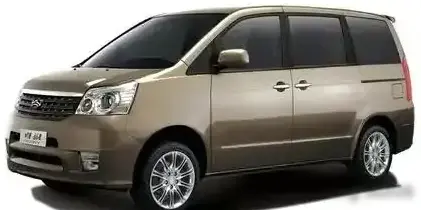
The Great Wall Deer G5 2.2i (105 hp) was a pick-up truck produced by the Chinese manufacturer Great Wall Motors from 2005 to 2013. Positioned as a workhorse vehicle, it represented Great Wall’s entry into the competitive mid-size pick-up market, primarily targeting buyers in developing nations and those seeking an affordable, utilitarian vehicle. The G5 was a significant model for Great Wall, helping to establish the brand’s presence beyond its domestic market. This specific 2.2i variant, with its 105 horsepower engine, served as the base model within the Deer G5 lineup, offering a balance between affordability and capability.
Technical Specifications
| Brand | Great Wall |
| Model | Deer |
| Generation | Deer G5 |
| Type (Engine) | 2.2 i (105 Hp) |
| Start of production | 2005 |
| End of production | 2013 |
| Powertrain Architecture | Internal Combustion engine |
| Body type | Pick-up |
| Seats | 5 |
| Doors | 4 |
| Fuel consumption (extra urban) | 12 l/100 km (19.6 US mpg, 23.5 UK mpg, 8.3 km/l) |
| Fuel consumption (combined) | 15 l/100 km (15.7 US mpg, 18.8 UK mpg, 6.7 km/l) |
| Fuel Type | Petrol (Gasoline) |
| Maximum speed | 140 km/h (86.99 mph) |
| Weight-to-power ratio | 15.4 kg/Hp, 64.8 Hp/tonne |
| Weight-to-torque ratio | 8.5 kg/Nm, 117.3 Nm/tonne |
| Power | 105 Hp @ 4600 rpm |
| Power per litre | 46.9 Hp/l |
| Torque | 190 Nm @ 3200 rpm (140.14 lb.-ft. @ 3200 rpm) |
| Engine layout | Front, Longitudinal |
| Engine displacement | 2237 cm3 (136.51 cu. in.) |
| Number of cylinders | 4 |
| Engine configuration | Inline |
| Number of valves per cylinder | 2 |
| Fuel injection system | Multi-port manifold injection |
| Engine aspiration | Naturally aspirated engine |
| Kerb Weight | 1620 kg (3571.49 lbs.) |
| Max. weight | 2430 kg (5357.23 lbs.) |
| Max load | 810 kg (1785.74 lbs.) |
| Fuel tank capacity | 60 l (15.85 US gal | 13.2 UK gal) |
| Length | 5280 mm (207.87 in.) |
| Width | 1750 mm (68.9 in.) |
| Height | 1800 mm (70.87 in.) |
| Wheelbase | 3380 mm (133.07 in.) |
| Front track | 1450 mm (57.09 in.) |
| Rear (Back) track | 1430 mm (56.3 in.) |
| Drivetrain Architecture | The Internal combustion engine (ICE) drives the rear wheels of the vehicle. |
| Drive wheel | Rear wheel drive |
| Number of gears and type of gearbox | 5 gears, manual transmission |
| Front suspension | Spring Strut |
| Rear suspension | Leaf spring |
| Front brakes | Ventilated discs |
| Rear brakes | Drum |
| Tires size | 215/75 R15 |
| Wheel rims size | 15 |
Powertrain & Engine Architecture
The Deer G5 2.2i was powered by a 2.2-liter inline-four cylinder gasoline engine. This engine, internally designated with various codes depending on the specific year and market, was a relatively simple design featuring a single overhead camshaft (SOHC) and two valves per cylinder. The multi-port fuel injection system delivered fuel to the cylinders, and the engine was naturally aspirated, meaning it did not utilize a turbocharger or supercharger. The engine produced 105 horsepower at 4600 rpm and 190 Nm (140 lb-ft) of torque at 3200 rpm. The engine was mounted longitudinally in the chassis. The five-speed manual transmission was the standard offering for this variant, providing a direct connection between the engine and the rear wheels.
Driving Characteristics
The 105 hp engine in the Deer G5 2.2i provided adequate, but not exceptional, performance. Acceleration was modest, and the vehicle was best suited for carrying loads at moderate speeds. The five-speed manual transmission allowed drivers to keep the engine in its optimal power band, but the overall driving experience was geared towards utility rather than sportiness. Compared to potential higher-output versions (which were not widely available), the 2.2i offered a more economical driving experience, albeit with reduced towing capacity and overall speed. The rear-wheel-drive configuration provided a stable platform for hauling, but also meant that traction could be limited in slippery conditions.
Equipment & Trim Levels
The Deer G5 2.2i, as the base model, typically came with a fairly basic level of equipment. Standard features generally included manual windows and door locks, a simple audio system, and vinyl or cloth upholstery. Air conditioning was often an optional extra. The interior design was functional and durable, prioritizing practicality over luxury. Higher trim levels, if available in certain markets, might have added features such as power windows, central locking, and upgraded interior materials. The dashboard layout was straightforward, with clearly marked gauges and controls.
Chassis & Braking
The Deer G5 utilized a body-on-frame construction, a common design for pick-up trucks. The front suspension consisted of a spring strut setup, while the rear suspension employed leaf springs, designed to handle heavy loads. The braking system featured ventilated discs on the front wheels and drum brakes on the rear. This configuration was typical for vehicles in this price range and weight class. The 215/75 R15 tires provided a reasonable balance between ride comfort and durability. The rear-wheel-drive layout and leaf spring suspension contributed to the truck’s load-carrying capacity.
Market Reception & Comparison
The Great Wall Deer G5 2.2i was generally well-received in markets where affordability was a primary concern. Critics often praised its robust construction and practical design. However, the engine’s performance was often cited as a weakness, particularly when compared to pick-up trucks from established manufacturers. Fuel economy, at 15 liters per 100 kilometers (15.7 US mpg), was average for a vehicle of this type. Compared to other trims within the Deer G5 lineup (if offered), the 2.2i represented the most economical option, appealing to buyers who prioritized cost savings over performance. Its main competitors included other budget-oriented pick-up trucks from Chinese manufacturers and older models from established brands.
Legacy
The Great Wall Deer G5 2.2i, while not known for groundbreaking innovation, played a crucial role in establishing Great Wall Motors as a viable player in the global automotive market. The 2.2-liter engine, while relatively simple, proved to be reasonably reliable, and parts availability remains adequate in many regions. On the used car market, these vehicles are often sought after by those needing a basic, affordable work truck. While not particularly collectible, the Deer G5 represents a significant step in the evolution of the Chinese automotive industry and a testament to the growing competitiveness of Chinese manufacturers.