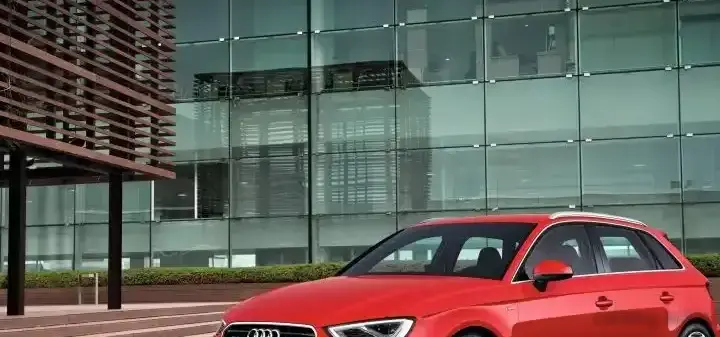
The Audi A3 Sportback (8V) 2.0 TDI 150 hp clean diesel, produced from 2013 to 2016, represented a significant offering in the premium compact hatchback segment. Positioned as a mid-range option within the 8V A3 Sportback lineup, it aimed to balance fuel efficiency with respectable performance. This variant was primarily marketed in Europe, where diesel engines held a substantial market share, and offered a compelling alternative to gasoline-powered competitors. It built upon the foundation of the Volkswagen Group’s MQB platform (A3/Golf 7 generation), known for its modularity and engineering advancements.
Technical Specifications
| Brand | Audi |
| Model | A3 |
| Generation | A3 Sportback (8V) |
| Type (Engine) | 2.0 TDI (150 Hp) clean diesel |
| Start of production | 2013 |
| End of production | 2016 |
| Powertrain Architecture | Internal Combustion engine |
| Body type | Hatchback |
| Seats | 5 |
| Doors | 5 |
| Fuel consumption (urban) | 5 l/100 km (47 US mpg, 56.5 UK mpg, 20 km/l) |
| Fuel consumption (extra urban) | 3.6 l/100 km (65.3 US mpg, 78.5 UK mpg, 27.8 km/l) |
| Fuel consumption (combined) | 4.1 l/100 km (57.4 US mpg, 68.9 UK mpg, 24.4 km/l) |
| CO2 emissions | 106 g/km |
| Fuel Type | Diesel |
| Acceleration 0 – 100 km/h | 8.6 sec |
| Acceleration 0 – 62 mph | 8.6 sec |
| Acceleration 0 – 60 mph | 8.2 sec |
| Maximum speed | 218 km/h (135.46 mph) |
| Emission standard | Euro 6 |
| Weight-to-power ratio | 8.7 kg/Hp, 114.9 Hp/tonne |
| Weight-to-torque ratio | 3.8 kg/Nm, 260.5 Nm/tonne |
| Power | 150 Hp @ 3500-4000 rpm |
| Power per litre | 76.2 Hp/l |
| Torque | 340 Nm @ 1750-3000 rpm (250.77 lb.-ft. @ 1750-3000 rpm) |
| Engine layout | Front, Transverse |
| Engine Model/Code | CRBC, CRLB, CRUA, DBGA, DEJA, DCYA |
| Engine displacement | 1968 cm3 (120.09 cu. in.) |
| Number of cylinders | 4 |
| Engine configuration | Inline |
| Cylinder Bore | 81 mm (3.19 in.) |
| Piston Stroke | 95.5 mm (3.76 in.) |
| Compression ratio | 16.2:1 |
| Number of valves per cylinder | 4 |
| Fuel injection system | Diesel Commonrail |
| Engine aspiration | Turbocharger, Intercooler |
| Valvetrain | DOHC |
| Engine oil capacity | 4.7 l (4.97 US qt | 4.14 UK qt) |
| Kerb Weight | 1305 kg (2877.03 lbs.) |
| Max. weight | 1865 kg (4111.62 lbs.) |
| Max load | 560 kg (1234.59 lbs.) |
| Trunk (boot) space – minimum | 380 l (13.42 cu. ft.) |
| Trunk (boot) space – maximum | 1220 l (43.08 cu. ft.) |
| Fuel tank capacity | 50 l (13.21 US gal | 11 UK gal) |
| Max. roof load | 75 kg (165.35 lbs.) |
| Permitted trailer load with brakes (8%) | 1800 kg (3968.32 lbs.) |
| Permitted trailer load with brakes (12%) | 1600 kg (3527.4 lbs.) |
| Permitted trailer load without brakes | 690 kg (1521.19 lbs.) |
| Permitted towbar download | 75 kg (165.35 lbs.) |
| Length | 4310 mm (169.69 in.) |
| Width | 1786 mm (70.31 in.) |
| Width including mirrors | 1966 mm (77.4 in.) |
| Height | 1426 mm (56.14 in.) |
| Wheelbase | 2636 mm (103.78 in.) |
| Front track | 1536 mm (60.47 in.) |
| Rear (Back) track | 1506 mm (59.29 in.) |
| Front overhang | 869 mm (34.21 in.) |
| Rear overhang | 805 mm (31.69 in.) |
| Drag coefficient (Cd) | 0.31 |
| Minimum turning circle (turning diameter) | 10.9 m (35.76 ft.) |
| Drivetrain Architecture | The Internal combustion engine (ICE) drives the front wheels of the vehicle. |
| Drive wheel | Front wheel drive |
| Number of gears and type of gearbox | 6 gears, manual transmission |
| Front suspension | Independent, type McPherson with coil spring and anti-roll bar |
| Rear suspension | Independent multi-link suspension |
| Front brakes | Ventilated discs |
| Rear brakes | Disc |
| Assisting systems | ABS (Anti-lock braking system) |
| Steering type | Steering rack and pinion |
| Power steering | Electric Steering |
| Tires size | 205/55 R16 |
| Wheel rims size | 6.5J x 16 |
INTRODUCTION
The Audi A3 Sportback (8V) 2.0 TDI 150 hp clean diesel, launched in 2013, was a key component of Audi’s strategy to offer a broad range of efficient and premium compact vehicles. Built on the MQB platform, it shared its underpinnings with models like the Volkswagen Golf, SEAT Leon, and Skoda Octavia, but distinguished itself through Audi’s signature interior quality, sophisticated styling, and available technology. This particular variant aimed to provide a balance between performance and economy, appealing to buyers who desired a refined driving experience without the higher running costs associated with more powerful engines. It was positioned as a step up from the entry-level 1.6 TDI models, offering more torque and horsepower for improved usability.
Powertrain & Engine Architecture
At the heart of this A3 Sportback variant lies the Volkswagen Group’s 2.0-liter four-cylinder diesel engine, specifically the CRBC, CRLB, CRUA, DBGA, DEJA, or DCYA engine code depending on the production year and market. This engine utilizes a common rail direct injection system, delivering fuel at extremely high pressures for optimized combustion. The engine features a turbocharger with an intercooler, enhancing power output and efficiency. The valvetrain employs a dual overhead camshaft (DOHC) configuration with four valves per cylinder, contributing to improved breathing and overall performance. The 150 hp version of this engine was carefully calibrated to deliver a broad torque curve, peaking at 340 Nm (250.77 lb.-ft.) between 1750 and 3000 rpm. This engine was paired with a 6-speed manual transmission, providing precise gear changes and contributing to the car’s overall driving dynamics. While a S-Tronic dual-clutch transmission was available on other A3 variants, this 150 hp diesel was primarily offered with the manual gearbox.
Driving Characteristics
The 2.0 TDI 150 hp A3 Sportback offered a composed and refined driving experience. While not overtly sporty, the engine provided ample torque for everyday driving situations, including overtaking and highway cruising. The 6-speed manual transmission allowed for good control over the engine’s power delivery. Acceleration from 0 to 100 km/h (0-62 mph) took approximately 8.6 seconds, which was competitive for its class. Compared to the more powerful 2.0 TDI variants (184 hp), this version felt less urgent in its acceleration, but it offered superior fuel economy. The manual gearbox, while engaging, required more driver involvement than the optional S-Tronic transmission. The suspension setup, typically featuring McPherson struts at the front and a multi-link setup at the rear, provided a comfortable ride without sacrificing handling stability.
Equipment & Trim Levels
The A3 Sportback 2.0 TDI 150 hp typically came equipped with a respectable level of standard features. These included air conditioning, a multi-function steering wheel, electric windows, and an infotainment system with a color display. Higher trim levels, such as Sport or S line, added features like alloy wheels, sport seats, upgraded interior trim, and parking sensors. Optional extras included a panoramic sunroof, navigation system, leather upholstery, and advanced driver-assistance systems like adaptive cruise control. The interior design was typically characterized by Audi’s minimalist aesthetic, with high-quality materials and a focus on ergonomics.
Chassis & Braking
The A3 Sportback’s chassis was designed to provide a balance between comfort and handling. The front suspension utilized McPherson struts with coil springs and an anti-roll bar, while the rear featured an independent multi-link suspension. This setup minimized body roll and provided a stable platform for cornering. Braking duties were handled by ventilated discs at the front and solid discs at the rear, providing adequate stopping power. Anti-lock braking system (ABS) was standard, enhancing safety and control during emergency braking situations.
Market Reception & Comparison
The Audi A3 Sportback 2.0 TDI 150 hp was generally well-received by automotive critics. It was praised for its fuel efficiency, comfortable ride, and refined interior. Compared to the 1.6 TDI models, the 2.0 TDI offered a noticeable improvement in performance, making it a more practical choice for drivers who frequently undertook longer journeys or carried passengers. Against competitors like the BMW 1 Series and Mercedes-Benz A-Class, the A3 Sportback stood out for its interior quality and overall refinement. However, some critics noted that the manual transmission could feel slightly notchy, and the ride could be a bit firm on rough road surfaces.
Legacy
The 2.0 TDI engine, in various iterations, proved to be a reliable and durable powertrain. However, like many diesel engines of this era, it was subject to scrutiny regarding emissions. The CRBC and related engine codes have a generally good reputation for longevity, provided they are properly maintained. Today, used examples of the A3 Sportback 2.0 TDI 150 hp represent a good value proposition for buyers seeking a fuel-efficient and well-built compact hatchback. Regular servicing, including oil changes and filter replacements, is crucial to ensure the continued reliability of this powertrain. The A3 Sportback 8V, in general, remains a popular choice in the used car market due to its blend of practicality, style, and driving enjoyment.