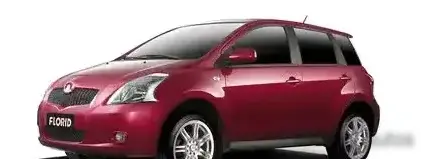
The Great Wall Florid 1.3, producing 87 horsepower, was a subcompact hatchback manufactured by the Chinese automaker Great Wall Motors from 2009 to 2013. Positioned as an entry-level vehicle, it represented Great Wall’s attempt to capture a segment of the growing Chinese automotive market seeking affordable and practical transportation. The Florid was based on the Toyota Vios platform, reflecting a common practice among early Chinese automakers of utilizing existing designs. This particular 1.3-liter variant served as the base engine option, offering a balance between fuel economy and acceptable performance for urban driving. It was primarily sold within the Chinese domestic market, with limited export sales.
Technical Specifications
| Brand | Great Wall |
| Model | Florid |
| Generation | Florid |
| Type (Engine) | 1.3 (87 Hp) |
| Start of production | 2009 |
| End of production | 2013 |
| Powertrain Architecture | Internal Combustion engine |
| Body type | Hatchback |
| Seats | 5 |
| Doors | 5 |
| Fuel consumption (combined) | 6.5 l/100 km (36.2 US mpg, 43.5 UK mpg, 15.4 km/l) |
| Fuel Type | Petrol (Gasoline) |
| Maximum speed | 170 km/h (105.63 mph) |
| Emission standard | Euro 4 |
| Weight-to-power ratio | 13.7 kg/Hp, 72.8 Hp/tonne |
| Weight-to-torque ratio | 9.6 kg/Nm, 104.6 Nm/tonne |
| Power | 87 Hp @ 6000 rpm |
| Power per litre | 67 Hp/l |
| Torque | 125 Nm @ 4000 rpm (92.2 lb.-ft. @ 4000 rpm) |
| Engine layout | Front, Transverse |
| Engine displacement | 1298 cm3 (79.21 cu. in.) |
| Number of cylinders | 4 |
| Engine configuration | Inline |
| Fuel injection system | Multi-port manifold injection |
| Engine aspiration | Naturally aspirated engine |
| Valvetrain | DOHC |
| Kerb Weight | 1195 kg (2634.52 lbs.) |
| Trunk (boot) space – minimum | 330 l (11.65 cu. ft.) |
| Fuel tank capacity | 45 l (11.89 US gal | 9.9 UK gal) |
| Length | 3907 mm (153.82 in.) |
| Width | 1694 mm (66.69 in.) |
| Height | 1521 mm (59.88 in.) |
| Wheelbase | 2368 mm (93.23 in.) |
| Front track | 1459 mm (57.44 in.) |
| Rear (Back) track | 1430 mm (56.3 in.) |
| Drivetrain Architecture | The Internal combustion engine (ICE) drives the front wheels of the vehicle. |
| Drive wheel | Front wheel drive |
| Number of gears and type of gearbox | 5 gears, manual transmission |
| Front suspension | Independent, type McPherson with coil spring and anti-roll bar |
| Rear suspension | Semi-dependent beam with stabilizer lateral stability |
| Front brakes | Ventilated discs |
| Rear brakes | Drum |
Powertrain & Engine Architecture
The Florid 1.3 was powered by a 1.3-liter inline-four cylinder gasoline engine. This engine, while relatively simple in design, was intended to provide adequate power for everyday commuting and urban driving. The engine code is not widely documented in Western automotive resources, but it is a naturally aspirated engine utilizing a multi-point fuel injection system. The double overhead camshaft (DOHC) valvetrain helped optimize airflow into and out of the cylinders, contributing to improved efficiency and a slightly broader powerband. The engine produced 87 horsepower at 6000 rpm and 125 Nm (92.2 lb-ft) of torque at 4000 rpm. The engine’s design prioritized fuel economy over outright performance, a common characteristic of entry-level vehicles in this market segment. The engine’s relatively low compression ratio and conservative tuning further emphasized longevity and reduced maintenance requirements, important considerations for a budget-focused vehicle.
Driving Characteristics
The driving experience in the Florid 1.3 was characterized by its modest performance. With 87 horsepower propelling a vehicle weighing approximately 1195 kg (2634.52 lbs), acceleration was adequate but not brisk. The five-speed manual transmission was the only transmission option available. The gear ratios were tuned to maximize fuel efficiency, resulting in a somewhat sluggish response during overtaking maneuvers. Compared to potential higher-trim versions (which were not widely available), the 1.3-liter engine lacked the punch needed for highway cruising or spirited driving. However, for city driving and short commutes, the engine provided sufficient power and a relatively smooth driving experience. The steering was light and easy to use, making it well-suited for navigating congested urban environments. The suspension, while not particularly sophisticated, absorbed bumps and imperfections in the road reasonably well, providing a comfortable ride for passengers.
Equipment & Trim Levels
The Florid 1.3 was offered with a fairly basic level of equipment, reflecting its position as an entry-level vehicle. Standard features typically included power steering, air conditioning, and a basic audio system. Interior upholstery was typically cloth, and the dashboard design was functional but not particularly luxurious. Optional extras were limited, but could include power windows and upgraded audio systems. The focus was on providing a practical and affordable vehicle, rather than a feature-rich one. The trim levels were not extensively differentiated, with most variations revolving around minor cosmetic changes or the addition of a few optional accessories. The overall interior design prioritized durability and ease of cleaning over aesthetic appeal, aligning with the target demographic’s needs.
Chassis & Braking
The Florid 1.3 utilized a front-wheel-drive chassis with an independent McPherson strut suspension in the front and a semi-dependent beam suspension in the rear. The front suspension incorporated a stabilizer bar to reduce body roll during cornering. The braking system consisted of ventilated discs on the front wheels and drum brakes on the rear wheels. This configuration was typical for vehicles in this price range and weight class. The suspension setup prioritized ride comfort over sporty handling, providing a reasonably smooth ride on typical road surfaces. The braking performance was adequate for everyday driving, but lacked the stopping power of vehicles equipped with four-wheel disc brakes. The relatively simple chassis design contributed to lower production costs and easier maintenance.
Market Reception & Comparison
The Great Wall Florid 1.3 was primarily targeted at first-time car buyers and those seeking an affordable and reliable means of transportation within the Chinese market. Reviews were generally positive, praising its affordability and practicality. However, critics also noted its lack of refinement and modest performance. Compared to other vehicles in its class, such as the Chery QQ or the Geely Panda, the Florid offered a slightly more spacious interior and a more robust build quality. Its fuel economy of 6.5 l/100 km (36.2 US mpg) was competitive with other subcompact hatchbacks in the market. Reliability reports were mixed, with some owners reporting minor issues with the engine and electrical systems. The Florid’s value proposition centered around providing a functional and economical vehicle at a significantly lower price point than imported alternatives.
Legacy
The Great Wall Florid 1.3, while not a groundbreaking vehicle, played a significant role in establishing Great Wall Motors as a major player in the Chinese automotive industry. It provided a relatively affordable and practical option for consumers entering the car market for the first time. In the used car market today, the Florid 1.3 is generally considered a reliable and inexpensive vehicle, although finding parts and service can be challenging outside of China. The powertrain, while simple, has proven to be reasonably durable, and many examples are still on the road today. The Florid 1.3 represents a snapshot of the early stages of the Chinese automotive industry, showcasing the country’s growing capabilities in vehicle manufacturing and design. It served as a stepping stone for Great Wall Motors, allowing them to gain experience and build a reputation for producing affordable and dependable vehicles.