Technical Specifications
| Brand | BMW |
| Model | 4 Series |
| Generation | 4 Series Coupe (F32) |
| Type (Engine) | 420i (184 Hp) |
| Start of production | 2013 |
| End of production | 2016 |
| Powertrain Architecture | Internal Combustion engine |
| Body type | Coupe |
| Seats | 4 |
| Doors | 2 |
| Fuel consumption (urban) | 8.4-8.6 l/100 km (28 – 27.4 US mpg) |
| Fuel consumption (extra urban) | 4.9-5.0 l/100 km (48 – 47 US mpg) |
| Fuel consumption (combined) | 6.1-6.3 l/100 km (38.6 – 37.3 US mpg) |
| CO2 emissions | 144-147 g/km |
| Fuel Type | Petrol (Gasoline) |
| Acceleration 0 – 100 km/h | 7.3 sec |
| Acceleration 0 – 62 mph | 7.3 sec |
| Acceleration 0 – 60 mph | 6.9 sec |
| Maximum speed | 236 km/h (146.64 mph) |
| Emission standard | Euro 6 |
| Weight-to-power ratio | 7.8 kg/Hp, 128.7 Hp/tonne |
| Weight-to-torque ratio | 5.3 kg/Nm, 188.8 Nm/tonne |
| Power | 184 Hp @ 5000-6250 rpm |
| Power per litre | 92.1 Hp/l |
| Torque | 270 Nm @ 1250-4500 rpm (199.14 lb.-ft. @ 1250-4500 rpm) |
| Engine layout | Front, Longitudinal |
| Engine Model/Code | N20B20B |
| Engine displacement | 1997 cm3 (121.86 cu. in.) |
| Number of cylinders | 4 |
| Engine configuration | Inline |
| Cylinder Bore | 84 mm (3.31 in.) |
| Piston Stroke | 90.1 mm (3.55 in.) |
| Compression ratio | 11:1 |
| Number of valves per cylinder | 4 |
| Fuel injection system | Direct injection |
| Engine aspiration | Twin-power turbo, Intercooler |
| Engine oil capacity | 5 l (5.28 US qt | 4.4 UK qt) |
| Coolant | 7.6 l (8.03 US qt | 6.69 UK qt) |
| Kerb Weight | 1430 kg (3152.61 lbs.) |
| Max. weight | 1950 kg (4299.01 lbs.) |
| Max load | 520 kg (1146.4 lbs.) |
| Trunk (boot) space – minimum | 445 l (15.72 cu. ft.) |
| Fuel tank capacity | 60 l (15.85 US gal | 13.2 UK gal) |
| Max. roof load | 75 kg (165.35 lbs.) |
| Permitted trailer load with brakes (12%) | 1400 kg (3086.47 lbs.) |
| Permitted trailer load without brakes | 695 kg (1532.21 lbs.) |
| Permitted towbar download | 75 kg (165.35 lbs.) |
| Length | 4638 mm (182.6 in.) |
| Width | 1825 mm (71.85 in.) |
| Height | 1377 mm (54.21 in.) |
| Wheelbase | 2810 mm (110.63 in.) |
| Front track | 1545 mm (60.83 in.) |
| Rear (Back) track | 1594 mm (62.76 in.) |
| Ride height (ground clearance) | 130 mm (5.12 in.) |
| Drag coefficient (Cd) | 0.29 |
| Minimum turning circle (turning diameter) | 11.3 m (37.07 ft.) |
| Drivetrain Architecture | Rear wheel drive |
| Drive wheel | Rear wheel drive |
| Number of gears and type of gearbox | 6 gears, manual transmission |
| Front suspension | Independent coil spring |
| Rear suspension | Independent multi-link suspension |
| Front brakes | Ventilated discs |
| Rear brakes | Ventilated discs |
| Assisting systems | ABS (Anti-lock braking system) |
| Steering type | Steering rack and pinion |
| Power steering | Electric Steering |
| Tires size | 225/50 R17; 225/45 R18; 255/40 R18; 225/40 R19; 255/35 R19 |
| Wheel rims size | 7.5J x 17; 8J x 18; 8.5J x 18; 8J x 19; 8.5J x 19 |
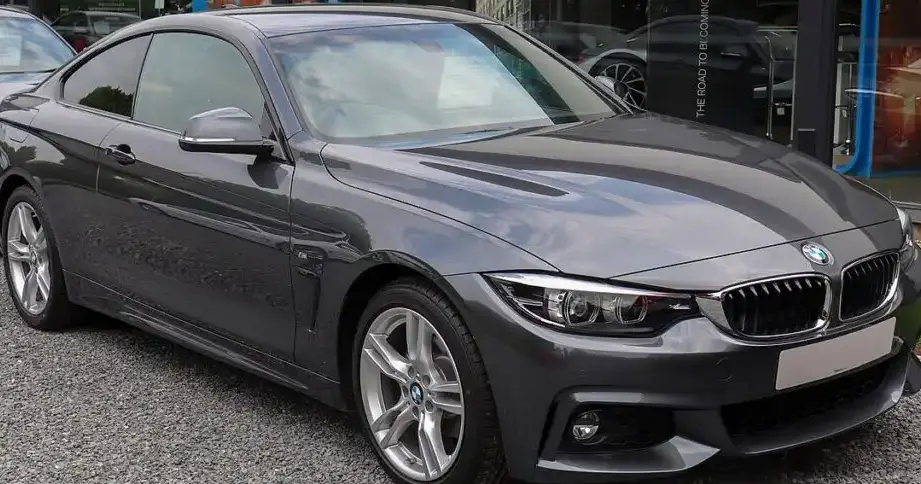
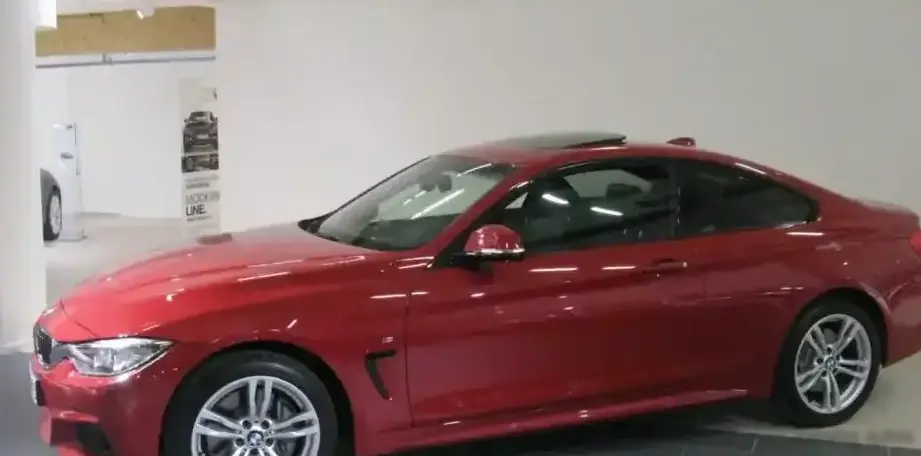
The BMW 4 Series Coupe (F32) 420i, produced from 2013 to 2016, served as the entry point into the F32 4 Series lineup in many markets, including the United States. Positioned as a stylish and relatively efficient coupe, it aimed to blend BMW’s renowned driving dynamics with a more accessible price point. The 420i was a crucial part of BMW’s strategy to broaden the F32’s appeal, competing directly with rivals like the Audi A5 Coupe and Mercedes-Benz C-Class Coupe. It utilized the BMW N20 engine family and was available with both six-speed manual and eight-speed automatic transmissions, with the automatic being the more prevalent choice among US buyers.
Powertrain & Engine Architecture
The 420i’s engine is the BMW N20B20B, a 2.0-liter turbocharged inline-four. This engine is part of BMW’s N20 family, celebrated for its balance of performance and fuel efficiency. Key features include direct fuel injection, a single twin-scroll turbocharger, and variable valve timing (VANOS) and variable valve lift (Valvetronic) technologies. These systems work together to optimize combustion and deliver a broad, usable torque curve. The N20 in the 420i produces 184 horsepower at 5,000-6,250 rpm and 270 Nm (199 lb-ft) of torque between 1,250 and 4,500 rpm. The turbocharger’s integration into the exhaust manifold enhances responsiveness and minimizes turbo lag. The 420i was commonly equipped with either a six-speed manual transmission or the ZF 8HP eight-speed automatic. The eight-speed automatic was favored for its smooth gear changes and contribution to improved fuel economy.
Driving Characteristics
The 420i, especially when paired with the automatic transmission, offered a comfortable and refined driving experience. While not as aggressively sporty as the higher-output 435i or 440i models, it provided sufficient power for daily commutes and highway travel. Acceleration from 0 to 60 mph took approximately 6.9 seconds, a respectable figure for its class. The automatic transmission’s gear ratios were optimized for efficiency, prioritizing fuel economy over outright acceleration. The steering was precise and well-weighted, a hallmark of BMW, providing good feedback to the driver. Compared to the manual transmission version, the automatic offered smoother shifts and reduced driver fatigue, though it sacrificed some driver engagement. The rear-wheel-drive configuration contributed to balanced handling, requiring careful throttle control in adverse weather conditions.
Equipment & Trim Levels
The standard equipment list for the 420i typically included leatherette upholstery, automatic climate control, a BMW iDrive infotainment system with a 6.5-inch display, and power-adjustable front seats. Numerous optional extras were available, such as genuine leather upholstery, a larger 8.8-inch iDrive display, navigation, a premium sound system, and various driver-assistance features like parking sensors and lane departure warning. Trim levels varied depending on the market, but generally, the 420i represented the base model, with option packages available to enhance luxury and technology. Popular packages included the Sport Line and Luxury Line, each offering unique exterior and interior styling elements.
Chassis & Braking
The F32 4 Series boasted a sophisticated chassis design. The front suspension utilized independent coil springs and struts, while the rear suspension employed an independent multi-link setup. This configuration struck a balance between ride comfort and handling precision. The 420i came standard with ventilated disc brakes on all four wheels, providing adequate stopping power. Anti-lock braking system (ABS) and electronic stability control (ESC) were standard safety features. The 420i’s relatively lower weight compared to its more powerful siblings contributed to its agile handling. Stabilizer bars were fitted front and rear to minimize body roll during cornering maneuvers.
Market Reception & Comparison
Automotive critics generally praised the 420i as a stylish and efficient entry-level coupe. However, some reviewers noted that the engine could feel somewhat strained when pushed to its limits, and the performance didn’t quite match the excitement of the 435i. Fuel economy was a significant strength, with combined figures ranging from 37.3 to 38.6 US mpg. Compared to the 435i, the 420i offered a more affordable purchase price and lower operating costs, making it an appealing choice for buyers prioritizing value and efficiency. The 420i’s reliability was generally considered good, although some owners reported minor issues with the turbocharger and fuel injectors.
Legacy
The BMW 4 Series Coupe (F32) 420i has become a popular option in the used car market, offering a combination of style, comfort, and BMW’s driving experience at a reasonable price. The N20 engine, while known for potential issues like oil leaks and carbon buildup, is generally reliable with proper maintenance. The availability of both manual and automatic transmissions broadens its appeal. Today, these coupes are appreciated for their classic BMW styling and relatively modern features, making them a compelling choice for enthusiasts and everyday drivers alike.