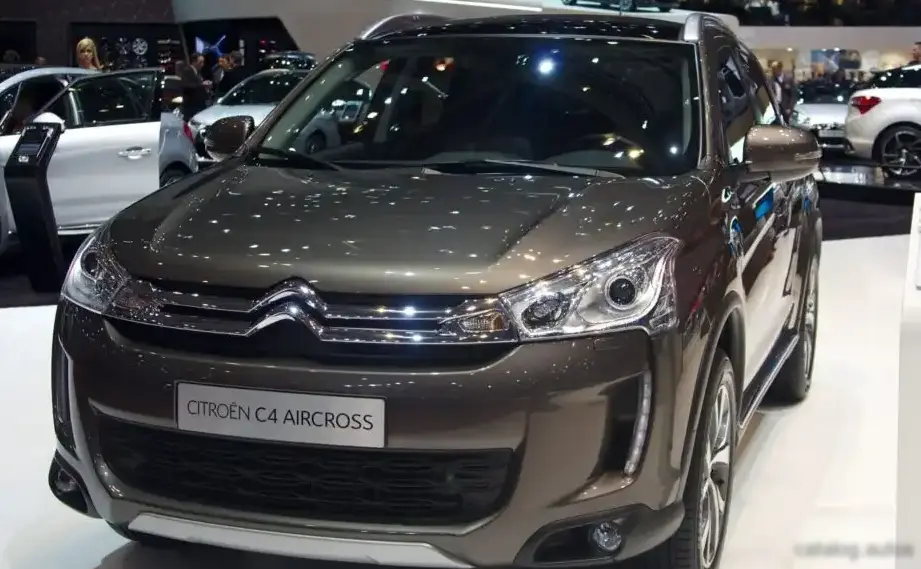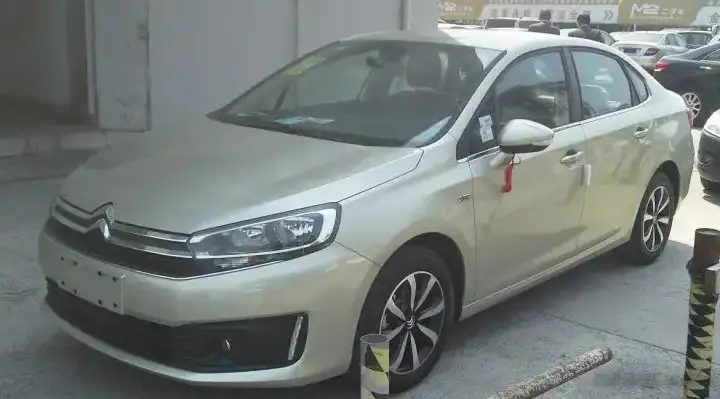
The Citroën C4 I Hatchback, specifically the 2.0 HDi 136 Automatic variant produced between 2008 and 2010, represents a mid-cycle refresh (Phase II) of the first-generation C4. Introduced as a competitor in the compact family car segment, the C4 aimed to blend comfort, practicality, and modern technology. This particular engine and transmission combination occupied a mid-range position within the C4 lineup, offering a balance between performance, fuel efficiency, and ease of driving. It was primarily marketed towards European consumers seeking a comfortable and refined diesel-powered hatchback.
Technical Specifications
| Brand | Citroën |
| Model | C4 |
| Generation | C4 I Hatchback (Phase II, 2008) |
| Type (Engine) | 2.0 HDi (136 Hp) FAP Automatic |
| Start of production | 2008 |
| End of production | 2010 |
| Powertrain Architecture | Internal Combustion engine |
| Body type | Hatchback |
| Seats | 5 |
| Doors | 5 |
| Fuel consumption (urban) | 9.1 l/100 km (25.8 US mpg, 31 UK mpg, 11 km/l) |
| Fuel consumption (extra urban) | 5.1 l/100 km (46.1 US mpg, 55.4 UK mpg, 19.6 km/l) |
| Fuel consumption (combined) | 6.6 l/100 km (35.6 US mpg, 42.8 UK mpg, 15.2 km/l) |
| CO2 emissions | 175 g/km |
| Fuel Type | Diesel |
| Acceleration 0 – 100 km/h | 10.4 sec |
| Acceleration 0 – 62 mph | 10.4 sec |
| Acceleration 0 – 60 mph | 9.9 sec |
| Maximum speed | 206 km/h (128 mph) |
| Emission standard | Euro 4 |
| Weight-to-power ratio | 10.4 kg/Hp |
| Weight-to-torque ratio | 4.4 kg/Nm |
| Power | 136 Hp @ 4000 rpm |
| Torque | 320 Nm @ 2000 rpm (236.02 lb.-ft. @ 2000 rpm) |
| Engine layout | Front, Transverse |
| Engine Model/Code | RHR DW10BTED4 |
| Engine displacement | 1997 cm3 (121.86 cu. in.) |
| Number of cylinders | 4 |
| Engine configuration | Inline |
| Cylinder Bore | 85 mm (3.35 in.) |
| Piston Stroke | 88 mm (3.46 in.) |
| Compression ratio | 17.6:1 |
| Number of valves per cylinder | 4 |
| Fuel injection system | Diesel Commonrail |
| Engine aspiration | Turbocharger, Intercooler |
| Valvetrain | DOHC |
| Engine oil capacity | 5.3 l (5.6 US qt, 4.66 UK qt) |
| Coolant | 10 l (10.57 US qt, 8.8 UK qt) |
| Kerb Weight | 1416 kg (3121.75 lbs.) |
| Max. weight | 1880 kg (4144.69 lbs.) |
| Max load | 464 kg (1022.94 lbs.) |
| Trunk (boot) space – minimum | 320 l (11.3 cu. ft.) |
| Trunk (boot) space – maximum | 1023 l (36.13 cu. ft.) |
| Fuel tank capacity | 60 l (15.85 US gal, 13.2 UK gal) |
| Max. roof load | 75 kg (165.35 lbs.) |
| Permitted trailer load with brakes (8%) | 1570 kg (3461.26 lbs.) |
| Permitted trailer load with brakes (12%) | 1570 kg (3461.26 lbs.) |
| Permitted trailer load without brakes | 740 kg (1631.42 lbs.) |
| Permitted towbar download | 70 kg (154.32 lbs.) |
| Length | 4275 mm (168.31 in.) |
| Width | 1773 mm (69.8 in.) |
| Width including mirrors | 1964 mm (77.32 in.) |
| Height | 1496 mm (58.9 in.) |
| Wheelbase | 2608 mm (102.68 in.) |
| Front track | 1505 mm (59.25 in.) |
| Rear track | 1510 mm (59.45 in.) |
| Front overhang | 950 mm (37.4 in.) |
| Rear overhang | 717 mm (28.23 in.) |
| Drag coefficient (Cd) | 0.31 |
| Minimum turning circle | 11.3 m (37.07 ft.) |
| Drivetrain Architecture | Front wheel drive |
| Number of gears and type of gearbox | 6 gears, automatic transmission |
| Front suspension | Independent, type McPherson with coil spring and anti-roll bar |
| Rear suspension | Semi-independent, coil spring |
| Front brakes | Ventilated discs |
| Rear brakes | Disc |
| Assisting systems | ABS (Anti-lock braking system) |
| Steering type | Steering rack and pinion |
| Tires size | 205/50 R17 |
| Wheel rims size | 17 |
Powertrain & Engine Architecture
The heart of this C4 variant is the DW10BTED4 engine, a 2.0-liter inline-four cylinder diesel engine. This engine, commonly found in PSA Group (Peugeot, Citroën) vehicles, is characterized by its robust construction and use of common rail direct injection. The ‘RHR’ engine code specifically denotes a version equipped with a Diesel Particulate Filter (DPF), or FAP in French (Filtre à Particules), designed to reduce particulate matter emissions and meet Euro 4 standards. The engine utilizes a turbocharger with an intercooler to boost power and torque. The DOHC (Double Overhead Camshaft) valvetrain, with four valves per cylinder, contributes to efficient gas exchange. The automatic transmission is a six-speed unit, providing smooth gear changes and contributing to relaxed cruising. This transmission was designed to handle the engine’s 320 Nm (236 lb-ft) of torque.
Driving Characteristics
The 2.0 HDi 136 Automatic C4 offered a comfortable and refined driving experience. While not overtly sporty, the engine provided adequate power for everyday driving and overtaking maneuvers. The automatic transmission, while not offering the engagement of a manual, provided smooth shifts and reduced driver fatigue. Acceleration from 0-100 km/h (0-62 mph) took approximately 10.4 seconds. Compared to the more powerful 2.0 HDi 163 hp version, this variant felt noticeably less responsive, particularly during quick acceleration. However, it offered superior fuel economy and a more relaxed driving style. The gear ratios were tuned for fuel efficiency and comfortable cruising, rather than outright performance.
Equipment & Trim Levels
The 2.0 HDi 136 Automatic typically came equipped with a reasonable level of standard features. These included air conditioning, power windows, central locking, and an audio system with CD player. Higher trim levels, such as Exclusive, added features like alloy wheels, automatic headlights and wipers, rear parking sensors, and upgraded interior trim. Interior upholstery was typically cloth, with options for leather available on higher-spec models. The dashboard layout was functional and ergonomically designed, with a focus on ease of use. Optional extras included a navigation system, panoramic sunroof, and upgraded audio systems.
Chassis & Braking
The C4 I utilized a McPherson strut front suspension and a semi-independent coil spring rear suspension. This setup provided a good balance between ride comfort and handling. The front brakes were ventilated discs, while the rear brakes were solid discs, providing adequate stopping power for the vehicle’s weight. ABS (Anti-lock Braking System) was standard, enhancing safety during emergency braking. Stabilizer bars were fitted to both the front and rear axles to reduce body roll during cornering.
Market Reception & Comparison
The Citroën C4 2.0 HDi 136 Automatic was generally well-received by automotive critics. It was praised for its comfortable ride, refined engine, and fuel efficiency. However, some critics noted that the automatic transmission could feel slightly sluggish at times, and the overall driving experience lacked the engagement of some competitors. Compared to the 1.6 HDi variants, the 2.0 HDi offered significantly more power and torque, making it a better choice for those who frequently carried passengers or luggage, or drove on motorways. Fuel economy was competitive within its class, averaging around 6.6 l/100 km (35.6 US mpg).
Legacy
The DW10BTED4 engine, in its various iterations, proved to be a reliable and durable powerplant. While the DPF (FAP) could be a potential source of issues if not properly maintained (requiring periodic regeneration or eventual replacement), the engine itself was generally robust. Today, the 2.0 HDi 136 Automatic C4 represents a relatively affordable and practical used car option. Its comfortable ride, good fuel economy, and relatively simple mechanicals make it a sensible choice for those seeking a dependable family hatchback. However, potential buyers should be aware of the potential costs associated with DPF maintenance and ensure the vehicle has been regularly serviced.