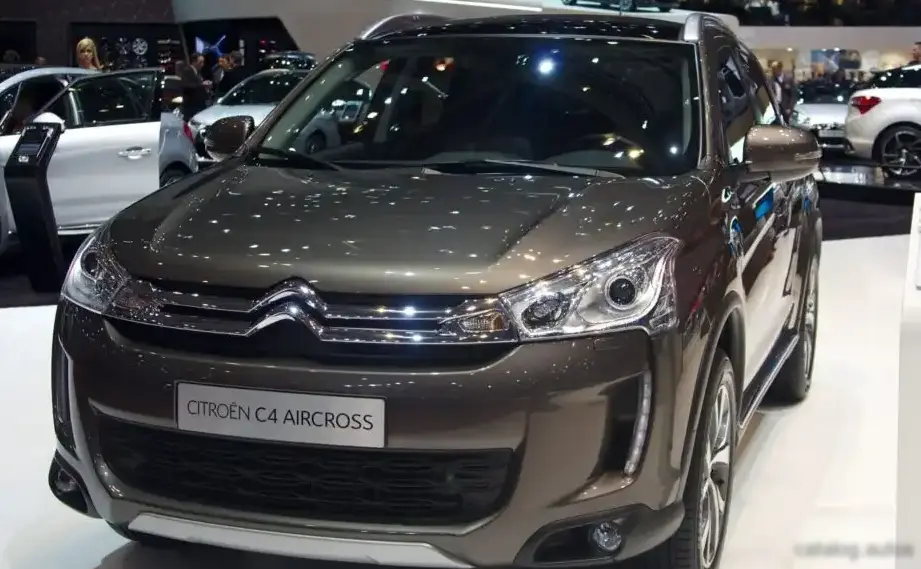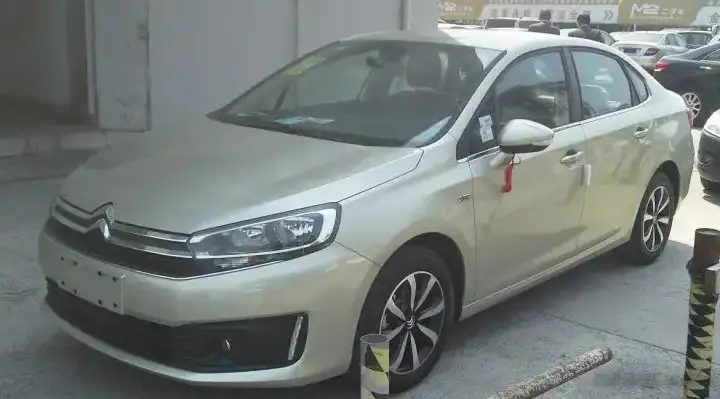
The Citroën C4 I Hatchback, specifically the 2.0 HDi 140 FAP variant produced between 2008 and 2010, represents a significant iteration of Citroën’s compact family car. This version falls within the Phase II update of the first-generation C4 (introduced in 2004), and was positioned as a mid-range offering within the broader C4 lineup. It aimed to balance fuel efficiency with respectable performance, appealing to buyers seeking a practical and comfortable hatchback with diesel economy. The C4 I series, built on the PSA Group’s Platform 2 (shared with the Peugeot 307), sought to modernize Citroën’s image and offer a more contemporary alternative to established rivals like the Volkswagen Golf and Ford Focus.
Technical Specifications
| Brand | Citroen |
| Model | C4 |
| Generation | C4 I Hatchback (Phase II, 2008) |
| Type (Engine) | 2.0 HDi (140 Hp) FAP |
| Start of production | 2008 |
| End of production | 2010 |
| Powertrain Architecture | Internal Combustion engine |
| Body type | Hatchback |
| Seats | 5 |
| Doors | 5 |
| Fuel consumption (urban) | 7.1 l/100 km (33.1 US mpg, 39.8 UK mpg, 14.1 km/l) |
| Fuel consumption (extra urban) | 4.3 l/100 km (54.7 US mpg, 65.7 UK mpg, 23.3 km/l) |
| Fuel consumption (combined) | 5.3 l/100 km (44.4 US mpg, 53.3 UK mpg, 18.9 km/l) |
| CO2 emissions | 139 g/km |
| Fuel Type | Diesel |
| Acceleration 0 – 100 km/h | 9.7 sec |
| Acceleration 0 – 62 mph | 9.7 sec |
| Acceleration 0 – 60 mph | 9.2 sec |
| Maximum speed | 207 km/h (128.62 mph) |
| Emission standard | Euro 4 |
| Weight-to-power ratio | 9.9 kg/Hp, 101.4 Hp/tonne |
| Weight-to-torque ratio | 4.3 kg/Nm, 231.7 Nm/tonne |
| Power | 140 Hp @ 4000 rpm |
| Power per litre | 70.1 Hp/l |
| Torque | 320 Nm @ 2000 rpm (236.02 lb.-ft. @ 2000 rpm) |
| Engine layout | Front, Transverse |
| Engine Model/Code | RHF DW10BTED4 |
| Engine displacement | 1997 cm3 (121.86 cu. in.) |
| Number of cylinders | 4 |
| Engine configuration | Inline |
| Cylinder Bore | 85 mm (3.35 in.) |
| Piston Stroke | 88 mm (3.46 in.) |
| Compression ratio | 17.6:1 |
| Number of valves per cylinder | 4 |
| Fuel injection system | Diesel Commonrail |
| Engine aspiration | Turbocharger, Intercooler |
| Valvetrain | DOHC |
| Engine oil capacity | 5.3 l (5.6 US qt | 4.66 UK qt) |
| Coolant | 10 l (10.57 US qt | 8.8 UK qt) |
| Kerb Weight | 1381 kg (3044.58 lbs.) |
| Max. weight | 1849 kg (4076.35 lbs.) |
| Max load | 468 kg (1031.76 lbs.) |
| Trunk (boot) space – minimum | 320 l (11.3 cu. ft.) |
| Trunk (boot) space – maximum | 1023 l (36.13 cu. ft.) |
| Fuel tank capacity | 60 l (15.85 US gal | 13.2 UK gal) |
| Max. roof load | 75 kg (165.35 lbs.) |
| Permitted trailer load with brakes (8%) | 1800 kg (3968.32 lbs.) |
| Permitted trailer load with brakes (12%) | 1500 kg (3306.93 lbs.) |
| Permitted trailer load without brakes | 728 kg (1604.97 lbs.) |
| Permitted towbar download | 73 kg (160.94 lbs.) |
| Length | 4275 mm (168.31 in.) |
| Width | 1773 mm (69.8 in.) |
| Width including mirrors | 1964 mm (77.32 in.) |
| Height | 1496 mm (58.9 in.) |
| Wheelbase | 2608 mm (102.68 in.) |
| Front track | 1505 mm (59.25 in.) |
| Rear (Back) track | 1510 mm (59.45 in.) |
| Front overhang | 950 mm (37.4 in.) |
| Rear overhang | 717 mm (28.23 in.) |
| Drag coefficient (Cd) | 0.31 |
| Minimum turning circle (turning diameter) | 11.3 m (37.07 ft.) |
| Drivetrain Architecture | The Internal combustion engine (ICE) drives the front wheels of the vehicle. |
| Drive wheel | Front wheel drive |
| Number of gears and type of gearbox | 6 gears, manual transmission |
| Front suspension | Independent, type McPherson with coil spring and anti-roll bar |
| Rear suspension | Semi-independent, coil spring |
| Front brakes | Ventilated discs |
| Rear brakes | Disc |
| Assisting systems | ABS (Anti-lock braking system) |
| Steering type | Steering rack and pinion |
| Tires size | 205/50 R17 |
| Wheel rims size | 17 |
Powertrain & Engine Architecture
The heart of this C4 variant is the DW10BTED4 engine, a 2.0-liter four-cylinder diesel engine. This engine, commonly found in PSA Group vehicles, utilizes a common rail direct injection system, delivering fuel at extremely high pressure for optimized combustion. The ‘RHF’ engine code specifically denotes a version equipped with a Diesel Particulate Filter (DPF), denoted by the ‘FAP’ in the model name, designed to reduce particulate matter emissions and meet Euro 4 standards. The engine features a double overhead camshaft (DOHC) design operating four valves per cylinder. A turbocharger with an intercooler is employed to boost power output and improve torque across the rev range. The 140 horsepower peak is achieved at 4000 rpm, while the substantial 320 Nm (236 lb-ft) of torque is available from just 2000 rpm, providing strong low-end and mid-range acceleration. The engine is transversely mounted in the front of the vehicle, driving the front wheels. The 6-speed manual transmission was the standard offering, providing a good balance between fuel economy and driver control.
Driving Characteristics
The 2.0 HDi 140 FAP C4 offers a composed and comfortable driving experience. The engine’s strong torque output makes it feel responsive in everyday driving situations, with ample power for overtaking and merging onto highways. While not a sports car, the 9.7-second 0-62 mph acceleration is respectable for a family hatchback. The 6-speed manual transmission allows for precise gear selection, and the gear ratios are well-matched to the engine’s power delivery. Compared to the lower-powered 1.6 HDi variants, the 2.0 HDi provides a noticeable performance boost. It also feels more refined and less strained at higher speeds. Compared to the petrol-powered C4s, the diesel offers significantly better fuel economy, but lacks the immediate responsiveness of the gasoline engines.
Equipment & Trim Levels
The 2.0 HDi 140 FAP typically came equipped with a reasonable level of standard features. These included air conditioning, electric front windows, a CD stereo, and ABS brakes. Higher trim levels, such as Exclusive, added features like alloy wheels, automatic headlights and wipers, rear parking sensors, and upgraded interior trim. Interior upholstery was typically cloth, with options for leather available on higher-spec models. The dashboard layout was functional and ergonomically designed, with a clear instrument cluster and easy-to-use controls.
Chassis & Braking
The C4 I utilizes a McPherson strut front suspension and a semi-independent torsion beam rear suspension. This setup provides a good balance between ride comfort and handling. The front brakes are ventilated discs, while the rear brakes are solid discs, providing adequate stopping power for the vehicle’s weight and performance. ABS (Anti-lock Braking System) is standard, enhancing safety during emergency braking situations. The steering is a rack and pinion system, offering precise and responsive control.
Market Reception & Comparison
The Citroën C4 I 2.0 HDi 140 FAP was generally well-received by automotive critics. It was praised for its fuel efficiency, comfortable ride, and spacious interior. However, some critics noted that the steering lacked feel and that the interior materials were not as premium as those found in some rivals. Compared to the 1.6 HDi, the 2.0 HDi offered a significant performance upgrade, making it a more appealing option for drivers who frequently travel long distances or carry passengers. Fuel economy remained excellent, averaging around 44.4 US mpg in combined driving. Reliability was generally good, although the DPF system could be prone to issues if the vehicle was primarily used for short trips.
Legacy
The 2.0 HDi 140 FAP C4 remains a relatively common sight on used car markets. The DW10BTED4 engine is known for its durability, provided it has been properly maintained. Regular servicing, including oil changes and DPF regeneration, is crucial for long-term reliability. While the DPF can be a potential weak point, many owners report trouble-free ownership. The C4 I, in this configuration, represents a practical and economical choice for buyers seeking a comfortable and fuel-efficient family hatchback. Its blend of performance, economy, and practicality has ensured its continued popularity in the used car market.