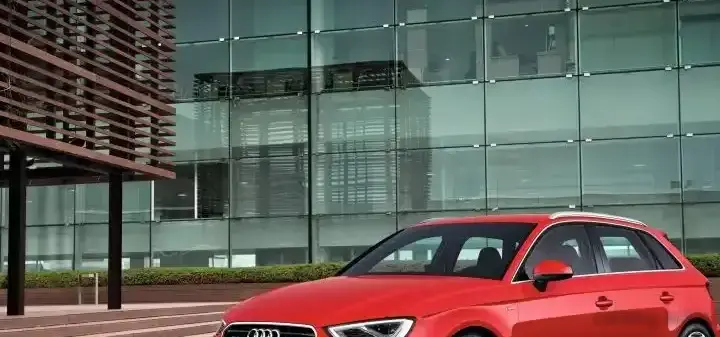
The Audi A3 Sportback (8V) 2.0 TDI 184 hp clean diesel quattro S-tronic represents a compelling blend of performance, efficiency, and all-weather capability within the third-generation A3 (8V) lineup. Produced from 2014 to 2016, this variant occupied a mid-to-upper position in the A3 Sportback range, appealing to buyers seeking a refined driving experience with strong acceleration and the added security of Audi’s quattro all-wheel-drive system. It was primarily marketed in Europe and other regions where diesel engines and compact premium hatchbacks were highly popular.
Technical Specifications
| Brand | Audi |
| Model | A3 |
| Generation | A3 Sportback (8V) |
| Type (Engine) | 2.0 TDI (184 Hp) clean diesel quattro S-tronic |
| Start of production | 2014 |
| End of production | 2016 |
| Powertrain Architecture | Internal Combustion engine |
| Body type | Hatchback |
| Seats | 5 |
| Doors | 5 |
| Fuel consumption (urban) | 5.4 l/100 km (43.6 US mpg, 52.3 UK mpg, 18.5 km/l) |
| Fuel consumption (extra urban) | 4.3 l/100 km (54.7 US mpg, 65.7 UK mpg, 23.3 km/l) |
| Fuel consumption (combined) | 4.7 l/100 km (50 US mpg, 60.1 UK mpg, 21.3 km/l) |
| CO2 emissions | 124 g/km |
| Fuel Type | Diesel |
| Acceleration 0 – 100 km/h | 6.9 sec |
| Acceleration 0 – 62 mph | 6.9 sec |
| Acceleration 0 – 60 mph | 6.6 sec |
| Maximum speed | 230 km/h (142.92 mph) |
| Emission standard | Euro 6 |
| Weight-to-power ratio | 7.7 kg/Hp, 129.6 Hp/tonne |
| Weight-to-torque ratio | 3.7 kg/Nm, 267.6 Nm/tonne |
| Power | 184 Hp @ 3500-4000 rpm |
| Power per litre | 93.5 Hp/l |
| Torque | 380 Nm @ 1750-3250 rpm (280.27 lb.-ft. @ 1750-3250 rpm) |
| Engine layout | Front, Transverse |
| Engine Model/Code | CUNA, DGCA |
| Engine displacement | 1968 cm3 (120.09 cu. in.) |
| Number of cylinders | 4 |
| Engine configuration | Inline |
| Cylinder Bore | 81 mm (3.19 in.) |
| Piston Stroke | 95.5 mm (3.76 in.) |
| Compression ratio | 15.8:1 |
| Number of valves per cylinder | 4 |
| Fuel injection system | Diesel Commonrail |
| Engine aspiration | Turbocharger, Intercooler |
| Valvetrain | DOHC |
| Engine oil capacity | 4.7 l (4.97 US qt | 4.14 UK qt) |
| Kerb Weight | 1420 kg (3130.56 lbs.) |
| Max. weight | 1980 kg (4365.15 lbs.) |
| Max load | 560 kg (1234.59 lbs.) |
| Trunk (boot) space – minimum | 380 l (13.42 cu. ft.) |
| Trunk (boot) space – maximum | 1220 l (43.08 cu. ft.) |
| Fuel tank capacity | 55 l (14.53 US gal | 12.1 UK gal) |
| Max. roof load | 75 kg (165.35 lbs.) |
| Permitted trailer load with brakes (8%) | 1800 kg (3968.32 lbs.) |
| Permitted trailer load with brakes (12%) | 1800 kg (3968.32 lbs.) |
| Permitted trailer load without brakes | 740 kg (1631.42 lbs.) |
| Permitted towbar download | 75 kg (165.35 lbs.) |
| Length | 4310 mm (169.69 in.) |
| Width | 1786 mm (70.31 in.) |
| Width including mirrors | 1966 mm (77.4 in.) |
| Height | 1426 mm (56.14 in.) |
| Wheelbase | 2636 mm (103.78 in.) |
| Front track | 1536 mm (60.47 in.) |
| Rear (Back) track | 1506 mm (59.29 in.) |
| Drag coefficient (Cd) | 0.31 |
| Minimum turning circle | 10.9 m (35.76 ft.) |
| Drive wheel | All wheel drive (4×4) |
| Number of gears and type of gearbox | 6 gears, automatic transmission S-tronic |
| Front suspension | Independent, type McPherson with coil spring and anti-roll bar |
| Rear suspension | Independent multi-link suspension |
| Front brakes | Ventilated discs |
| Rear brakes | Disc |
INTRODUCTION
The Audi A3 Sportback (8V) 2.0 TDI 184 hp quattro S-tronic, launched in 2014, was a key component of Audi’s strategy to offer a comprehensive range of compact premium hatchbacks. Built on the Volkswagen Group’s MQB platform (A3/Golf 7 generation), the 8V A3 Sportback aimed to deliver a more sophisticated and refined experience than its predecessors. This particular variant combined a potent 2.0-liter turbocharged diesel engine with Audi’s renowned quattro all-wheel-drive system and the quick-shifting S-tronic dual-clutch transmission. It positioned itself as a practical yet engaging option for drivers prioritizing performance, fuel efficiency, and all-weather capability.
Powertrain & Engine Architecture
At the heart of this A3 Sportback lies the 2.0-liter four-cylinder diesel engine, identified by engine codes CUNA or DGCA depending on the specific market and production year. This engine is a member of the Volkswagen Group’s modular engine family, featuring a cast iron block, aluminum cylinder head, and a sophisticated common-rail direct injection system. The fuel injection system, typically operating at pressures exceeding 1800 bar, ensures precise fuel delivery for optimal combustion. The engine utilizes a variable geometry turbocharger (VGT) and an intercooler to boost power and torque. The DOHC (Double Overhead Camshaft) valvetrain, with four valves per cylinder, further enhances breathing and efficiency.
The S-tronic 6-speed dual-clutch transmission (DCT) is a crucial element of this variant. It offers incredibly fast and smooth gear changes, contributing to both performance and fuel economy. Unlike a traditional automatic transmission with a torque converter, the S-tronic uses two separate clutches – one for odd-numbered gears and one for even-numbered gears – allowing for pre-selection of the next gear. This minimizes interruption in power delivery during shifts.
Driving Characteristics
The 2.0 TDI 184 hp quattro S-tronic delivers a noticeably more spirited driving experience compared to lower-powered A3 variants. The 380 Nm (280 lb-ft) of torque, available from 1750 to 3250 rpm, provides strong acceleration in everyday driving situations. The S-tronic transmission complements the engine well, offering quick and decisive shifts. The quattro all-wheel-drive system provides excellent traction, particularly on slippery surfaces, enhancing stability and confidence. While not a sports car, this variant offers a balanced and engaging driving experience. The 0-60 mph time of around 6.6 seconds is respectable for a diesel-powered hatchback. Compared to the manual transmission version, the S-tronic offers convenience and slightly quicker acceleration, but some enthusiasts might miss the direct engagement of a manual gearbox.
Equipment & Trim Levels
The A3 Sportback 2.0 TDI 184 hp quattro S-tronic typically came well-equipped as standard. Features included automatic climate control, a multi-function steering wheel, Audi’s MMI infotainment system with a central display screen, and alloy wheels. Upholstery was generally cloth, but leather options were available. Higher trim levels added features such as heated front seats, parking sensors, a panoramic sunroof, and upgraded audio systems. Optional extras included navigation, advanced driver-assistance systems (like adaptive cruise control and lane assist), and various cosmetic enhancements.
Chassis & Braking
The A3 Sportback’s chassis features independent suspension all around – McPherson struts at the front and a multi-link setup at the rear. This configuration provides a good balance between ride comfort and handling precision. The quattro all-wheel-drive system distributes power between the front and rear axles as needed, optimizing traction. Braking duties are handled by ventilated discs at the front and solid discs at the rear. Anti-lock braking system (ABS) and electronic stability control (ESC) are standard features, enhancing safety.
Market Reception & Comparison
The A3 Sportback 2.0 TDI 184 hp quattro S-tronic was generally well-received by automotive critics. It was praised for its refined engine, quick-shifting transmission, and all-weather capability. Fuel economy was also a strong point, with combined figures around 50 mpg. Compared to the lower-powered 1.6 TDI and 2.0 TDI 150 hp variants, this model offered a significant performance upgrade. However, it was more expensive. Compared to the petrol-powered 1.8 TFSI, the diesel offered superior fuel economy and torque, but the petrol engine was often considered smoother and more responsive.
Legacy
The 2.0 TDI engine, in various iterations, has proven to be a durable and reliable powertrain. However, like many modern diesel engines, it’s susceptible to issues related to the diesel particulate filter (DPF) if not properly maintained with regular long-distance drives. The S-tronic transmission, while generally reliable, can require more expensive maintenance than a traditional automatic transmission. Today, the A3 Sportback 2.0 TDI 184 hp quattro S-tronic remains a popular choice in the used car market, offering a compelling combination of practicality, performance, and fuel efficiency. Well-maintained examples continue to provide a refined and enjoyable driving experience.