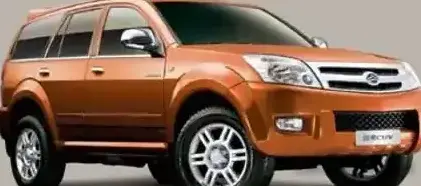
The Great Wall Hover H6 1.5 (143 Hp) 4×2 was a front-wheel-drive compact SUV produced by the Chinese manufacturer Great Wall Motors from 2011 to 2017. Positioned as an entry-level offering within the broader H6 range, it aimed to provide affordable SUV practicality to the rapidly growing Chinese automotive market. While not officially sold in the United States, the H6 represented a significant step for Great Wall in terms of design and engineering, attempting to emulate the styling and features of established Japanese and Korean competitors. This variant, equipped with the 1.5-liter turbocharged engine and a 6-speed manual transmission, was designed for buyers prioritizing fuel efficiency and value over outright performance.
Technical Specifications
| Brand | Great Wall |
| Model | Hover H6 |
| Generation | Hover H6 |
| Type (Engine) | 1.5 (143 Hp) 4×2 |
| Start of production | 2011 |
| End of production | 2017 |
| Powertrain Architecture | Internal Combustion engine |
| Body type | SUV |
| Seats | 5 |
| Doors | 5 |
| Fuel consumption (combined) | 9 l/100 km (26.1 US mpg, 31.4 UK mpg, 11.1 km/l) |
| CO2 emissions | 207 g/km |
| Fuel Type | Petrol (Gasoline) |
| Acceleration 0 – 100 km/h | 11.2 – 11.4 sec |
| Acceleration 0 – 62 mph | 11.2 – 11.4 sec |
| Acceleration 0 – 60 mph | 10.6 sec |
| Maximum speed | 180 km/h (111.85 mph) |
| Power | 143 Hp |
| Power per litre | 95.5 Hp/l |
| Torque | 202 Nm (148.99 lb.-ft.) |
| Engine layout | Front, Transverse |
| Engine Model/Code | GW4G15B |
| Engine displacement | 1497 cm3 (91.35 cu. in.) |
| Number of cylinders | 4 |
| Engine configuration | Inline |
| Fuel injection system | Multi-port manifold injection |
| Engine aspiration | Turbocharger, Intercooler |
| Trunk (boot) space – minimum | 808 l (28.53 cu. ft.) |
| Trunk (boot) space – maximum | 2040 l (72.04 cu. ft.) |
| Fuel tank capacity | 58 l (15.32 US gal, 12.76 UK gal) |
| Length | 4640 mm (182.68 in.) |
| Width | 1825 mm (71.85 in.) |
| Height | 1745 mm (68.7 in.) |
| Wheelbase | 2680 mm (105.51 in.) |
| Front track | 1565 mm (61.61 in.) |
| Rear (Back) track | 1565 mm (61.61 in.) |
| Ride height (ground clearance) | 180 mm (7.09 in.) |
| Approach angle | 26° |
| Departure angle | 22° |
| Drivetrain Architecture | The Internal combustion engine (ICE) drives the front wheels of the vehicle. |
| Drive wheel | Front wheel drive |
| Number of gears and type of gearbox | 6 gears, manual transmission |
| Front suspension | Independent type McPherson |
| Rear suspension | Independent multi-link suspension |
| Front brakes | Ventilated discs |
| Rear brakes | Disc |
| Assisting systems | ABS (Anti-lock braking system) |
| Steering type | Steering rack and pinion |
| Tires size | 225/65 R17 |
| Wheel rims size | 17 |
Powertrain & Engine Architecture
The Hover H6 1.5 utilized the GW4G15B, a 1.5-liter inline-four cylinder gasoline engine. This engine featured a single overhead camshaft (SOHC) valvetrain and multi-point fuel injection. The addition of a turbocharger and intercooler boosted output to 143 horsepower and 202 Nm (148.99 lb.-ft.) of torque. This engine was a relatively modern design for Great Wall at the time, incorporating technologies aimed at improving fuel efficiency and reducing emissions. The engine was transversely mounted, driving the front wheels through a 6-speed manual transmission. While an automatic transmission was offered on other H6 variants, the 1.5-liter engine was exclusively paired with the manual gearbox. The manual transmission was chosen to maximize fuel economy and keep costs down, aligning with the target market for this trim level.
Driving Characteristics
The 1.5-liter engine, while adequate for everyday driving, wasn’t known for its blistering performance. Acceleration from 0-60 mph took approximately 10.6 seconds, and top speed was limited to 180 km/h (111.85 mph). The 6-speed manual transmission helped to keep the engine in its optimal power band, but the relatively low horsepower output meant that overtaking maneuvers required careful planning. Compared to the higher-output 2.0-liter engine options available on other H6 models, the 1.5 felt noticeably less responsive. The gearing was tuned for economy rather than outright acceleration. However, the lighter engine weight contributed to slightly improved handling and fuel economy. The steering, while not particularly sporty, was light and easy to use in urban environments.
Equipment & Trim Levels
The Hover H6 1.5 4×2 typically came with a fairly basic level of equipment, reflecting its position as the entry-level model. Standard features generally included air conditioning, power windows, power steering, and a basic audio system. Interior upholstery was typically cloth, and the dashboard featured a functional but somewhat utilitarian design. The plastics used were of a lower grade compared to more expensive trims. Optional extras could include alloy wheels, a more advanced audio system, and a sunroof. Safety features were also relatively basic, typically including ABS brakes and a driver’s airbag. The focus was on providing essential features at an affordable price point.
Chassis & Braking
The H6 1.5 featured an independent McPherson strut suspension at the front and an independent multi-link suspension at the rear. This setup provided a reasonably comfortable ride, although it wasn’t particularly sporty. The front brakes were ventilated discs, while the rear brakes were solid discs. The steering was a rack and pinion system, providing adequate precision. The vehicle rode on 17-inch wheels with 225/65 R17 tires. The suspension was tuned for comfort rather than performance, prioritizing a smooth ride over sharp handling. The braking system, while adequate for normal driving, lacked the stopping power of more sophisticated systems found on higher-end SUVs.
Market Reception & Comparison
The Great Wall Hover H6 1.5 4×2 was primarily targeted at budget-conscious buyers in the Chinese market. Critics generally praised its affordability and practicality, but noted its lack of refinement compared to established competitors from Japan and Korea. Fuel economy was a strong point, with the 1.5-liter engine achieving around 9 l/100 km (26.1 US mpg). However, the engine’s performance was often criticized as being underwhelming. Compared to the 2.0-liter H6 models, the 1.5 offered a more economical option but at the expense of performance and refinement. The interior quality and overall build quality were also areas where the H6 1.5 fell short of its competitors.
Legacy
The Great Wall Hover H6 1.5 4×2 played a role in establishing Great Wall Motors as a significant player in the Chinese automotive market. While not known for exceptional reliability, the GW4G15B engine proved to be reasonably durable with proper maintenance. Today, used examples of the H6 1.5 are relatively affordable, but potential buyers should be aware of the vehicle’s basic features and limited performance. The H6 paved the way for Great Wall’s subsequent SUV models, which have become increasingly sophisticated and competitive in both the Chinese and international markets. It represented an early attempt by a Chinese manufacturer to offer a modern, affordable SUV, and it helped to build brand recognition for Great Wall Motors.