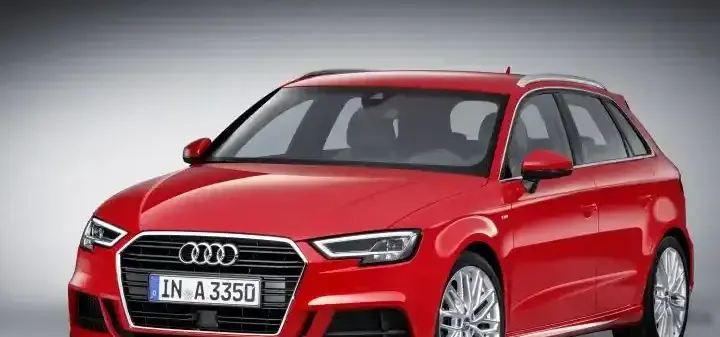
The Audi A3 Sportback (8V, facelift) 1.4 TFSI COD ultra S tronic, produced from 2016 to 2017, represents a key variant within the broader A3 Sportback (8V) lifecycle. Positioned as a fuel-efficient and technologically advanced option, this model aimed to balance performance with economy, appealing to buyers seeking a premium hatchback experience. It falls within the facelifted 8V generation, benefiting from styling updates and revised technology compared to earlier 8V models. The “COD ultra” designation signifies Audi’s Cylinder On Demand and ultra-lightweight construction technologies, aimed at maximizing efficiency. This variant was primarily marketed in Europe and other regions where smaller, fuel-efficient hatchbacks are highly sought after.
Technical Specifications
| Brand | Audi |
| Model | A3 |
| Generation | A3 Sportback (8V, facelift 2016) |
| Type (Engine) | 1.4 TFSI COD ultra (150 Hp) S tronic |
| Start of production | 2016 |
| End of production | 2017 |
| Powertrain Architecture | Internal Combustion engine |
| Body type | Hatchback |
| Seats | 5 |
| Doors | 5 |
| Fuel consumption (urban) | 5.9-6.2 l/100 km (39.9 – 37.9 US mpg, 47.9 – 45.6 UK mpg, 16.9 – 16.1 km/l) |
| Fuel consumption (extra urban) | 4.2-4.5 l/100 km (56 – 52.3 US mpg, 67.3 – 62.8 UK mpg, 23.8 – 22.2 km/l) |
| Fuel consumption (combined) | 4.8-5.1 l/100 km (49 – 46.1 US mpg, 58.9 – 55.4 UK mpg, 20.8 – 19.6 km/l) |
| CO2 emissions | 111-116 g/km |
| Fuel Type | Petrol (Gasoline) |
| Acceleration 0 – 100 km/h | 8.2 sec |
| Acceleration 0 – 62 mph | 8.2 sec |
| Acceleration 0 – 60 mph | 7.8 sec |
| Maximum speed | 220 km/h (136.7 mph) |
| Emission standard | Euro 6 |
| Weight-to-power ratio | 8.3 kg/Hp, 121 Hp/tonne |
| Weight-to-torque ratio | 5 kg/Nm, 201.6 Nm/tonne |
| Power | 150 Hp @ 5000-6000 rpm |
| Power per litre | 107.5 Hp/l |
| Torque | 250 Nm @ 1500-3500 rpm (184.39 lb.-ft. @ 1500-3500 rpm) |
| Engine layout | Front, Transverse |
| Engine Model/Code | CZDA, CZEA |
| Engine displacement | 1395 cm3 (85.13 cu. in.) |
| Number of cylinders | 4 |
| Engine configuration | Inline |
| Cylinder Bore | 74.5 mm (2.93 in.) |
| Piston Stroke | 80 mm (3.15 in.) |
| Compression ratio | 10:1 |
| Number of valves per cylinder | 4 |
| Fuel injection system | Direct injection |
| Engine aspiration | Turbocharger, Intercooler |
| Valvetrain | DOHC |
| Engine oil capacity | 4 l (4.23 US qt | 3.52 UK qt) |
| Coolant | 10 l (10.57 US qt | 8.8 UK qt) |
| Kerb Weight | 1240 kg (2733.73 lbs.) |
| Max. weight | 1800 kg (3968.32 lbs.) |
| Max load | 560 kg (1234.59 lbs.) |
| Trunk (boot) space – minimum | 380 l (13.42 cu. ft.) |
| Trunk (boot) space – maximum | 1220 l (43.08 cu. ft.) |
| Fuel tank capacity | 50 l (13.21 US gal | 11 UK gal) |
| Max. roof load | 75 kg (165.35 lbs.) |
| Permitted trailer load with brakes (8%) | 1700 kg (3747.86 lbs.) |
| Permitted trailer load with brakes (12%) | 1500 kg (3306.93 lbs.) |
| Permitted trailer load without brakes | 650 kg (1433 lbs.) |
| Permitted towbar download | 75 kg (165.35 lbs.) |
| Length | 4313 mm (169.8 in.) |
| Width | 1785 mm (70.28 in.) |
| Width including mirrors | 1966 mm (77.4 in.) |
| Height | 1426 mm (56.14 in.) |
| Wheelbase | 2637 mm (103.82 in.) |
| Front track | 1543 mm (60.75 in.) |
| Rear (Back) track | 1514 mm (59.61 in.) |
| Front overhang | 870 mm (34.25 in.) |
| Rear overhang | 806 mm (31.73 in.) |
| Drag coefficient (Cd) | 0.32 |
| Minimum turning circle (turning diameter) | 10.9 m (35.76 ft.) |
| Drivetrain Architecture | The Internal combustion engine (ICE) drives the front wheels of the vehicle. |
| Drive wheel | Front wheel drive |
| Number of gears and type of gearbox | 7 gears, automatic transmission Stronic |
| Front suspension | Independent, type McPherson with coil spring and anti-roll bar |
| Rear suspension | Semi-independent, coil spring |
| Front brakes | Ventilated discs |
| Rear brakes | Disc |
| Assisting systems | ABS (Anti-lock braking system) |
| Steering type | Steering rack and pinion |
| Power steering | Electric Steering |
| Tires size | 205/55 R16; 225/45 R17; 225/40 R18; 235/35 R19 |
| Wheel rims size | 6.5J x 16; 17; 18; 19 |
INTRODUCTION
The Audi A3 Sportback (8V, facelift) 1.4 TFSI COD ultra S tronic, launched in 2016 and continuing through 2017, is a five-door hatchback that represents a significant iteration of Audi’s popular compact model. Built on the Volkswagen Group’s MQB platform (specifically the A3/1HX0 variant), this version focused on maximizing fuel efficiency through the implementation of Audi’s Cylinder On Demand (COD) technology and lightweight construction techniques (“ultra” badging). It occupied a mid-range position within the 8V A3 Sportback lineup, offering a balance between affordability, performance, and features. It served as a direct competitor to models like the Volkswagen Golf, BMW 1 Series, and Mercedes-Benz A-Class.
Powertrain & Engine Architecture
At the heart of this A3 variant lies the 1.4-liter turbocharged four-cylinder engine, designated CZDA or CZEA depending on specific calibration and market. This engine utilizes direct fuel injection and a single turbocharger with an intercooler to deliver 150 horsepower at 5000-6000 rpm and 250 Nm (184 lb-ft) of torque between 1500-3500 rpm. A key feature is the Cylinder On Demand (COD) system, which shuts down two cylinders under light load conditions to reduce fuel consumption. The engine employs a DOHC (Dual Overhead Camshaft) valvetrain with four valves per cylinder. The engine is transversely mounted at the front of the vehicle. The S tronic transmission is a seven-speed dual-clutch transmission (DCT) known for its quick and smooth shifts. This transmission features a sophisticated electronic control unit that optimizes gear selection for both performance and efficiency.
Driving Characteristics
The 1.4 TFSI COD ultra S tronic offers a comfortable and refined driving experience. While not as overtly sporty as higher-powered A3 variants, it provides adequate acceleration for everyday driving, achieving 0-100 km/h (0-62 mph) in approximately 8.2 seconds. The S tronic transmission contributes to responsive acceleration, and the gear ratios are well-suited for both urban and highway driving. The COD system is largely imperceptible to the driver, seamlessly switching between four and two cylinders. Compared to the manual transmission versions of the 1.4 TFSI, the S tronic offers greater convenience and slightly quicker acceleration, but may sacrifice a small degree of driver engagement. Compared to the more powerful 1.8 TFSI or 2.0 TFSI models, this variant prioritizes fuel economy over outright performance.
Equipment & Trim Levels
The 1.4 TFSI COD ultra S tronic typically came equipped with a generous array of standard features. These included Audi’s MMI infotainment system with a central display screen, automatic climate control, alloy wheels (typically 16-18 inches depending on options), and a comprehensive suite of safety features such as ABS, electronic stability control, and multiple airbags. Interior upholstery was typically cloth, with leather options available as an upgrade. Optional extras included a panoramic sunroof, upgraded sound system, navigation system, and various driver assistance systems like adaptive cruise control and lane departure warning. Trim levels varied by market, but generally offered packages that added cosmetic enhancements and additional convenience features.
Chassis & Braking
The A3 Sportback’s chassis features an independent McPherson strut suspension at the front and a semi-independent coil spring suspension at the rear. This setup provides a good balance between ride comfort and handling. Stabilizer bars are fitted to both axles to reduce body roll during cornering. Braking duties are handled by ventilated discs at the front and solid discs at the rear. The ABS (Anti-lock Braking System) is standard, ensuring safe and controlled braking in various conditions. The steering system is an electric power-assisted rack and pinion system, providing precise and responsive steering feel.
Market Reception & Comparison
The Audi A3 Sportback 1.4 TFSI COD ultra S tronic was generally well-received by automotive critics. It was praised for its fuel efficiency, comfortable ride, and refined interior. However, some reviewers noted that the engine could feel slightly underpowered when fully loaded or during spirited driving. Compared to the 1.8 TFSI and 2.0 TFSI variants, it offered significantly better fuel economy but less exhilarating performance. The 1.6 TDI diesel variant was a direct competitor in terms of fuel economy, but the 1.4 TFSI offered a smoother and quieter driving experience. Reliability reports generally indicate good long-term dependability, although regular maintenance is crucial for the turbocharger and dual-clutch transmission.
Legacy
The 1.4 TFSI COD ultra S tronic powertrain has proven to be relatively reliable, although the dual-clutch transmission requires regular servicing (fluid changes) to prevent issues. In the used car market, this variant represents a good value proposition for buyers seeking a fuel-efficient and well-equipped premium hatchback. Its combination of technology, comfort, and economy continues to make it an attractive option, and parts availability remains good. The implementation of COD technology demonstrated Audi’s commitment to improving fuel efficiency, paving the way for further advancements in engine technology.