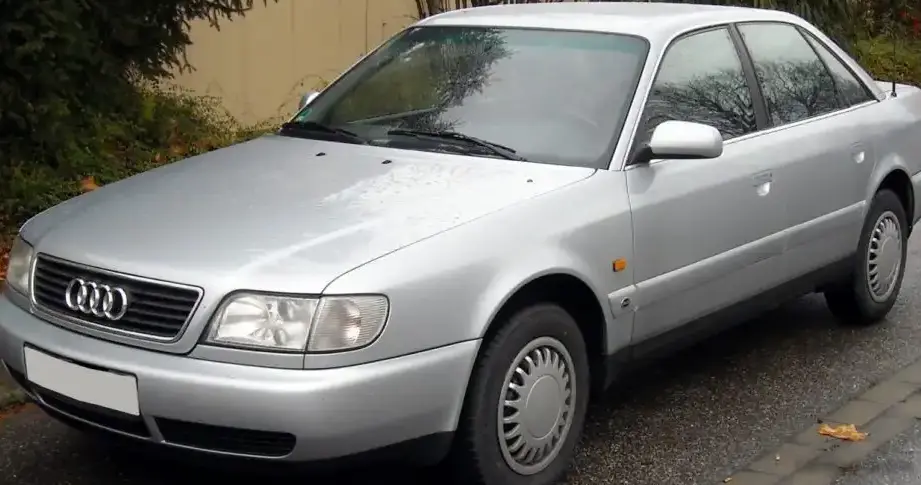
The Audi A6 Avant (4F, C6) 2.8 FSI V6, produced between 2006 and 2008, represents a compelling blend of performance and practicality within the mid-size luxury wagon segment. Positioned as a step up from the base 2.0 TFSI models, and offering a more accessible entry point into the A6 range than the flagship 4.2 FSI V8, the 2.8 FSI aimed to deliver a refined driving experience with respectable power and efficiency. This variant was a key offering in European markets, where the demand for premium wagons remained strong, and also saw moderate sales in other regions where the A6 Avant was offered. It built upon the foundation of the 4F chassis, introduced in 2004, which brought advancements in technology, safety, and interior refinement to the A6 line.
Technical Specifications
| Brand | Audi |
| Model | A6 |
| Generation | A6 Avant (4F,C6) |
| Type (Engine) | 2.8 FSI V6 (210 Hp) |
| Start of production | 2006 |
| End of production | 2008 |
| Powertrain Architecture | Internal Combustion engine |
| Body type | Station wagon (estate) |
| Seats | 5 |
| Doors | 5 |
| Fuel consumption (urban) | 13 l/100 km (18.1 US mpg, 21.7 UK mpg, 7.7 km/l) |
| Fuel consumption (extra urban) | 6.4 l/100 km (36.8 US mpg, 44.1 UK mpg, 15.6 km/l) |
| Fuel consumption (combined) | 8.8 l/100 km (26.7 US mpg, 32.1 UK mpg, 11.4 km/l) |
| CO2 emissions | 209 g/km |
| Fuel Type | Petrol (Gasoline) |
| Acceleration 0 – 100 km/h | 8.2 sec |
| Acceleration 0 – 62 mph | 8.2 sec |
| Acceleration 0 – 60 mph | 7.8 sec |
| Maximum speed | 237 km/h (147.26 mph) |
| Emission standard | Euro 4 |
| Weight-to-power ratio | 7.7 kg/Hp, 130.4 Hp/tonne |
| Weight-to-torque ratio | 5.8 kg/Nm, 173.9 Nm/tonne |
| Power | 210 Hp @ 5500-6800 rpm |
| Power per litre | 75.7 Hp/l |
| Torque | 280 Nm @ 3000-5000 rpm (206.52 lb.-ft. @ 3000-5000 rpm) |
| Engine layout | Front, Longitudinal |
| Engine Model/Code | BDX |
| Engine displacement | 2773 cm3 (169.22 cu. in.) |
| Number of cylinders | 6 |
| Engine configuration | V-engine |
| Cylinder Bore | 84.5 mm (3.33 in.) |
| Piston Stroke | 82.4 mm (3.24 in.) |
| Compression ratio | 12:1 |
| Number of valves per cylinder | 4 |
| Fuel injection system | Direct injection |
| Engine aspiration | Naturally aspirated engine |
| Valvetrain | DOHC |
| Engine oil capacity | 6.2 l (6.55 US qt | 5.46 UK qt) |
| Coolant | 9.6 l (10.14 US qt | 8.45 UK qt) |
| Kerb Weight | 1610 kg (3549.44 lbs.) |
| Max. weight | 2240 kg (4938.35 lbs.) |
| Max load | 630 kg (1388.91 lbs.) |
| Trunk (boot) space – minimum | 565 l (19.95 cu. ft.) |
| Trunk (boot) space – maximum | 1660 l (58.62 cu. ft.) |
| Fuel tank capacity | 70 l (18.49 US gal | 15.4 UK gal) |
| Max. roof load | 100 kg (220.46 lbs.) |
| Permitted trailer load with brakes (8%) | 1800 kg (3968.32 lbs.) |
| Permitted trailer load with brakes (12%) | 1600 kg (3527.4 lbs.) |
| Permitted trailer load without brakes | 750 kg (1653.47 lbs.) |
| Permitted towbar download | 85 kg (187.39 lbs.) |
| Length | 4933 mm (194.21 in.) |
| Width | 1855 mm (73.03 in.) |
| Height | 1463 mm (57.6 in.) |
| Wheelbase | 2843 mm (111.93 in.) |
| Front track | 1612 mm (63.46 in.) |
| Rear (Back) track | 1618 mm (63.7 in.) |
| Drag coefficient (Cd) | 0.31 |
| Minimum turning circle (turning diameter) | 11.9 m (39.04 ft.) |
| Drivetrain Architecture | The Internal combustion engine (ICE) drives the front wheels of the vehicle. |
| Drive wheel | Front wheel drive |
| Number of gears and type of gearbox | 6 gears, manual transmission |
| Front suspension | Independent multi-link suspension |
| Rear suspension | Independent on trapezoidal lever |
| Front brakes | Ventilated discs |
| Rear brakes | Disc |
| Assisting systems | ABS (Anti-lock braking system) |
| Steering type | Steering rack and pinion |
| Tires size | 205/60 R16 |
| Wheel rims size | 7.5J x 16 |
Powertrain & Engine Architecture
The heart of the A6 Avant 2.8 FSI is the BDX engine code, a 2.8-liter naturally aspirated V6. This engine utilizes Audi’s FSI (Fuel Stratified Injection) direct injection technology, which allows for precise fuel delivery and improved combustion efficiency. The engine boasts a 12:1 compression ratio and a double overhead camshaft (DOHC) valvetrain with four valves per cylinder. This configuration contributes to its relatively high specific output of 75.7 horsepower per liter. The engine’s longitudinal mounting and front-wheel-drive configuration were standard for the A6 range. The 6-speed manual transmission was the standard gearbox, offering precise shifts and a direct connection to the engine. While an automatic transmission was available, it was often seen as detracting from the driving experience.
Driving Characteristics
The 2.8 FSI V6 with the manual transmission provided a balanced driving experience. Acceleration from 0-60 mph took approximately 7.8 seconds, making it adequately quick for everyday driving and highway merging. The engine delivered a smooth and linear power delivery, with peak torque available from 3000-5000 rpm. The manual gearbox allowed drivers to fully exploit the engine’s capabilities, while the relatively lightweight front-wheel-drive configuration contributed to nimble handling. Compared to the more powerful 4.2 FSI V8, the 2.8 FSI felt less urgent, but it offered a more engaging driving experience than the base 2.0 TFSI models. The automatic transmission, while offering convenience, noticeably dulled the engine’s responsiveness and increased fuel consumption.
Equipment & Trim Levels
The A6 Avant 2.8 FSI typically came well-equipped, reflecting its position as a mid-range offering. Standard features included automatic climate control, power windows and mirrors, a multi-function steering wheel, and an Audi Concert audio system. Interior upholstery was typically cloth, with leather options available as an upgrade. Optional extras included a sunroof, navigation system, premium sound system, and parking sensors. Trim levels varied slightly depending on the market, but generally offered packages that bundled popular options together.
Chassis & Braking
The A6 Avant (4F) featured an independent multi-link suspension at the front and an independent trapezoidal lever suspension at the rear, providing a comfortable and controlled ride. The 2.8 FSI models were equipped with ventilated front disc brakes and solid rear disc brakes. Anti-lock braking system (ABS) was standard. The suspension was tuned to balance comfort and handling, offering a stable and predictable driving experience. Stabilizer bars were fitted front and rear to reduce body roll during cornering.
Market Reception & Comparison
The Audi A6 Avant 2.8 FSI was generally well-received by automotive critics. It was praised for its refined engine, comfortable ride, and spacious interior. However, some critics noted that the front-wheel-drive configuration didn’t quite match the handling prowess of the quattro all-wheel-drive models. Compared to the 2.0 TFSI, the 2.8 FSI offered a significant performance upgrade, while remaining more affordable than the 4.2 FSI V8. Fuel economy was respectable for its class, averaging around 26.7 US mpg in combined driving. Reliability was generally good, although preventative maintenance was crucial to avoid issues with the FSI direct injection system.
Legacy
The Audi A6 Avant 2.8 FSI (4F, C6) remains a popular choice in the used car market, particularly for those seeking a practical and refined luxury wagon. The BDX engine, while requiring regular maintenance, is generally considered durable. Common issues include carbon buildup on the intake valves (a characteristic of direct injection engines) and potential problems with the oil pump. However, with proper care, these engines can provide many years of reliable service. The 4F A6 Avant, in general, is remembered as a well-built and technologically advanced vehicle that offered a compelling alternative to traditional luxury sedans.