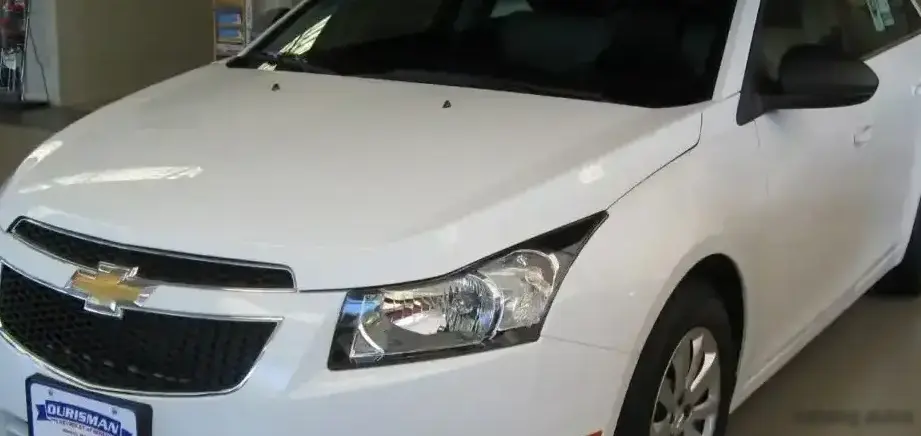
The Chevrolet Cruze Sedan 1.8 (141 hp) was a key variant in the first generation of the Cruze, produced from 2009 to 2013. Positioned as a mainstream offering within the Cruze lineup, it aimed to provide a balance of affordability, fuel efficiency, and acceptable performance for the average commuter. This model represented Chevrolet’s attempt to compete in the increasingly competitive compact sedan segment, particularly against established rivals like the Honda Civic and Toyota Corolla. The Cruze, built on the Delta II platform (also known internally as the 730 platform), was a significant departure from the Cobalt it replaced, offering a more refined driving experience and a more modern interior.
Technical Specifications
| Brand | Chevrolet |
| Model | Cruze |
| Generation | Cruze Sedan |
| Type (Engine) | 1.8 (141 Hp) |
| Start of production | 2009 |
| End of production | 2013 |
| Powertrain Architecture | Internal Combustion engine |
| Body type | Sedan |
| Seats | 5 |
| Doors | 4 |
| Fuel consumption (urban) | 9.3 l/100 km (25.3 US mpg) |
| Fuel consumption (extra urban) | 5.3 l/100 km (44.4 US mpg) |
| Fuel consumption (combined) | 6.8 l/100 km (34.6 US mpg) |
| Fuel Type | Petrol (Gasoline) |
| Acceleration 0 – 100 km/h | 10 sec |
| Acceleration 0 – 62 mph | 10 sec |
| Acceleration 0 – 60 mph | 9.5 sec |
| Maximum speed | 200 km/h (124.27 mph) |
| Emission standard | Euro 5 |
| Weight-to-power ratio | 9.7 kg/Hp |
| Weight-to-torque ratio | 7.8 kg/Nm |
| Power | 141 Hp @ 6200 rpm |
| Torque | 176 Nm @ 3800 rpm (129.81 lb.-ft. @ 3800 rpm) |
| Engine layout | Front, Longitudinal |
| Engine Model/Code | LWE |
| Engine displacement | 1796 cm3 (109.6 cu. in.) |
| Number of cylinders | 4 |
| Engine configuration | Inline |
| Cylinder Bore | 80.5 mm (3.17 in.) |
| Piston Stroke | 88.2 mm (3.47 in.) |
| Number of valves per cylinder | 4 |
| Fuel injection system | Multi-port manifold injection |
| Engine aspiration | Naturally aspirated engine |
| Valvetrain | DOHC |
| Engine oil capacity | 4.5 l (4.76 US qt | 3.96 UK qt) |
| Coolant | 6.5 l (6.87 US qt | 5.72 UK qt) |
| Kerb Weight | 1365 kg (3009.31 lbs.) |
| Max. weight | 1793 kg (3952.89 lbs.) |
| Max load | 428 kg (943.58 lbs.) |
| Fuel tank capacity | 60 l (15.85 US gal | 13.2 UK gal) |
| Length | 4597 mm (180.98 in.) |
| Width | 1788 mm (70.39 in.) |
| Height | 1477 mm (58.15 in.) |
| Wheelbase | 2685 mm (105.71 in.) |
| Drivetrain Architecture | The Internal combustion engine (ICE) drives the front wheels of the vehicle. |
| Drive wheel | Front wheel drive |
| Number of gears and type of gearbox | 5 gears, manual transmission |
| Front brakes | Disc |
| Rear brakes | Disc |
| Assisting systems | ABS (Anti-lock braking system) |
| Steering type | Steering rack and pinion |
| Tires size | 205/60 R16 |
Powertrain & Engine Architecture
The 1.8-liter inline-four engine, designated as the LWE engine code, was a naturally aspirated powerplant. It featured a dual overhead camshaft (DOHC) valvetrain with four valves per cylinder, contributing to its relatively efficient operation. Fuel delivery was handled by a multi-port fuel injection system, a common setup for engines of this era. The engine produced 141 horsepower at 6200 rpm and 176 Nm (129.81 lb-ft) of torque at 3800 rpm. This engine was paired with a five-speed manual transmission in the base models, offering a fairly conventional driving experience. While an automatic transmission was available, it was typically a four-speed unit, which impacted performance and fuel economy compared to the manual. The four-speed automatic, a GM-sourced 4T45-E, was known for its simplicity but lacked the efficiency and responsiveness of more modern transmissions.
Driving Characteristics
The 1.8L Cruze Sedan with the five-speed manual transmission offered adequate, though not exhilarating, performance. Acceleration from 0-60 mph took around 9.5 seconds, making it competitive within its class. The engine felt reasonably responsive in everyday driving situations, but lacked the punch of the available 1.4L turbo or the more powerful 2.0L engine options. The four-speed automatic transmission, while providing convenience, noticeably dulled acceleration and increased engine noise during hard acceleration. The gear ratios were spaced to prioritize fuel economy over outright performance. The automatic’s shift points were often criticized for being slow to react, especially during overtaking maneuvers. Handling was generally considered safe and predictable, but not particularly sporty. The suspension was tuned for comfort, absorbing bumps reasonably well, but resulting in some body roll during cornering. Steering feel was light and lacked significant feedback.
Equipment & Trim Levels
The 1.8L Cruze typically served as the entry-level trim. Standard features generally included air conditioning, power windows and locks, a basic audio system with an auxiliary input, and steel wheels with wheel covers. Safety features included ABS brakes and a driver and front passenger airbag system. Higher trim levels, such as the LS and LT, added features like alloy wheels, upgraded audio systems, cruise control, and power mirrors. Optional extras included a sunroof, leather upholstery, and a navigation system. The interior materials were generally durable but not luxurious, reflecting the car’s price point. The base trim featured a relatively spartan interior with hard plastic surfaces, while the LT trim offered upgraded cloth upholstery and a more refined dashboard design.
Chassis & Braking
The Cruze utilized a MacPherson strut front suspension and a multi-link rear suspension. This setup provided a good balance of ride comfort and handling. The base models typically featured disc brakes on all four wheels, while some earlier models may have had rear drum brakes. The ABS anti-lock braking system was standard, enhancing safety during emergency braking situations. Steering was rack-and-pinion, providing reasonably precise control. The standard tire size was 205/60 R16, offering a good compromise between ride comfort and grip. The suspension was tuned to prioritize ride comfort over sporty handling, resulting in a relatively soft and forgiving ride quality.
Market Reception & Comparison
The 1.8L Cruze Sedan received mixed reviews. Critics generally praised its improved interior quality and more refined driving experience compared to its predecessor, the Cobalt. However, the 1.8L engine was often criticized for being underpowered, especially when paired with the four-speed automatic transmission. Fuel economy was considered average for the class, with combined figures around 34.6 US mpg. Compared to the 1.4L turbo model, the 1.8L offered less power but potentially better long-term reliability due to its simpler engine design. The 1.4L turbo was more fuel-efficient and offered quicker acceleration, but some owners reported issues with turbocharger reliability. The 2.0L engine provided significantly more power but came at a higher price point. Many reviewers felt the 1.8L was a sensible choice for budget-conscious buyers prioritizing fuel economy and reliability over performance.
Legacy
The Chevrolet Cruze, including the 1.8L variant, enjoyed moderate success in the used car market. The 1.8L engine proved to be relatively reliable, with fewer reported issues compared to the 1.4L turbo. However, like many vehicles of this era, the Cruze is susceptible to age-related issues such as corrosion, worn suspension components, and failing sensors. The availability of affordable parts and a relatively straightforward mechanical design make it a popular choice for DIY mechanics. Common issues reported include failing oxygen sensors, coolant leaks, and electrical problems. While not a standout performer, the 1.8L Cruze Sedan provided a practical and affordable transportation option for many drivers, and remains a common sight on roads today. Its simplicity and relatively low maintenance costs continue to appeal to budget-minded car buyers.