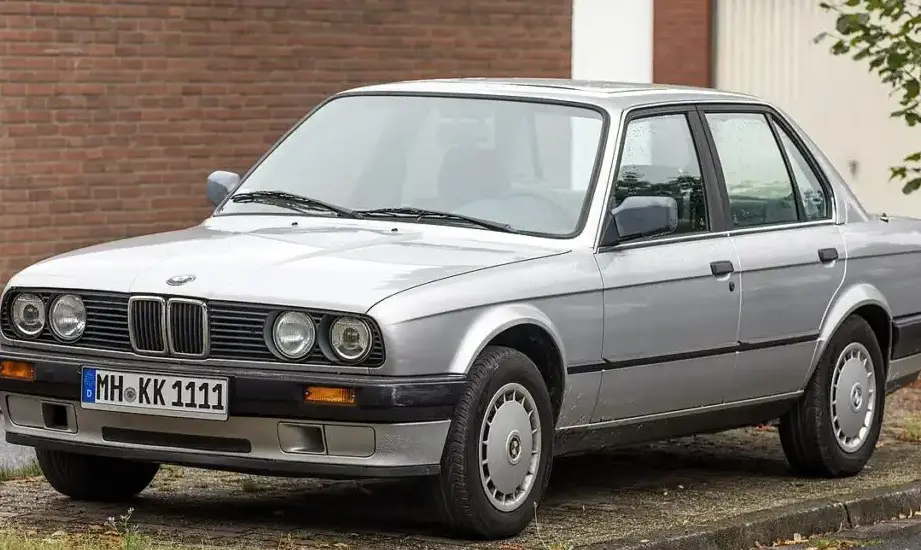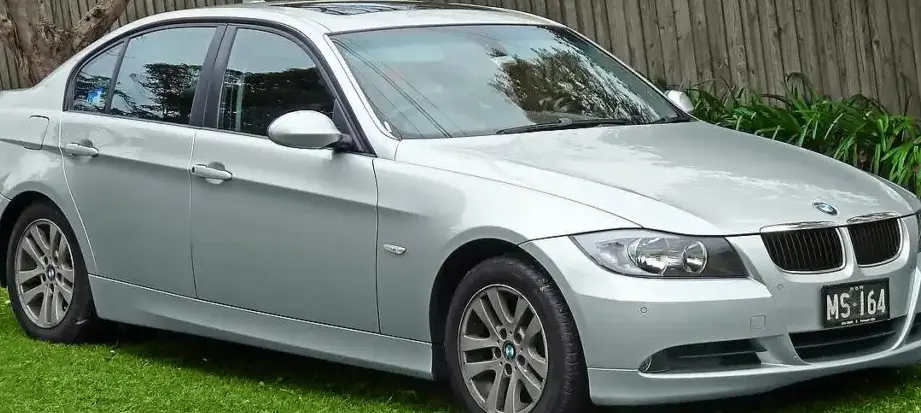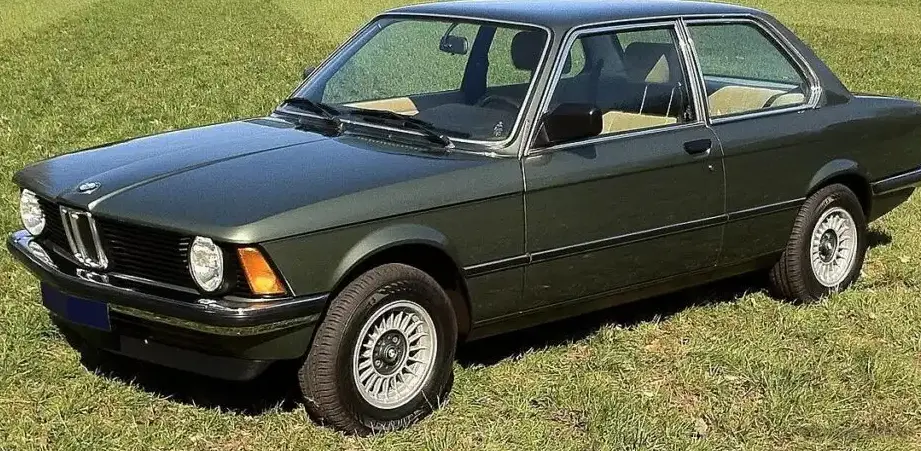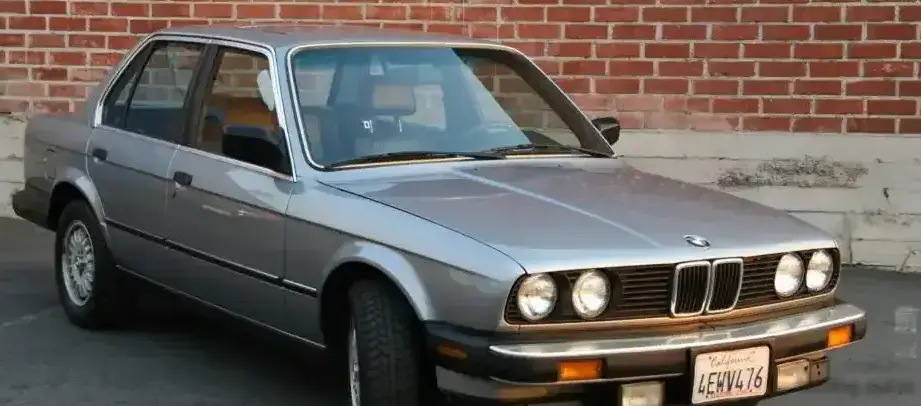
The BMW 3 Series Sedan (E30) 325i Automatic, produced from 1986 to 1987, represents a significant iteration of BMW’s iconic 3 Series. Falling within the E30 chassis code generation (1982-1994), the 325i Automatic occupied a premium position in the lineup, offering a blend of performance and convenience. It was designed to appeal to buyers seeking a sporty sedan with the ease of an automatic transmission, differentiating itself from the more driver-focused manual transmission variants and the lower-powered 325e models sold primarily in the US market. This model played a crucial role in solidifying the 3 Series’ reputation for balanced handling and refined driving dynamics.
Technical Specifications
| Brand | BMW |
| Model | 3 Series |
| Generation | 3 Series Sedan (E30) |
| Type (Engine) | 325i (170 Hp) Automatic |
| Start of production | 1986 |
| End of production | 1987 |
| Powertrain Architecture | Internal Combustion engine |
| Body type | Sedan |
| Seats | 5 |
| Doors | 4 |
| Fuel consumption (economy) – urban | 13.3 l/100 km (17.7 US mpg, 21.2 UK mpg, 7.5 km/l) |
| Fuel consumption (economy) – extra urban | 7.3 l/100 km (32.2 US mpg, 38.7 UK mpg, 13.7 km/l) |
| Fuel consumption (economy) – combined | 9.2 l/100 km (25.6 US mpg, 30.7 UK mpg, 10.9 km/l) |
| Fuel Type | Petrol (Gasoline) |
| Acceleration 0 – 100 km/h | 9.9 sec |
| Acceleration 0 – 62 mph | 9.9 sec |
| Acceleration 0 – 60 mph | 9.4 sec |
| Maximum speed | 212 km/h (131.73 mph) |
| Weight-to-power ratio | 7.1 kg/Hp, 141.7 Hp/tonne |
| Weight-to-torque ratio | 5.4 kg/Nm, 185 Nm/tonne |
| Power | 170 Hp @ 5800 rpm |
| Power per litre | 68.2 Hp/l |
| Torque | 222 Nm @ 4300 rpm (163.74 lb.-ft. @ 4300 rpm) |
| Engine layout | Front, Longitudinal |
| Engine Model/Code | M20B25 |
| Engine displacement | 2494 cm3 (152.19 cu. in.) |
| Number of cylinders | 6 |
| Engine configuration | Inline |
| Cylinder Bore | 84 mm (3.31 in.) |
| Piston Stroke | 75 mm (2.95 in.) |
| Compression ratio | 9.7:1 |
| Number of valves per cylinder | 2 |
| Fuel injection system | Multi-port manifold injection |
| Engine aspiration | Naturally aspirated engine |
| Engine oil capacity | 4.25 l (4.49 US qt | 3.74 UK qt) |
| Coolant | 10.5 l (11.1 US qt | 9.24 UK qt) |
| Kerb Weight | 1200 kg (2645.55 lbs.) |
| Max. weight | 1660 kg (3659.67 lbs.) |
| Max load | 460 kg (1014.13 lbs.) |
| Trunk (boot) space – minimum | 425 l (15.01 cu. ft.) |
| Fuel tank capacity | 55 l (14.53 US gal | 12.1 UK gal) |
| Length | 4325 mm (170.28 in.) |
| Width | 1645 mm (64.76 in.) |
| Height | 1380 mm (54.33 in.) |
| Wheelbase | 2570 mm (101.18 in.) |
| Front track | 1405 mm (55.31 in.) |
| Rear (Back) track | 1415 mm (55.71 in.) |
| Front overhang | 761 mm (29.96 in.) |
| Rear overhang | 994 mm (39.13 in.) |
| Drag coefficient (Cd) | 0.35 |
| Drivetrain Architecture | The Internal combustion engine (ICE) drives the rear wheels of the vehicle. |
| Drive wheel | Rear wheel drive |
| Number of gears and type of gearbox | 4 gears, automatic transmission |
| Front suspension | Coil spring |
| Rear suspension | Coil spring |
| Front brakes | Disc |
| Rear brakes | Disc |
| Assisting systems | ABS (Anti-lock braking system) |
| Steering type | Steering rack and pinion |
| Power steering | Hydraulic Steering |
| Tires size | 195/65 VR14 |
| Wheel rims size | 14 |
Powertrain & Engine Architecture
The heart of the 325i Automatic is the M20B25 engine, a 2.5-liter inline-six cylinder powerplant. This engine, a hallmark of BMW engineering during the era, featured a cast iron block and an aluminum cylinder head. It employed multi-port fuel injection, delivering a precise fuel mixture for optimal combustion. The valvetrain consisted of a single overhead camshaft (SOHC) operating two valves per cylinder. The M20 engine family was known for its smooth power delivery and robust construction. The automatic transmission used was a four-speed unit, designed to provide comfortable and convenient shifting. While not as sporty as the available five-speed manual, it offered a more relaxed driving experience, particularly in urban environments. The transmission was geared for a balance of acceleration and fuel efficiency, though it did slightly diminish the overall performance potential compared to its manual counterpart.
Driving Characteristics
The 325i Automatic delivered a refined driving experience. While the automatic transmission slightly dulled the responsiveness compared to the manual, it still provided ample power for spirited driving. Acceleration from 0-60 mph took approximately 9.4 seconds, and the car could reach a top speed of 131.73 mph. The automatic transmission’s gear ratios were optimized for everyday usability, providing smooth transitions between gears. However, drivers seeking maximum performance would find the manual transmission offered a more engaging and quicker experience. The car’s rear-wheel drive configuration and well-tuned suspension contributed to its balanced handling characteristics, making it a joy to drive on winding roads.
Equipment & Trim Levels
The 325i Automatic typically came equipped with a respectable level of standard features for its time. These included power windows, central locking, and a basic sound system. Interior upholstery was typically cloth, though leather was available as an option. The dashboard layout was functional and driver-focused, with clear instrumentation. Optional extras included a sunroof, upgraded sound system, and air conditioning. The 325i Automatic was positioned as a mid-range to upper-mid-range trim within the E30 lineup, offering a step up in performance and features compared to the base 325e models.
Chassis & Braking
The E30 325i Automatic featured a robust chassis with coil spring suspension at all four corners. The suspension was tuned to provide a comfortable ride while maintaining good handling characteristics. The car was equipped with disc brakes on all four wheels, providing ample stopping power. An Anti-lock Braking System (ABS) was also included as standard, enhancing safety and control during hard braking. The steering was a rack-and-pinion system with hydraulic power assistance, offering precise and responsive steering feel.
Market Reception & Comparison
The 325i Automatic was generally well-received by automotive critics. It was praised for its smooth engine, comfortable ride, and balanced handling. However, some critics noted that the automatic transmission slightly diminished the car’s overall performance potential compared to the manual version. Compared to the 325e, the 325i offered significantly more power and a more engaging driving experience. Fuel economy was reasonable for the time, averaging around 25.6 US mpg in combined driving. Reliability was generally good, though maintenance costs could be higher than some competitors due to the car’s German engineering.
Legacy
The E30 325i Automatic has become a sought-after classic among BMW enthusiasts. The M20 engine is known for its durability and relatively straightforward maintenance. While finding well-maintained examples can be challenging, the car’s enduring appeal and driving dynamics continue to attract collectors and enthusiasts. The automatic transmission, while not as desirable as the manual to some, offers a unique and comfortable driving experience that appeals to a different segment of the market. Today, these cars represent a piece of BMW’s heritage and a testament to the brand’s commitment to building high-quality, driver-focused vehicles.