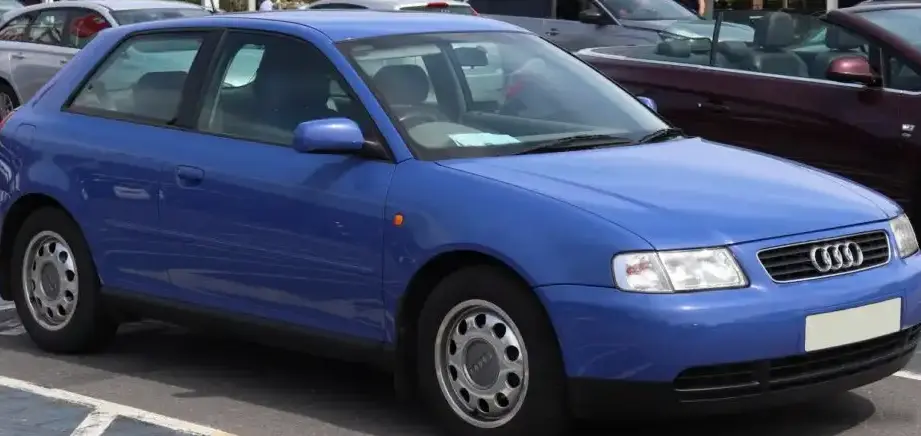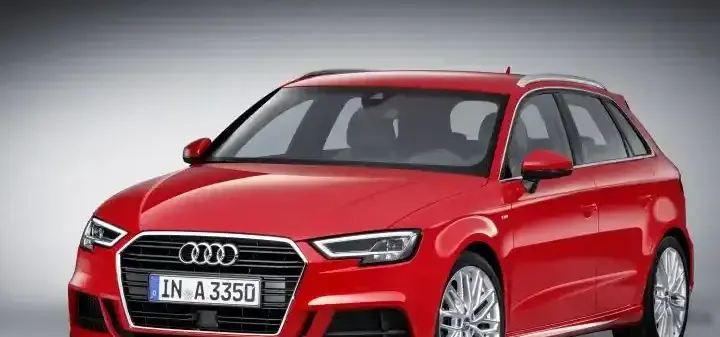
The Audi A3 Sportback (8V, facelift) 1.6 TDI with 116 horsepower, produced from 2017 to 2018, represented an entry-level offering within the broader A3 Sportback range. This variant was primarily aimed at the European market, where fuel efficiency and lower running costs were highly valued. Positioned below the more powerful petrol and diesel options, the 1.6 TDI offered a balance between affordability and the premium feel associated with the Audi brand. It sat within the 8V generation of the A3, which benefited from a mid-life facelift in 2016, bringing updated styling and technology.
Technical Specifications
| Brand | Audi |
| Model | A3 |
| Generation | A3 Sportback (8V, facelift 2016) |
| Type (Engine) | 1.6 TDI (116 Hp) |
| Start of production | 2017 |
| End of production | 2018 |
| Powertrain Architecture | Internal Combustion engine |
| Body type | Hatchback |
| Seats | 5 |
| Doors | 5 |
| Fuel consumption (economy) – urban (NEDC) | 4.5-4.7 l/100 km (52.3 – 50 US mpg, 62.8 – 60.1 UK mpg, 22.2 – 21.3 km/l) |
| Fuel consumption (economy) – extra urban (NEDC) | 3.7-3.9 l/100 km (63.6 – 60.3 US mpg, 76.3 – 72.4 UK mpg, 27 – 25.6 km/l) |
| Fuel consumption (economy) – combined (NEDC) | 4-4.2 l/100 km (58.8 – 56 US mpg, 70.6 – 67.3 UK mpg, 25 – 23.8 km/l) |
| CO2 emissions (NEDC) | 106-109 g/km |
| Fuel Type | Diesel |
| Acceleration 0 – 100 km/h | 10.4 sec |
| Acceleration 0 – 62 mph | 10.4 sec |
| Acceleration 0 – 60 mph | 9.9 sec |
| Maximum speed | 202 km/h (125.52 mph) |
| Emission standard | Euro 6 |
| Weight-to-power ratio | 10.9 kg/Hp, 92.1 Hp/tonne |
| Weight-to-torque ratio | 5 kg/Nm, 198.4 Nm/tonne |
| Power | 116 Hp @ 3250-4000 rpm |
| Power per litre | 72.6 Hp/l |
| Torque | 250 Nm @ 1500-3000 rpm (184.39 lb.-ft. @ 1500-3000 rpm) |
| Engine layout | Front, Transverse |
| Engine Model/Code | DDYA |
| Engine displacement | 1598 cm3 (97.52 cu. in.) |
| Number of cylinders | 4 |
| Engine configuration | Inline |
| Cylinder Bore | 79.5 mm (3.13 in.) |
| Piston Stroke | 80.5 mm (3.17 in.) |
| Compression ratio | 16.2:1 |
| Number of valves per cylinder | 4 |
| Fuel injection system | Diesel Commonrail |
| Engine aspiration | Turbocharger, Intercooler |
| Valvetrain | DOHC |
| Engine oil capacity | 4.7 l (4.97 US qt | 4.14 UK qt) |
| Kerb Weight | 1260 kg (2777.82 lbs.) |
| Max. weight | 1820 kg (4012.41 lbs.) |
| Max load | 560 kg (1234.59 lbs.) |
| Trunk (boot) space – minimum | 380 l (13.42 cu. ft.) |
| Trunk (boot) space – maximum | 1220 l (43.08 cu. ft.) |
| Fuel tank capacity | 50 l (13.21 US gal | 11 UK gal) |
| Max. roof load | 75 kg (165.35 lbs.) |
| Permitted trailer load with brakes (8%) | 1700 kg (3747.86 lbs.) |
| Permitted trailer load with brakes (12%) | 1500 kg (3306.93 lbs.) |
| Permitted trailer load without brakes | 660 kg (1455.05 lbs.) |
| Permitted towbar download | 75 kg (165.35 lbs.) |
| Length | 4313 mm (169.8 in.) |
| Width | 1785 mm (70.28 in.) |
| Width including mirrors | 1966 mm (77.4 in.) |
| Height | 1426 mm (56.14 in.) |
| Wheelbase | 2637 mm (103.82 in.) |
| Front track | 1543 mm (60.75 in.) |
| Rear (Back) track | 1514 mm (59.61 in.) |
| Front overhang | 870 mm (34.25 in.) |
| Rear overhang | 806 mm (31.73 in.) |
| Minimum turning circle (turning diameter) | 10.9 m (35.76 ft.) |
| Drivetrain Architecture | The Internal combustion engine (ICE) drives the front wheels of the vehicle. |
| Drive wheel | Front wheel drive |
| Number of gears and type of gearbox | 6 gears, manual transmission |
| Front suspension | Independent type McPherson |
| Rear suspension | Torsion |
| Front brakes | Ventilated discs |
| Rear brakes | Disc |
| Assisting systems | ABS (Anti-lock braking system) |
| Steering type | Steering rack and pinion |
| Power steering | Electric Steering |
| Tires size | 205/55 R16; 225/45 R17; 225/40 R18 |
| Wheel rims size | 6.5J x 16; 7J x 16; 7.5J x 17; 7.5J x 18 |
INTRODUCTION
The Audi A3 Sportback (8V, facelift) 1.6 TDI 116 hp, produced between 2017 and 2018, was a key model in Audi’s compact hatchback lineup. Built on the Volkswagen Group’s MQB platform (specifically the A3/Golf 8V iteration), it offered a practical and relatively affordable entry point into the Audi brand. The facelift brought subtle but noticeable changes to the exterior styling, including revised headlights and grille, as well as updates to the interior technology. This variant was primarily sold in Europe, where diesel engines remained popular due to their fuel efficiency and lower tax implications.
Powertrain & Engine Architecture
At the heart of this A3 Sportback variant lies the 1.6-liter four-cylinder diesel engine, designated DDYA. This engine is a turbocharged common rail direct injection diesel. The DDYA engine produces 116 horsepower at 3250-4000 rpm and 250 Nm (184 lb-ft) of torque between 1500-3000 rpm. The engine features a single turbocharger with an intercooler to improve efficiency and power output. The fuel injection system utilizes common rail technology, allowing for precise fuel delivery and optimized combustion. The engine also incorporates a Diesel Particulate Filter (DPF) to reduce harmful emissions, complying with Euro 6 standards. The engine is transversely mounted in the front of the vehicle. The 6-speed manual transmission was standard, offering a balance between fuel economy and driver engagement.
Driving Characteristics
The 1.6 TDI 116 hp A3 Sportback offered a comfortable and refined driving experience, prioritizing fuel economy over outright performance. Acceleration from 0-100 km/h (0-62 mph) took around 10.4 seconds, making it adequate for everyday driving but not particularly sporty. The engine’s torque delivery was relatively flat, providing usable power across a wide rev range. The manual gearbox was well-matched to the engine, with gear ratios optimized for fuel efficiency. Compared to the more powerful 2.0 TDI variants, the 1.6 TDI felt noticeably slower, especially during overtaking maneuvers. However, it offered a smoother and quieter ride, making it well-suited for urban commuting and long-distance journeys. The steering was light and precise, providing good feedback to the driver.
Equipment & Trim Levels
The 1.6 TDI Sportback typically came with a reasonable level of standard equipment. This included air conditioning, a multi-function steering wheel, electric front windows, and an infotainment system with a color display. Safety features such as ABS, ESP (Electronic Stability Program), and multiple airbags were also standard. Higher trim levels, such as Sport and S line, added features like alloy wheels, sports suspension, upgraded interior trim, and advanced infotainment options. Optional extras included navigation system, parking sensors, automatic climate control, and a panoramic sunroof.
Chassis & Braking
The A3 Sportback 8V utilized a McPherson strut front suspension and a torsion beam rear suspension. This setup provided a good balance between ride comfort and handling. The front brakes were ventilated discs, while the rear brakes were solid discs. ABS (Anti-lock Braking System) was standard, ensuring safe and controlled braking in various conditions. The steering system was an electric power steering system, offering precise and responsive steering feel.
Market Reception & Comparison
The 1.6 TDI variant was generally well-received by critics as a practical and economical option within the A3 range. It was praised for its fuel efficiency, comfortable ride, and refined interior. However, some reviewers noted its lack of outright performance compared to the more powerful engine options. Compared to the 2.0 TDI models, the 1.6 TDI offered significantly better fuel economy but at the expense of performance. It also represented a more affordable entry point into the A3 lineup, making it attractive to budget-conscious buyers. Against competitors like the Volkswagen Golf, BMW 1 Series, and Mercedes-Benz A-Class, the A3 1.6 TDI offered a compelling combination of style, comfort, and efficiency.
Legacy
The 1.6 TDI engine, while not known for being particularly exciting, proved to be relatively reliable. Common issues, if any, typically revolved around the DPF system, requiring regular maintenance to prevent clogging. In the used car market, the 1.6 TDI A3 Sportback represents a good value proposition for buyers seeking a fuel-efficient and well-equipped compact hatchback. Its lower purchase price and running costs make it an attractive option for those prioritizing practicality and economy over performance. However, potential buyers should be aware of the importance of maintaining the DPF system and ensuring regular servicing to avoid potential issues.